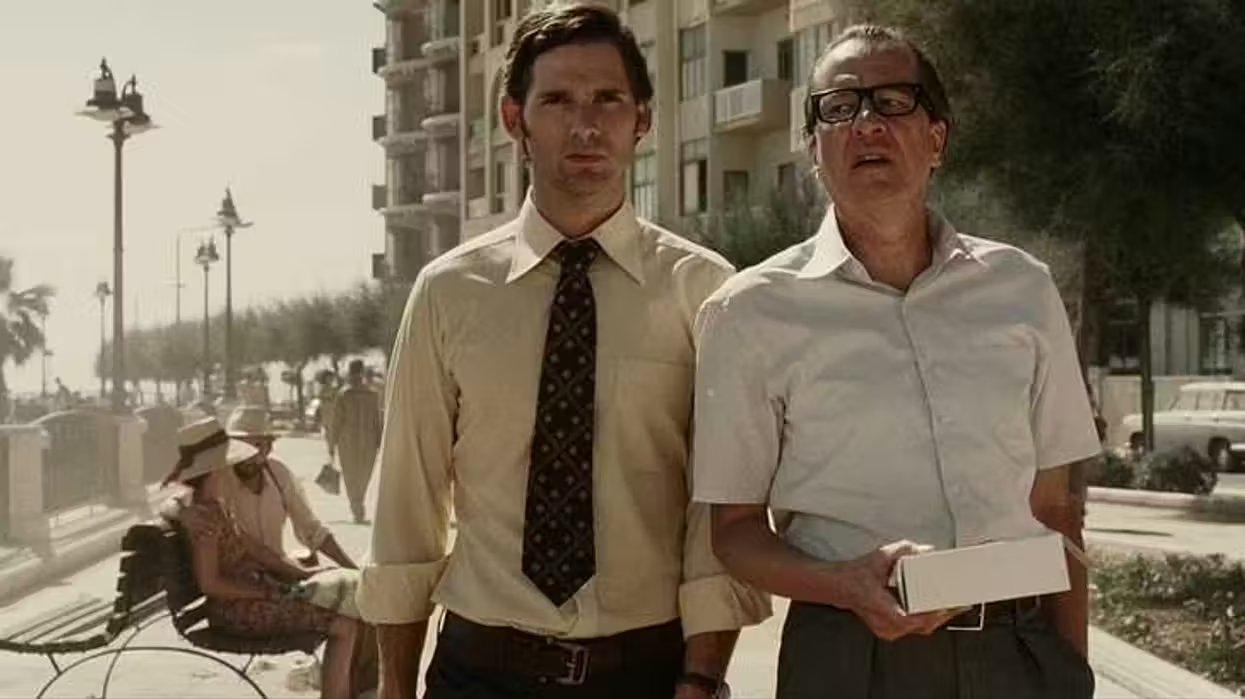
The best channel on all of YouTube for film essays is Patrick (H) Willems, whose dissections of movies and TV are must-watch for anyone trying to understand media. I legitimately think they are better than many college courses on the topic, and I think Patrick is a hero both in his quest for understanding and in media literacy.
Even when I don't always agree with his videos, I learn something I never knew. And it actually has opened me up to a deeper understanding not just of other people's work, but in trying to channel my own voice as well.
So when I tell you, Patrick has made what could be his best video of all time, I hope you listen. It's a dissection of Steven Spielberg's Munich, and it's this beautiful look at who Spielberg is as a person and hiw work in front of and behind the camera.
It posits that Munich is the best-directed movie ever, and I walked away agreeing.
In his video essay, Willems breaks down not just why Munich is Spielberg’s most underrated film, but also why it is a masterclass in visual storytelling, economy of coverage, and formal control — the likes maybe we've never seen before or since.
Let's dive in.
- YouTubewww.youtube.com
The 21st-Century "Jazz Period"
In order to understand Spielberg's work on Munich, you first have to look at the movies that came before it. Yes, that's a lot of films, so we're just going to focus on the immediate movies before it that sort of shaped Spielberg's worldview.
Patrick affectionately called it Spielberg's "Jazz period," but I also like to think of it as his immediate pre- and post 9/11 persiod where he was trying to figure out what the hell was going on in the world.
Between 2001 and 2005, Spielberg released six feature films in five years. We saw A.I. Artificial Intelligence and Minority Report, Catch Me If You Can, The Terminal, War of the Worlds, and Munich.
That was a helluva run for me going to the movies. And it was when Spielberg became my favorite filmmaker of all time.
This era saw Spielberg operating at the absolute peak of his technical powers.
He was using and learning new tools that other filmmakers simply had justn ot grasped or were not working at the budget level to play with yet.
Spielberg used intricate camera movements, dynamic blocking, and aggressive zoom lenses to deliver high-stakes drama with stunning speed and precision to all of these films, which are wildly different in tone and genre.
But all of this wizardry came together in Munich, which feltl ike the period on a long sentence he had been writing about filmmaking, maybe since he started out doing it as a child.
- YouTubewww.youtube.com
What Makes Munich's Direction Special
I'll never be able to summarize everything Patrick goes over in the 40 minutes, so I really do think the best thing to do is to watch Munich, and then go watch his video.
So I am just going to make some of his main points and echo them here.
Spatial Geography in a Single Shot
If you've seen Munich, you probably remember the phone scene in Paris. The basic idea is that a phone has been rigged with a bomb that activates when the receiver is picked up.
This is a simple plot, laid out with one of the most complex shots I've ever seen.
Spielberg establishes the spatial relationships among four characters and an entire assassination plan in a single 18-second unbroken shot that constantly shifts framing and motion.
- The Shot Sequence: A wide shot of a phone booth pans to follow a moving vehicle, rack focuses to an operative at a newsstand, and tilts up to an apartment window, revealing where the explosion will be.
- Filmmaking Takeaway: Instead of cutting back and forth between characters and shots to explain who is looking at what, see if you can use precise camera movement and rack focus to establish geography. Agaib. Easier said than done, but try coupling one or two shots together before you try adding as many as Spielberg. The reason for this is to keep the audience in the space. When the audience understands the physical space, suspense builds naturally.
Intentional Zoom Lenses for Paranoia
Okay, so no one has really used zoom lenses in movies since the 70s. And Spielberg notoriously avoids zoom lenses in favor of physical camera movement; The only zoom I can think of outside of this movie is that opening shot from his Colombo episode.
Anyway, Spielberg and cinematographer Janusz Kamiński leaned heavily into a Cooke 25-250mm zoom lens on Munich to evoke '70s cinema aesthetics.
And the zooms in this movie are not only indicative of the spy genre but also give us this voyeuristic feeling, as if we're embedded in the plot itself.
- The Technique: We get these creeping, predatory zooms in on characters signing contracts or tracking targets. They show a point of view that only the agents have, and we're let in on it. We are part of the surveillance.
- Filmmaking Takeaway: You can try a zoom to see if it fits your aesthetic. Zoom lenses draw attention to the frame itself, so be careful not to take the people out of the story. Use them intentionally to signal external forces, paranoia, or an encroaching threat, and you may have a new tool in your kit.
Subjective POV and Visual Transitions
Filmmaking is a visual medium. And there has never been a director better at conveying a story through visuals than Spielberg. He's a genius, and you can see him just doing things in this movie that are seamless.
For example, to convey the internal trauma of protagonist Avner (Eric Bana), Spielberg turns to subtle camera movements rather than expository dialogue to show that he's struggling to cope with this mission of vengeance.
- The Technique: After a bloody flashback, editor Michael Kahn crossfades to a blood-red sky reflected in an airplane window. Spielberg then tilts the camera down from the window to focus on Avner as he removes his wedding ring and slips it into his pocket. We immediately get this sense of dread and death that overshadows any sense of victory.
- Filmmaking Takeaway: How can you connect character psychology to action? What visuals can you add to your transitions that mirror the actual emotion you want the audience to feel? Small visual details, like a wedding ring combined with a tilt, can convey internal conflict far better than a line of dialogue.
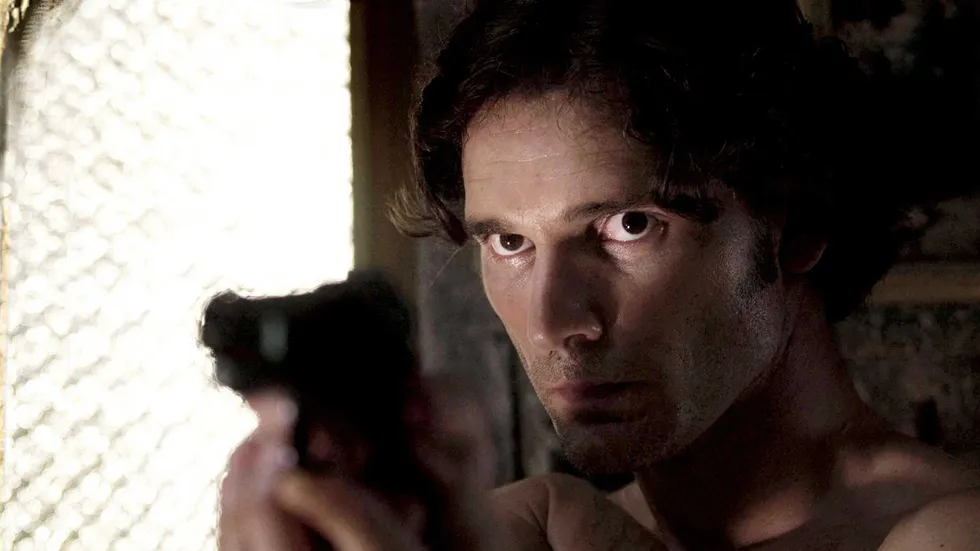 'Munich'Credit: Universal
High-Efficiency "Oners"
Okay, we love to celebrate oners at No Fim School. We cover them all the time because they look cool, and because they feel like magic.
The Spielberg oner is a topic we've talked about at Nausheim, from Sugarland Express to Disclosure Day.
Munich featured a 180-page screenplay that was shot in 60 days across multiple European countries. How did Spielberg achieve this speed?
Well, he used a lot of oners to cut down on his setups.
- The Technique: Rather than setting up separate camera setups for close-ups, wide shots, and coverage, Spielberg designs long master shots in which actors naturally move into close-up or profile within the same frame. That way, he can shoot three to four camera setups all at once. This saves time, and it keeps the audience in the shot, refusing to look away or blink.
- Filmmaking Takeaway: Okay, it's easy to say, "Just be Spielberg," but none of us are that talented. Just think about what can be combined in your shots, and if you can do some oners, even without movement, that allow you to slash shots.
Populating the World with Background Life
Unlike modern blockbusters shot on sparse LED volume stages or relying on fakery, Munich is a movie that used its locations to the fullest.
We had extras moving in and out of frame at different distances, and cars, real buildings, and worlds.
That kind of stuff is expensive, but it adds so much reality. You can do this; just try to go to locations and/or really spend when you can. We feel like this is the real world, and we also understand the chaos of the story's place within it.
- The Technique: During a tension-filled assassination sequence, Spielberg pans past the open window of a music school where students are practicing their instruments. This scores a murder taking place across the street. But it also shows life, juxtaposed against death. Again, this stuff takes planning and ideation that maybe is another layer in the script, but it's worth taking the time to grab these things.
- Filmmaking Takeaway: Violence and conflict never happen in a vacuum. And even if your story doesn't cover that kind of stuff, think about the world around your story. How can you meld or fold it into your narrative to accent the story's intentions? Background extras and world-building elements humanize the setting and ground genre stories in believable reality. Plan them out and use them where you can for worldbuilding.
The Best Directed Movie Of All Time
All of these intricate elements add up to what I think is the best-directed movie of all time. Their control at every level; everything in this movie is intentional and precise to a degree I am not sure we've even seen before.
This is a big and expansive movie, and you can see every dollar reflected in every choice. Every transition matters; every shot has subtext.
Munich was a deeply personal movie for Spielberg, and I wish we had more interviews about it. Every time I go back to it, I find a new shot or scene that I forgot about that packs an unexpected punch and so much power.
It's a movie about shifting perspectives, vengeance, violence, and the cycle of violence that has stuck with us to this very day.
There are no easy answers in it, just a burden we bear watching and knowing its events echo forever.
And so does its filmmaking.
Summing It All Up
Steven Spielberg is the kind of filmmaker that only comes around once in a generation. And somehow, he has even more masterpieces than just Munich.
The next time he's on a press tour, I hope we see interviewers unpack more movies like Munich and talk with the director about his process of directing a movie like this one, one with so many layers and so much depth to each frame that it feels exacting and obsessive.
Until then, we have this brilliant video essay to extrapolate it.
Let me know what you think in the comments.