Look, the last few years have not been kind to screenwriters. But we're officially five years removed from COVID, three from the strikes, and we made it through much of the consolidation and content wars.
I know that the industry feels smaller, the gates feel higher, and your scripts may feel like they're not being read...but this is the year all that changes.
And it changes because you change your plan of attack.
If you’re heading into 2026 with the same "I’ll just write a great script and wait for my agent to call" mindset, you’re already behind.
Here are five resolutions for the 2026 screenwriter who wants to take matters into their own hands.
Let's dive in.
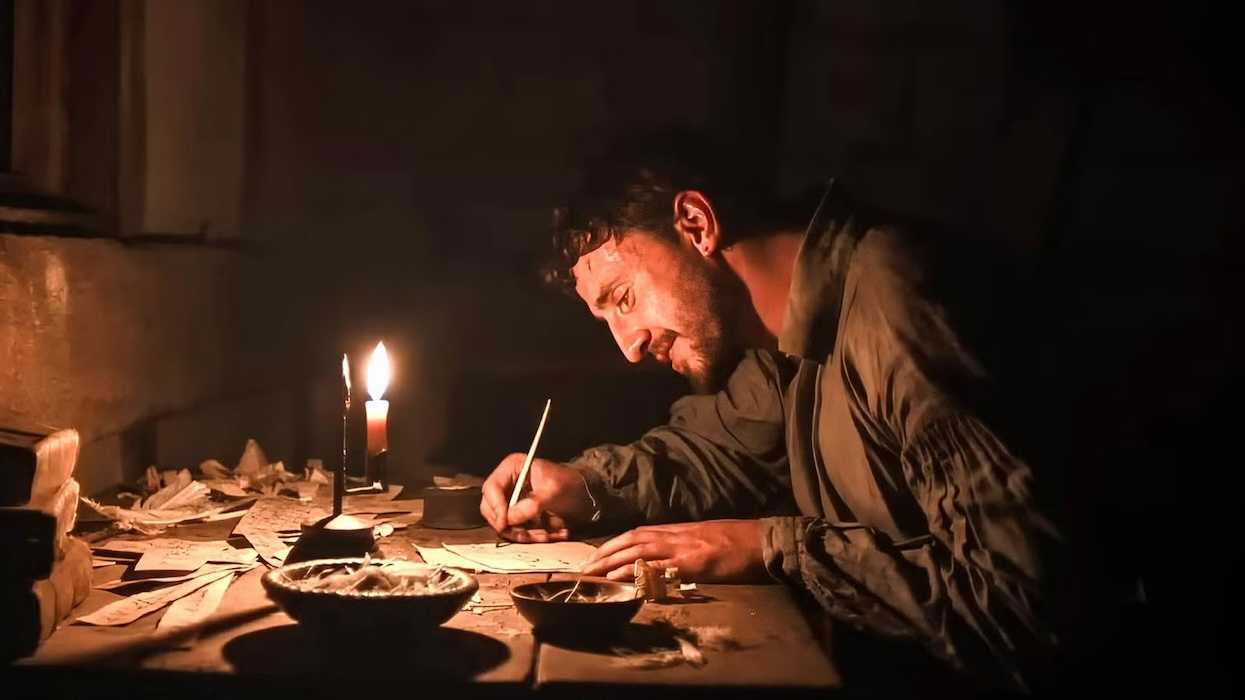
 'Hamnet' Credit: Focus
1. Stop Being "Just" a Writer
I love writing so much. It's my favorite thing to do. But the one lesson I learned over the last ten years or more of a career is that you are going to have to produce, too.
Studios don’t want to read a script and then go find a vision; they want to buy a vision that happens to have a script attached.
That means you need to make some calls to check in on directors, work with other producers on your projects to make talent lists, reach out to connections, and become an active participant in telling your story.
It's not just about what you have on the page anymore, but also who you can bring in to work on these visions.
2. Commit to the "Productivity Floor."
We’ve all had those weeks where we "think" about our script for six days and write for two hours on Sunday. While that can happen once in a while, it can't be how we shape our work.
Success in 2026 belongs to the writers who show up even when the "muse" is out to lunch. Sit and write every day. Even if you only manage to get out a page or a paragraph, write.
Stop aiming for five pages a day. Aim for one. One page is easy. Anyone can do one page. But one page a day is a feature every four months. Build the floor, and the ceiling will take care of itself.
Treat this like a professional career, and a professional career will follow.
3. Write the "Impossible-to-Ignore" Low Budget Spec
The "Middle Class" of film is still in recovery. Big-budget specs are a lottery ticket. If you want to get a movie made in 2026, write something that a producer can greenlight without needing a permission slip from a tech giant's board of directors.
Can it be made cheaply, and does it have a noisy logline or a genre that audiences love, like action or horror? This might be the ticket to getting something produced.
You're taking high-concept ideas and turning them into something feasible. And if you have aspirations to direct, this can be a good place to start.
4. Stop Polishing the Same Turd
Every year, someone tells me they have been working on the same "soul-searching" idea for years. Listen, if that script hasn't opened a door by now, it is time to write something new.
My advice to you is to feature specs or three pilots this year. Period. And also to adopt the "Kill Your Darlings" rule. If a script has gone through five major rounds of notes and still isn't landing, move on. The best way to get over a script that didn’t sell is to be halfway through writing one that will.
5. Master the "Economic" Page
This last one made me queasy, but it is a reality in this industry. Producers in 2026 are reading on iPhones while waiting for Waymos. If your script has blocks of action text that look like a Cormac McCarthy novel, they’re going to pass.
White space is your best friend. Look at it on an iPhone before sending it out and see how it scrolls.
Go through your current draft and look for "is," "are," and "starts to." Kill the fluff.
If a line of action takes up three lines but can be said in one, you’re wasting the reader's time—and in 2026, time is the only currency that matters.
Summing It All Up
2026 is going to be a year of "The Survival of the Adaptable." Get out there. Write something dangerous. And for the love of God, bold your sluglines.
Let me know what you think in the comments.