How 'Border Hopper' Used Mixed Media to Turn Immigration into a Video Game
The best way to get the message out to the people is to meet them where they are.
'Border Hopper'
In his latest hybrid film, Border Hopper, Nico Casavecchia tackles the often solemn subject of immigration with a distinctively chaotic, psychedelic lens.
Co-written with his wife, Mercedes Arturo, and based on their own lived experiences, the film reimagines the American immigration system not just as a hurdle, but as a high-stakes video game where the rules are constantly changing.
We sat down with the filmmaker to discuss how he used mixed media to bridge storytelling gaps, the challenges of shooting in his own home to save budget, and why he believes directors should stop making decks and start making films.
Let's dive in.
- YouTubewww.youtube.com
NFS: Hi Nico! Your film Border Hopper weaves animation alongside live-action in a way that reshapes how we interpret the characters’ experiences. What storytelling gap did animation allow you to bridge that live-action alone could not?
Nico Casavecchia: I’m a self-taught filmmaker, so I’ve always used whatever tools were around me to tell stories. My first short was shot on a grainy 480p webcam. Animation quickly became a way to express the subjectivity of my characters, and over time, my voice drifted toward mixed media, creating hybrid projects for film and commercials.
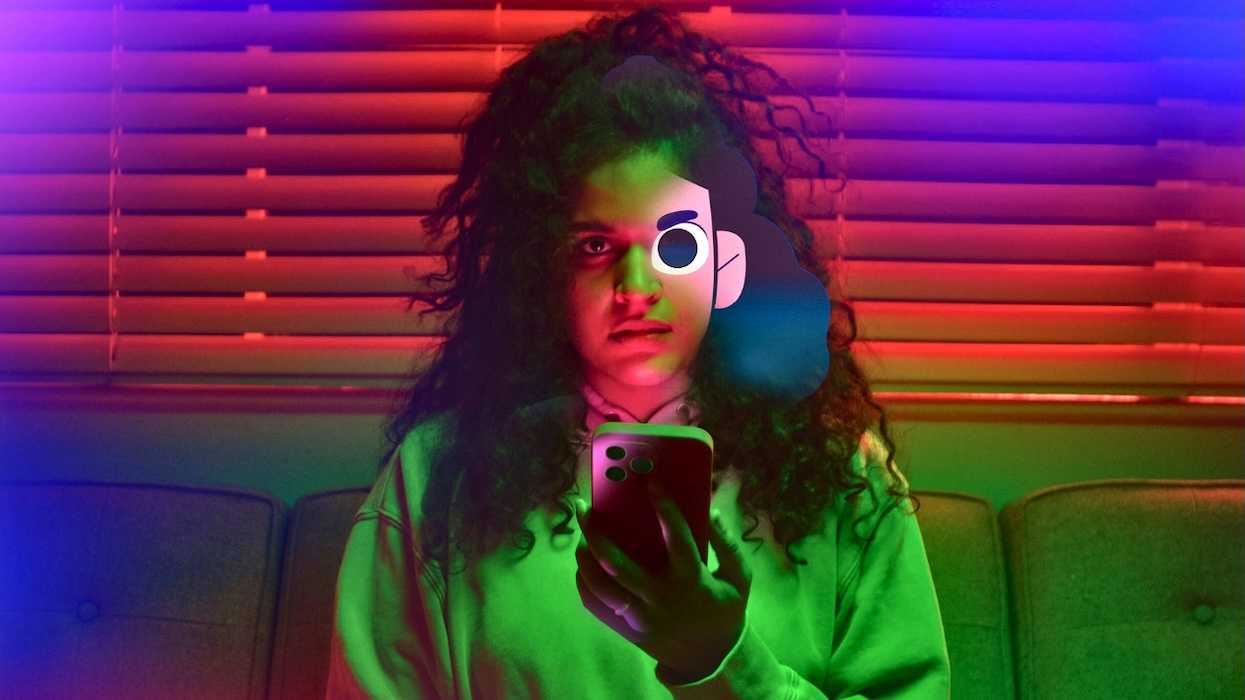
While writing Border Hopper, a Henry Rollins quote that had been sloshing in my head for years came back to me: “America is not a place you live in, it’s a video game you survive.” It made me think of my own immigration experiences, not just in the US but also in Europe, where I lived for a decade when I was younger. The idea of immigration as a video game became a guiding principle for the writing and the visual development. As filmmakers, we’re always looking for a visual metaphor that can condense a concept clearly, and having a character experience her immigration journey as a video game was perfect for animation. My friend Martín Allais and his studio BRUT helped me shape the visual language. I wanted to evoke the sugar-rush, psychedelic nature of row-puzzle games like Candy Crush and mix that with immigration offices and the feeling of going through Kafkaesque bureaucracy mazes where every obstacle you conquer just reveals a new one waiting around the corner.
NFS: The film’s palette feels almost like a character in its own right. What emotional or narrative function did you want the color design to serve as the story unfolded?
NC: Once we knew Candy Crush would be the starting point for the video-game design, the entire animation palette fell into place. From there, it became about contrast. Laura’s real life sits in muted, cold hues, while the game explodes with saturated color. As her descent into madness progresses, the video-game world begins to erupt into her reality, and by the end, both merge. This evolution is also reflected in the film’s aspect ratio, which traps Laura in a 1:1 frame as soon as she discovers she’s expected to travel for the job.
NFS: Touring the film across festivals exposes you to a wide variety of audiences. Was there a particular screening where the crowd’s reaction surprised you or made you see the film in a new light?
NC: People really respond to an immigration story told from such an unorthodox angle. Audiences appreciate that we didn’t approach the subject with solemnity but instead pushed into a breathless, psychedelic ride that mixes humor and horror. The film became a way to process the real events behind it. Everything in the story happened to me and my wife, Mercedes Arturo, who wrote it with me. We wanted to laugh at the absurdity of what we went through, and I think people connect with that take.
NFS: Because the film gestures toward lived experience while embracing surreal elements, how did you decide which parts of reality to preserve and which to distort?
NC: I always approach absurd or surreal situations from a place of realism. You either want a sane character in a crazy world or an insane character in a mundane world, but not both at the same time. The same applies to how I work with actors. It’s always more engaging when a character reacts in a grounded way to the most absurd situation. I ask myself, what would I do if I suddenly found myself dropped into a video game? That became the starting point for the tone shifts. We don’t spend time explaining why the world behaves this way, but we’re careful to make sure everything feels authentic, and the stakes are clear.
NFS: Was there a particular challenge or obstacle during the making of Border Hopper that ended up reshaping the film for the better?
NC: Independent filmmaking is always about working around a lack of resources. In Border Hopper, our budget was extremely limited for a very ambitious project, so we ended up shooting in our home, which I definitely don’t recommend to other filmmakers. It was pretty surreal to reenact the events in the exact same place where they originally happened.
NFS: Looking back now, what did this project teach you about your own relationship to migration, memory, or storytelling?
NC: Definitely, the lesson learned is about execution. Border Hopper is one of those projects that only makes sense once it exists, but is very hard to communicate on the page. It’s a common issue for filmmakers who are directors first. You have a vision in your head that feels too complicated in script form, yet you know it will work once it’s visual. That’s the storytelling lesson for me: stop making decks, make films instead!