How a Missed Comedy Showcase and a World-Ending Threat Inspired 'NUKE'
Writer-star Alli Brown and director Kelsea Bauman-Murphy break down their high-stakes short film ahead of its Short of the Week premiere.
'Nuke'
In just under a decade, Alli Brown has built a resume that spans network television, prestige drama, and a string of award-winning short films. As an actress, she's appeared in guest roles on Succession, Search Party, and Awkwafina Is Nora From Queens, alongside a recurring role on BET's Sistas. Most recently, Alli wrapped the indie drama CIRCLES, starring opposite Ed Helms, Pamela Adlon, and Sam Baron.
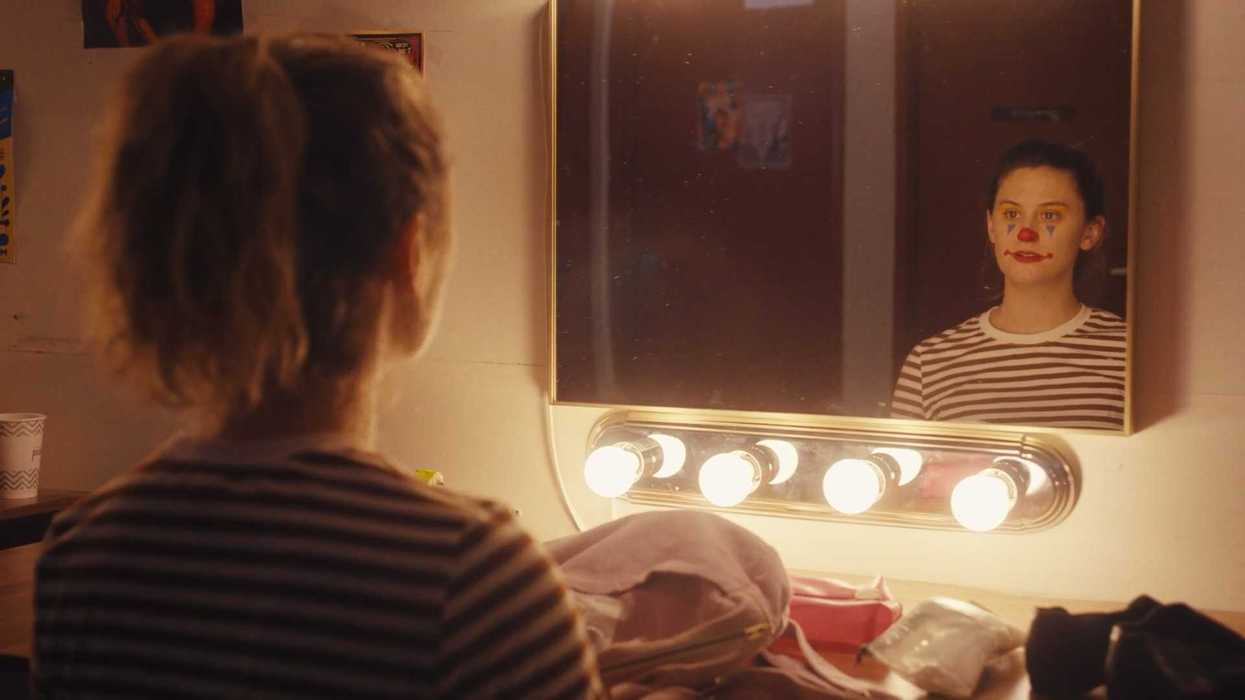
But it's her short films, written by and starring Brown (Purple Bear, Really Well), where her voice as a filmmaker has come into focus. Her latest short, NUKE, is her most personal work yet. Written by and starring Alli, NUKE tells the story of a struggling comedian (Molly) who forces her way onto New York’s top comedy showcase, using the fallout of a nuclear missile alert to her advantage.
After making its way through the festival circuit, NUKE makes its online premiere with Short of the Week on September 14th. We caught up with Brown, alongside NUKE director Kelsea Bauman-Murphy, to unpack the film.
Let’s dive in.
NFS: When you first had the idea, what came first, the hook or Molly’s emotional need?
Alli Brown: The hook came first, I would say. I wrote NUKE as an ode to my relationship with auditioning for JFL, or the Just For Laughs festival. JFL is an annual comedy fest where a select few of up-and-coming comics are given entrée to the industry at large. Getting JFL is competitive; their rigorous, multi-month audition process starts with an invite-only showcase. I’d been (desperately) trying to secure an invite since I started doing comedy in 2015. As luck would have it, in January of 2020 my invite finally arrived. I opened my showcase and, if I say so myself, “totally crushed.” My characters were on point, the transitions were well executed, and my accents were accurate and socially acceptable! I was certain this JFL audition showcase was not only going to start my career but the rest of my life.
Then COVID happened. The industry stopped, the world shut down, people were dying, and for a minute, all I could think was “…but what about JFL?” It was this absolute-monster-of-a-thought that sparked what would eventually become Molly’s need: the need to be seen. NUKE’s hook (performer finally gets chance to perform but a massive thing interrupts that chance) stemmed from my shot at JFL colliding headfirst with COVID. I knew I wasn’t going to write a pandemic movie. So what was the second-best world-annihilating event? A nuclear bomb.
NFS: NUKE moves fast and relies heavily on dialogue and timing. As a comedian, how did you approach writing jokes that serve the story of the film rather than just landing as standalone punchlines?
AB: The kiss of death for comedic scripts is trying to write something funny. I know this because I’ve written many a script where I tried, and guess what? Not funny! Unlike writing stand-up where you’re laser-focused on the joke (set up, wording, punchline), screenwriting demands a more holistic approach. You can’t put relationships, stakes, or given circumstances as secondary. You have to think about all of it, all of the time, all at once. So, in order to write jokes that served NUKE’s story, I avoided writing jokes. Luckily, there were still a lot of funny moments despite a rather unfunny set of circumstances.
One such example of this is the dynamic between Molly and Hallie. Both women are ambitious, career-obsessed, and willing to do whatever it takes to make it, but in opposite ways. Molly’s delusional optimism feeds her single-track mind. Molly will beg, borrow, and/or steal her way onto Showcase, all with an innocent twinkle in her eye. Hallie, played by the incredible Madeline Weinstein, has a cut-throat attitude towards the industry, which stems from her hard work and undeniable talent. Hallie sees Molly as a threat to the integrity of Showcase: Hallie and the other comics were invited. They deserve to be there. Molly, a “comic nobody’s even heard of,” does not. This tension created some of the funnier moments of NUKE. And one of the more heartbreaking ones.
Also, this shouldn’t go unsaid: I am extremely fortunate to have an endless well of talented friends who read my work. They don’t let me get away with anything, especially if a joke doesn't serve the story.
NFS: The tone of NUKE stays grounded even as the premise escalates. What were the key creative decisions you and director Kelsea Bauman-Murphy made to keep the film from tipping too far into absurdity or cynicism?
AB: Casting. From the jump, Kelsea and I talked about needing to find comics who could, bluntly speaking, act the hell out of it. And I think I can speak for both of us when I say: we found comics who totally acted the hell out of it! Creative choices outside of writing and casting are Kelsea’s jurisdiction. I’ll have her weigh in on the rest.
KB: The circumstances of a nuclear missile alert are as absurd as it gets, so I wanted everything else to feel as grounded as possible. My major focus was on keeping the performances genuine; I felt like it would be a hat on a hat to have anyone do a quirky performance, since our main character is literally a clown. I wanted everyone to behave how they would really, truly behave in that insane situation. And the dialogue and relationships in Alli’s script had so much realism, which I felt confident about because I was a cocktail waitress at a comedy club in my early 20s, where I worked many JFL showcases, so I felt like I knew what the realistic version of this unbelievable scenario would look like. And I was trying to hold onto that realism with the performances.
I also tried to heighten the real tension of the nuclear missile threat with the visual language by keeping everything as real-time as possible. We focused on following the actors through the chaos of making moment-to-moment decisions, using a steadicam to trail the actors as they argued. We also had a great drum score that was really bare and added to the stress I was trying to use to balance out the absurdity of a clown staring down the barrel of a nuke.
NFS: Because you wrote, starred in, and executive produced NUKE, you were deeply embedded in the production, as well as the character of Molly at every stage. How did having multiple positions affect you once you got into rehearsals and production?
AB: Shortly before our first rehearsal, I talked with Kelsea and our producer Ellie Shanahan about how my role would change once we started shooting. We all agreed it would be best if I showed up as “just” an actor. This wasn’t an ego choice; it was an organizational one! It’s easy on set, especially indies, for people to be spread too thin. Writers are also directors who are also actors who are also crafty. Not to say multihyphenates can’t run great sets; they absolutely can! It’s more to say that the three of us knew the best way for NUKE to operate was for Kelsea to focus on directing, Ellie on producing, and Alli on Molly (the character). I credit this conversation, along with Ellie and Kelsea being immensely talented, with making my job easy. I never felt the weight of having multiple positions within the production, because once we started shooting, I was able to be “just” Molly.
NFS: The film feels sharply aware of the comedy scene, showcases, gatekeepers, and the quiet desperation underneath it all. How much of what we see in NUKE comes directly from your own experiences in that world?
AB: All of it comes from my ten years performing, auditioning, and hustling in New York. At times it’s a direct copy-paste, at times it’s exaggerated, and at times it’s toned down. There is so much more I wish I could have put into NUKE: barking for time; doing the check spot; only being nice to a comic so they’d book you; realizing that a comic was only nice to you so you’d book them; following the comic who bombed; bombing; awful tech; great tech; bad wigs; good wigs; bad people in good wigs doing great comedy; watching those bad people in good wigs doing great comedy get canceled. The list could go on and on, but I’ll save that for a feature. Maybe.
NFS: Now that NUKE has played festivals, what surprised you most about how audiences responded to the film, and what lessons are you taking into your next project?
AB: We had our European premiere in Italy at Nót Film Festival. (Highly recommend!) By that point, NUKE had played two US festivals, and we had a good idea of how much Americans enjoyed it. We were worried people might not laugh if the jokes weren't in their native language because we weren't totally confident that subtitles could be funny. And even if they could be, were Italians going to care about an American clown trying to hit it big in New York? Much to my and Kelsea’s delight, the Italian audience loved NUKE. It turns out, jokes work in subtitles, and clowns are universal (And so too is fear of nuclear warfare).