What is Poetic Justice? When Storytelling Lets Fate Write the Ending
Where justice works both ways and delivers a fitting end to the story.
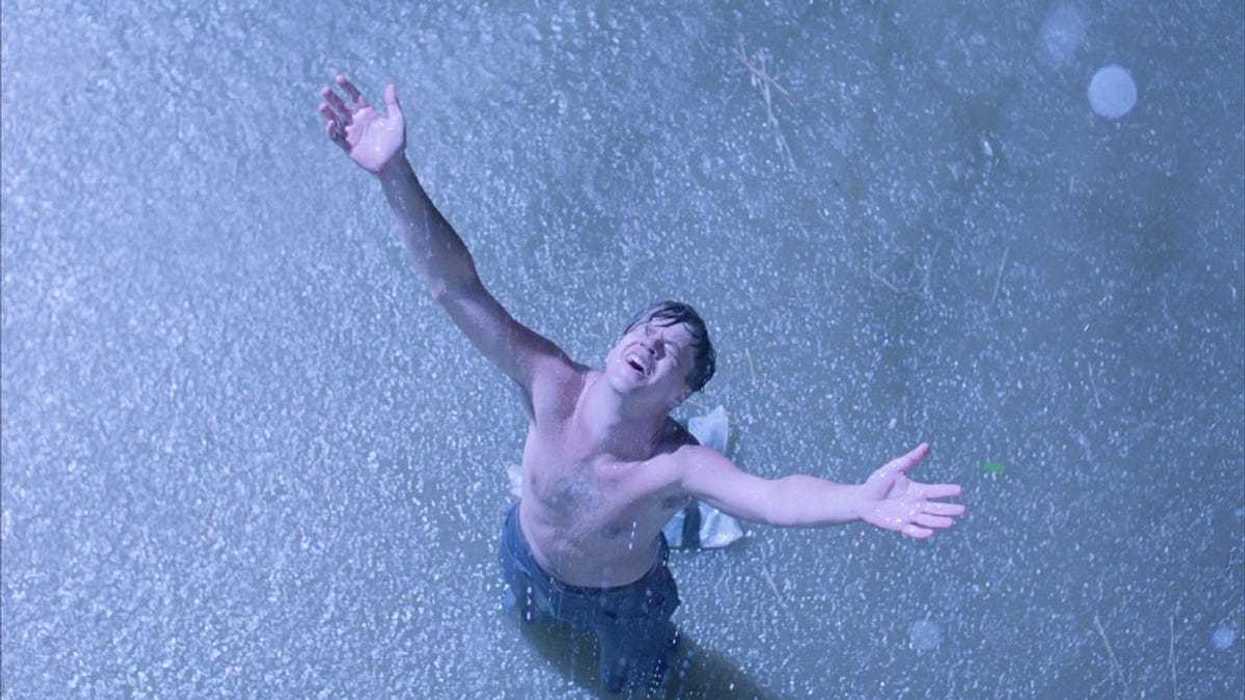
'The Shawshank Redemption' (1994)
Films that deal with the “good vs. evil” concept often reward virtue and punish the wicked.
There’s a special kind of satisfaction that comes with the fall of villains, which is not by chance but is a result of their actions.
But why do writers do it? What’s the payoff? It’s emotionally engaging and visually poetic.
In fact, as fans of justice, everybody’s got a taste for a satisfying payoff that implies the virtue of fairness.
The literary device that is used in such storytelling is called “poetic justice.”
Let’s define this term before we get into a couple of film examples for it.
Origin of Poetic Justice
Poetic justice, as a term, was first used by Thomas Rymer in 1678 in his work, “The Tragedies of the Last Age Consider’d.” He was an English drama critic by profession. He used the term specifically to describe how an artist’s work should inspire positive morality by defining the triumph of good over evil.
Definition of Poetic Justice
To put it simply, when good actions are rewarded and wrongdoings are punished, often through a twist of fate, we say poetic justice has taken place.
Now, to put it into perspective, let’s say… “A murderer is acquitted of all the charges, but the ghost of the victim haunts him throughout his life till he goes mad, and eventually dies.” This is an example of Poetic Justice being served.
Although poetic justice is prevalent in innumerable written works as well as filmmaking, it’s interesting to note that it is hard to spot in real life. As reality does not directly engage with the concepts of morality and fairness, we crave it in art. That’s why the inclusion of the poetic justice device in a narrative is intentional. Because, firstly, it engages the audience emotionally, and secondly, it gives hope to people to become better.
Prime Film Examples That Perfectly Use Poetic Justice
I suppose it’s fair to say that cinema loves justice — it offers clarity in this insane and brutal world. Here are some iconic examples of films where poetic justice takes up the role of storytelling.
1. Inglourious Basterds (2009)
In Quentin Tarantino’s Inglourious Basterds, after committing atrocities, Hans Landa (Christoph Waltz) manipulates both sides to crack a sweetheart deal that allows him to leave his Nazi identity and walk free of any military punishment. However, his impression of loyalty towards his deal turns into a nightmare for him, as Lt. Aldo Raine (Brad Pitt) brutally carves a swastika into his forehead. Hans Landa’s end falls in line with his actions — hence, the poetic justice, and a satisfying one indeed.
2. The Shawshank Redemption (1994)
In The Shawshank Redemption, Andy Dufresne (Tim Robbins) spends decades in prison for a crime he was falsely accused of. So, when he finally breaks out from the cold-hearted Warden Norton’s (Bob Gunton) nest, it’s fulfilling to see Andy outsmarting the system that failed him — poetic justice at its best.
3. The Green Mile (1999)
In The Green Mile, poetic justice comes into play when John Coffey (Michael Clarke Duncan) uses his supernatural abilities to transfer Del’s (Michael Jeter) pain to Percy Wetmore (Doug Hutchison), causing the sadistic guard to lose his mind. Percy suffers the same mental torment he once inflicted on the prisoners and prison guards, which he utterly enjoyed. Furthermore, Wild Bill also gets what he deserves for the murders he committed, for which John Coffey had to pay the price. So, it’s double poetic justice in a way.
4. The Lion King (1994)
The Lion King is a classic tale of “good vs. evil” that we all grew up watching, where good eventually triumphs. After taking over Mufasa’s (James Earl Jones) place through deception and betrayal, Scar (Jeremy Irons) meets a fitting end to his actions at the hands of his own henchmen (the hyenas). The betrayer gets betrayed.
Simba (Matthew Broderick), on the other hand, gets his family and kingdom back, and the balance is restored through poetic justice.
5. Avengers: Endgame (2019)
Thanos (Josh Brolin) and his army are defeated by the power of the Infinity Stones, which he used to wipe out half of humanity in Avengers: Infinity War. In an emotional, yet ironic ending of Avengers: Endgame, Iron Man (Robert Downey Jr.) even uses the same words that were once used by Thanos before the snap, “I am inevitable.”
Although Tony Stark had to sacrifice his life, the chaos that Thanos caused was successfully reversed.
Final Thoughts
The reason why poetic justice works so well in storytelling is that this literary device introduces emotional catharsis in the story and sometimes uses irony to enforce different shades of morality among characters. Not to mention that the karmic nature of rewards and punishments was and will always be captivating to humans.
So, next time, try imbibing the poetic justice device into your screenplay if you haven’t yet.