Movie Lines Presidents and Politicians Have Borrowed
From Ronald Reagan to Hillary Clinton, five instances of movie dialogue crossing over.
'Sudden Impact'
You probably love to quote films as much as I do. It's fun to reference what our favorite characters say, almost like a code among savvy cinema fans.
The lines that last often do so because of their impact or rhetorical value. Sometimes the best way to say something is in another character's voice, with the skill and word choice of an orator, so we can crib those lines to express ourselves in the same way. Sometimes a line can enter daily life so thoroughly that it just becomes standard.
I can forget sometimes that politicians are sometimes just as nerdy as the rest of us. When they hear a really good line of dialogue, it can end up in the mouth of a sitting president, a governor, or another candidate, sometimes as a deliberate borrow, sometimes as a hot-mic accident. These lines can end up shaping policy fights, campaign messaging, and other speeches.
Here are five examples and the lines that became political tools.
- YouTube www.youtube.com
Reagan and Dirty Harry
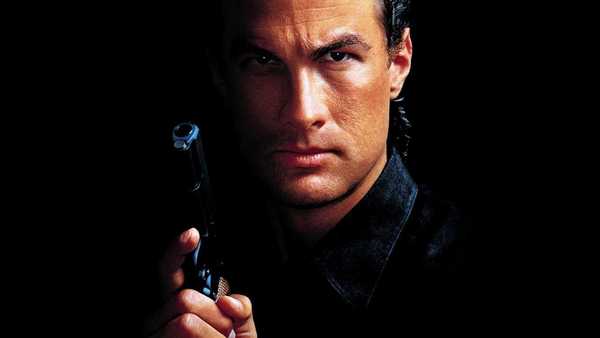
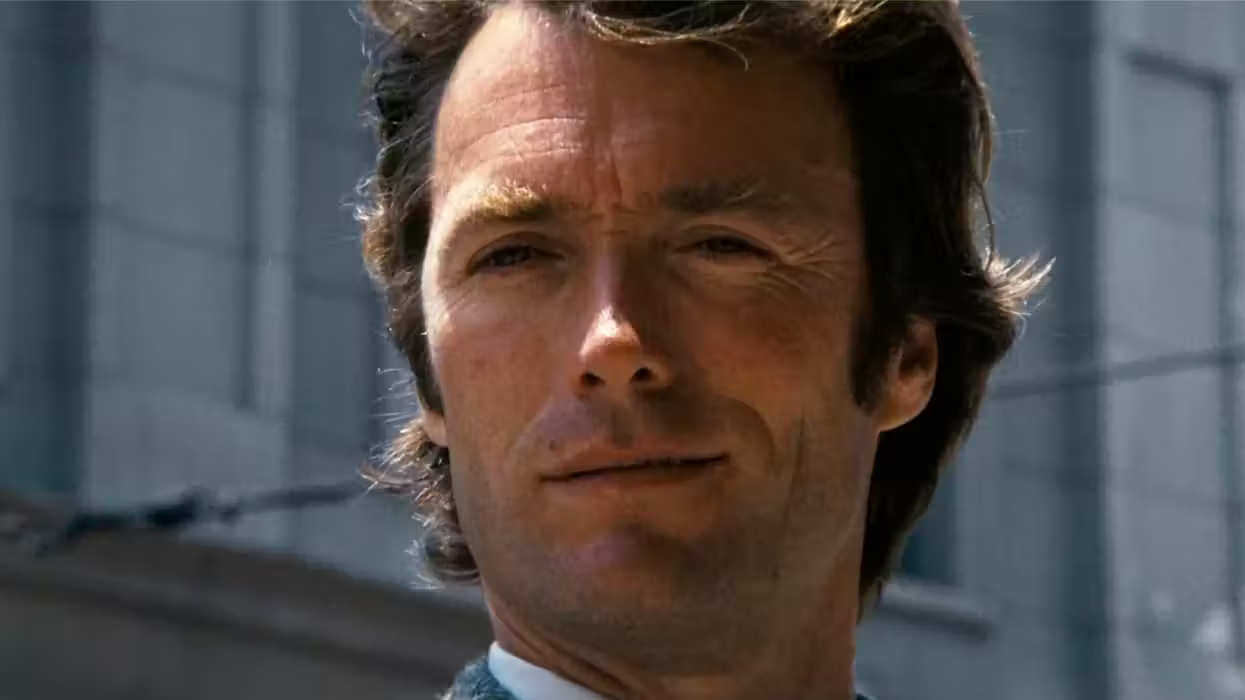
On March 13, 1985, President Ronald Reagan was at a White House briefing for the American Business Conference. The Senate Budget Committee had been talking about tax increases. Reagan borrows Harry Callahan's line from Sudden Impact (written by Joseph Stinson, with the "make my day" phrase widely attributed to John Milius). He turned it into a veto threat.
"No matter how well-intentioned they might be, no matter what their illusions might be, I have my veto pen drawn and ready for any tax increase that Congress might even think of sending up," he said, per UPI. "And I have only one thing to say to the tax increasers: 'Go ahead—make my day.'"
He liked the line. A lot. Three years later, Reagan referenced the moment when addressing the same group.
"In 1985 it was while addressing you that I warned the would-be tax hikers in Congress that I had my veto pen at the ready and dared them to make my day," he told them again, per the Ronald Reagan Presidential Library.
- YouTube www.youtube.com
Reagan and George Gipp
You might think, Reagan, again? And yes, it's him again. He was an actor before he was president, after all, and it makes sense that his language of choice came from the cinema.
In fact, Reagan is a politician who campaigned on a line he had personally delivered on screen. In Knute Rockne, All American, Reagan played Notre Dame halfback George Gipp and delivered the deathbed request that "Rock" tell the boys to "win just one for the Gipper." The phrase followed him into every campaign he ran, and the character's name became his nickname.
On August 15, 1988, Reagan joined the Republican National Convention in New Orleans, handing the party off to George H.W. Bush. He said in his speech (via the Reagan Library):
"So, George, I'm in your corner. I'm ready to volunteer a little advice now and then and offer a pointer or two on strategy, if asked. I'll help keep the facts straight or just stand back and cheer. But, George, just one personal request: Go out there and win one for the Gipper."
This one is wildly meta. Reagan was an actor-turned-president quoting his own character at his successor, and the line came from his death scene, no less.
Then George W. Bush repeated the line at the 2004 RNC when honoring the recently deceased Reagan. The sentiment was even used on their campaign buttons, too.
- YouTube www.youtube.com
Arnold Schwarzenegger and The Terminator
Arnold must have liked what Reagan was doing by quoting himself, because he decided to do it, too.
At the 1992 New Hampshire Republican primary, President George H.W. Bush is under attack from conservative Pat Buchanan. Bush campaigns hard and brings Schwarzenegger along as a surrogate on his final New Hampshire swing on February 15, 1992, as The Washington Post covered.
At this time, Terminator 2: Judgment Day has been out for seven months, and its most-quoted line is already widespread. Everybody's saying it.
The Terminator himself encouraged voters to "send a message to Pat Buchanan: Hasta la vista, baby" (via The Baltimore Sun).
In other words, "So long!" Imagine the T-800 actually stumping for a candidate.
- YouTube youtube.com
Hillary Clinton and Star Wars
And why not, we say. Hillary Clinton was at a Democratic primary debate at Saint Anselm College on December 19, 2015. The Force Awakens had opened the day before. Clinton, in her closing remarks, ended with a wink toward a galaxy far, far away.
"Thank you, good night, and may the Force be with you," she said, per BuzzFeed News.
It drove the internet bonkers, which probably was the point. It was more tongue-in-cheek than our other examples. The line, from George Lucas' iconic sci-fi series, is spoken repeatedly across the saga by several characters, always the good guys. Here, it's another rare movie line that already functions as a unique goodbye, which is why it works as a debate closer.
This was just a pop culture reference for Clinton, not a line of dialogue weaponized for a political cause in the way our other examples have been.
- YouTube www.youtube.com
Reagan and Frank Capra
We know, we know. Reagan seems to be talking in movie dialogue all the time, doesn't he?
He is campaigning in New Hampshire in February 1980. Reagan and George H.W. Bush are three days from the New Hampshire primary, arriving at the Nashua High School gymnasium, where the Nashua Telegraph has organized a two-man debate. Reagan's campaign wants to open it to the other four Republican candidates, so his team agrees to pay for the debate and, at the last minute, invite the others.
When Reagan shows up with everyone in tow, moderator Jon Breen orders his mic cut. Reagan blows up.
"I am paying for this microphone, Mr. Green!" he said, misspeaking (via RealClearPolitics). The crowd cheers in support.
The moment is widely credited with saving his candidacy. What most people don't know is that it wasn't exactly his line.
It came from Frank Capra's State of the Union, in which Spencer Tracy's Grant Matthews shouts, "Don't you shut me off. I'm paying for this broadcast" (via NBC News).
Reagan's biographer noted later, "Many of the one-liners in Reagan's mental card file were scraps of film dialogue that popped out at unexpected but often appropriate occasions" (via The Baltimore Sun).