How 'Young King' Survived Indie Chaos, COVID, and Budget Hurdles to Reach Amazon
It's not about how fast the movie gets made, just that it gets made.
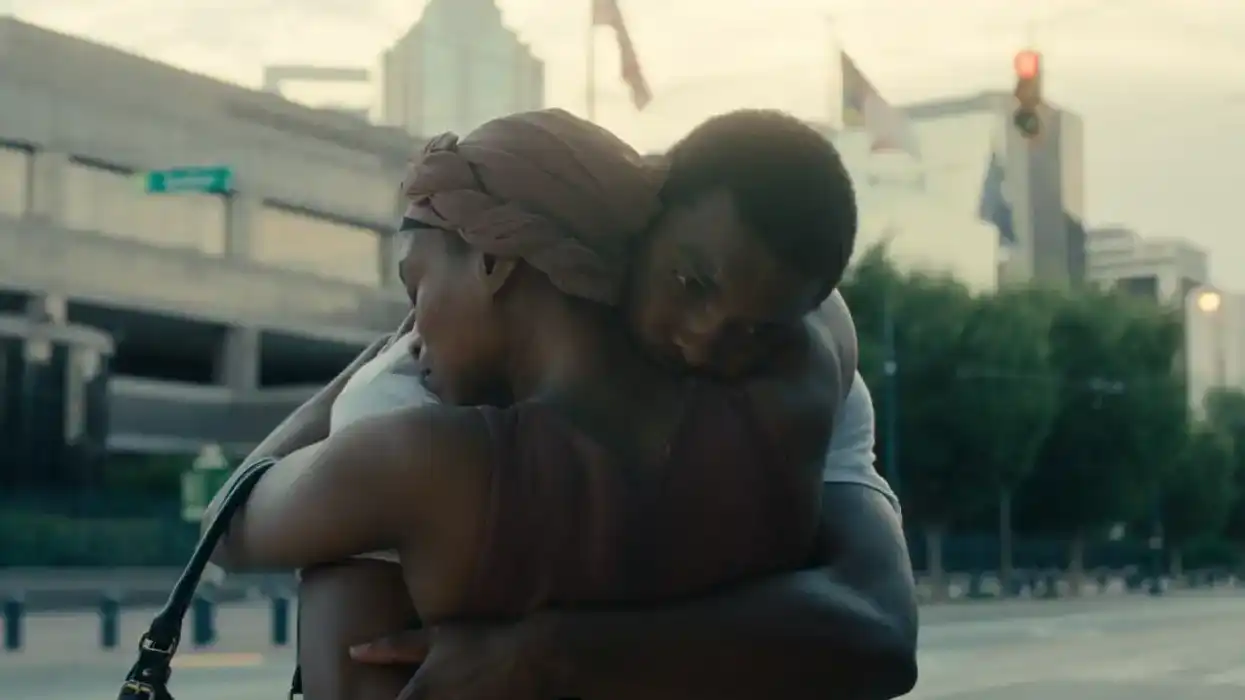
'Young King'
The journey from a script in development to a feature film available on major streaming platforms is rarely a straight line. For independent producers, that line is often a zigzag of funding, logistical nightmares, and even global pandemics.
In her new feature film Young King, now available on Amazon and Fandango at Home, producer Selena Leoni navigated all of the above to tell the poignant story of a war veteran struggling with undiagnosed PTSD and the systemic barriers to healthcare upon returning home. Leoni joined the project in 2019, steering it through a shifting landscape of COVID-19 safety protocols, budget constraints, and the complex dynamics of location shooting in North Carolina.
In this interview, Leoni opens up about the reality of producing a project for the long haul.
Let's dive in.
- YouTubewww.youtube.com
NFS: Hi Selena! Can you tell us more about your feature film Young King, and what it was like to produce a project from development all the way through distribution?
Selena Leoni: Young King, now available on Amazon and Fandango at Home, is a feature film about a war veteran with undiagnosed PTSD who struggles to readjust to civilian life after returning home from Iraq. The film explores topics such as PTSD and mental health in veterans, the systemic barriers they face in accessing healthcare, and the challenges their families and friends experience in order to support them.
I joined the project in 2019, when the project was still in development, and I had the opportunity from the very beginning to support the script and help evolve it into the story it is today. Since the film is inspired by true events, it was important for us to remain authentic while maintaining an unbiased perspective. Given budget constraints and the focus we wanted for the story, we decided to center the film on Diondre’s life after returning home, rather than depicting what happened in Iraq. Ultimately, the film is about the way veterans are treated and the challenges they face after returning home.
Seeing this project through from development to distribution has been incredibly rewarding. As independent filmmakers, the process took longer than expected due to funding challenges, COVID, and the natural hurdles of life. But throughout the process, we met so many supporters who not only championed the story but actively helped us bring the film to audiences. Now that Young King is released, we hope that the film will open the door for conversations about veterans' mental health and inspire positive changes that will encourage understanding and support, while also contributing to awareness and action toward real systemic change.
NFS: How did producing a film amidst the COVID-19 pandemic differ from your previous experiences as a producer, and what did it teach you about yourself?
SL: Producing during COVID-19 was definitely a unique and challenging experience. When the pandemic first hit, everything was brand new for all of us, and the safety policies and protocols were literally being created as we went. No one really knew what was going on, and the entire industry was put on pause for a while.
Fortunately, right before Young King I had already produced another feature, Smile or Hug, in late 2020 as part of Wayfarer Studios’ Six Feet Apart Experiment’s Filmmaking Competition. That film was specifically designed to be made under strict COVID restrictions, so I learned a tremendous amount about navigating safety guidelines, remote workflows, and constant protocol changes. Then, in 2021, I was in the Film Independent Project Involve fellowship, and produced two short films that also required rigorous COVID compliance. So by the time I was in production with Young King in the summer of 2021, I was already very familiar with the complexities of COVID-era production.
However, producing Young King came with its own new challenges. We were in pre-production in mid-2021, when many rules created in 2020 were shifting again, and we had to adapt to updated regulations. On top of that, we shot in North Carolina, where the guidelines were different from Los Angeles. Since half of our producing team was from LA and the rest were local, we had to stay flexible and create policies that balanced with SAG rules, crew safety, and local culture.
What it ultimately taught me is how adaptable I am as a producer. I learned how to stay calm in the face of uncertainty, how to build safety structures from scratch, and how to lead a team through constantly changing circumstances. Producing during COVID really reinforced my ability to solve problems creatively and prioritize the well-being of my cast and crew while still delivering the film at a high standard.
NFS: Can you tell us more about your relationship with Young King director Bryant Terrell Griffin?
SL: As a producer, I always say that having a strong relationship with your director is important, especially in independent feature filmmaking, where you’re collaborating over several years and navigating so many unknowns together. With Bryant, that foundation was there from the very beginning.
We first met at UCLA in 2018 while I was in the MFA Producers Program and he was in the directing track. We connected creatively right away, and by 2019 we were already talking about Young King while he was still developing the script. We initially planned to go into production earlier, but like many independent films, the timeline shifted (especially once COVID happened), so the project ultimately came together in 2021. Experiences like this one really reinforce why trust and compatibility matter so much, as making a feature is really a long-term partnership.
I often joke that a good filmmaking team is a bit like a marriage because you’re in it for the long haul, you spend an incredible amount of time together, and you need to genuinely like and respect each other. For me and Bryant specifically, communication has always been the key. From the earliest stages, we held weekly or biweekly check-ins, depending on where we were in the process, where we would go through all the details, track our individual tasks, and make sure we were aligned creatively and logistically.
That collaborative approach extended to our department heads as well, such as our DP, Vittoria Campaner, and the rest of the core team. By the time we entered festivals, it felt like we’d built a family that had truly grown through the process together.
Overall, our strong communication and mutual trust were what carried Young King from development through production and into its distribution. And we’re both hoping to continue that partnership, bringing new projects to life together in the coming years. Fingers crossed!
NFS: How does producing a feature-length project differ from producing short films?
SL: I think, in general, producing at its core is the same across all formats: you’re making things happen and building something from scratch. Especially for me, because I usually love working on projects I can lead from development through distribution. So the core part of the producing process doesn’t really change whether it’s a short film or a feature.
The biggest difference between producing a short and producing a feature is really the scale and length of the shoot. In a way, producing a feature can feel like producing four or five short films back-to-back. Even though the timeline is much longer, the planning, the strategy, and the workflow are actually very similar. You’re still coordinating all the same departments, solving problems, and keeping everything moving forward; the only difference is that everything is happening on a larger scale.
Of course, the scale also shifts depending on whether you’re making an indie feature or a larger studio project, but that’s part of the variability of producing in general.
Having produced three features as the lead producer, worked on two as a production executive, and many short films over the years…I’d say producing a feature really is like a scaled-up version of producing a short. More days, more people, more logistics, but the core responsibilities and mindset stay the same.
NFS: How does your childhood across China and Italy continue to shape your perspective as a creative today?
SL: In general, my upbringing as a third-culture kid, moving between China and Italy, really shaped both my perspective and my creativity as a producer. It made me who I am today. I’m naturally very curious, and I’m drawn to stories that explore something I don’t fully understand or that introduce me to a world I’ve never seen before.
When I was growing up and constantly moving, I often learned about different cultures through TV, film, and media. That was my window into understanding the world around me, especially when everything felt new. So now, it’s really important to me to create projects that can do the same for others, to open doors, spark curiosity, and help people connect with experiences outside their own.
If you look at my portfolio, you’ll see that reflected in the variety of projects I’ve worked on. They’re all very different from each other, but what ties them together is that sense of discovery. When I encounter a story I’ve never heard before, I get excited. I want to know more, and I want to help tell it.
Ultimately, I think film and television are incredibly powerful tools for helping people understand other cultures and perspectives. Especially in the world we’re living in now, where everything is so connected and global. My hope is that through my films, someone out there learns something new about a culture, a community, or a life they might never have encountered otherwise.
NFS: As a producer, what kind of advice would you give to aspiring filmmakers who are struggling to get their projects made?
SL: One of the most important things I’ve learned as a producer since moving to Los Angeles is how crucial it is to build your community. When you do that, you start to find your people and your long-term collaborators, aka the people you grow with project after project. As an independent filmmaker, getting your film made can be really challenging, and it often takes much longer than it would in a studio setting. But having a community changes everything.
When you have a strong network, you can learn from each other's experiences, share resources, and problem-solve together. Sometimes you’ll hear about a pathway, a workaround, or a creative solution that you never would have thought of on your own.
I also believe there’s no single way to make a film. Every project is different, every journey is different, and as filmmakers, we have to stay flexible. Being open to trying new approaches, adapting to circumstances, and rethinking your strategy is critical, especially in the independent world.
So my biggest advice would be: build your community, and stay flexible. Surround yourself with people who inspire you, collaborate with you, and support you, and be willing to explore different paths to get your project made. There’s never just one way to do it.
NFS: Are there any other genres or mediums in which you are excited to work?
SL: In the past seven years, since I moved to Los Angeles, I’ve worked primarily in narrative, both feature films and short films, and branded content. But over the past three years, I’ve also started producing documentaries, which has been an incredibly rewarding experience. I’ve always loved documentaries, and actually being able to produce them has deepened my appreciation even more. One of the things I love about documentary filmmaking is that you’re constantly learning about new people, cultures, and experiences.
Right now, in addition to a slate of feature films and short films in development under my company Little Paws Pictures, I’m also in production on two feature documentaries: GERM, which amplifies the overlooked stories of Southeast Asian families impacted by gang culture through the story of a Filipino American family, as their youngest son, social worker J.R. Angeles, embarks on a journey of healing and grief alongside his father and late brother’s teenage son; and I AM NOBODY, which follows Chinese immigrant Xin Ying as she enters her final season as principal dancer at the Martha Graham Dance Company, confronting questions of identity, reinvention, and the next chapter of her life and career.
Besides documentaries, I’m also very interested in television, particularly limited series. I’ve been developing projects with a few writer-director friends, and while I haven’t produced a TV series yet, it’s something I’m excited to explore in the coming years.
I also come from a multimedia background and worked on virtual reality projects about ten years ago before transitioning to film, when VR was just starting. Therefore, I’m very interested in seeing how virtual reality or augmented reality can intersect with storytelling in film. It’s still a very new and experimental space, but I think it has exciting potential to expand how we experience stories on screen.