In 1996, Warner Bros. faced a challenge familiar to many studios today. How could they break into a market dominated by a major competitor?
Disney controlled feature animation, but Warner Bros. found a different path forward with Space Jam, a hybrid live-action/animated film that became a template for modern franchise filmmaking.
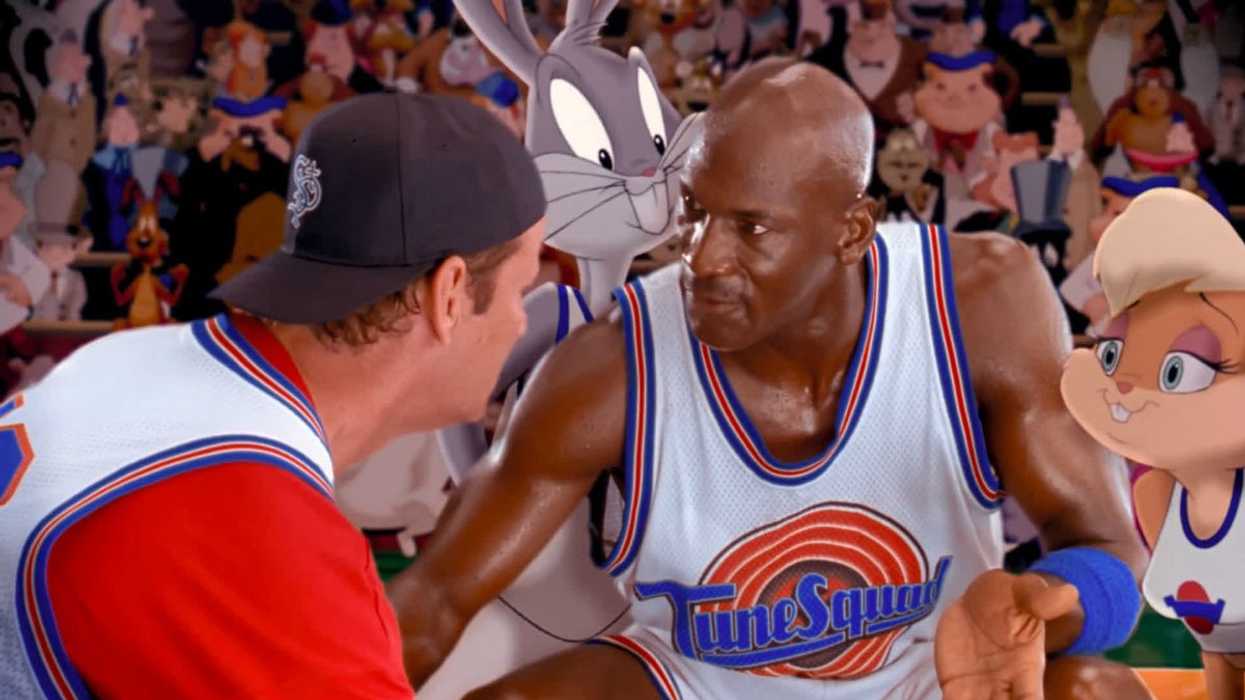
Space Jam burst into theaters that year as a virtually guaranteed box office success. Warner Bros. had the perfect formula: Michael Jordan at his peak popularity paired with beloved Looney Tunes characters.
Let’s dive into the film’s impact.
Space Jam’s Storyline
Space Jam combines sports, science fiction, and comedy. The story follows two storylines (Jordan's basketball career and the Looney Tunes' conflict with alien invaders), connected by themes of teamwork and identity.
The story begins with young Michael Jordan sharing his dream of joining the NBA with his father. Fast-forward through a quick highlight reel of his basketball career, and we arrive at a press conference, where Jordan announces his retirement from the sport.
Meanwhile, in space, the failing amusement park Moron Mountain is in need of new attractions. Owner Swackhammer sends the Nerdlucks to Earth to kidnap the Looney Tunes characters.
To save themselves, the Looney Tunes challenge the tiny aliens to a game of basketball, assured of a win. To their dismay, these aliens immediately resort to cheating, going around various basketball games and stealing the talents of NBA players, transforming into the powerful “Monstars.”
With no way out, the Looney Tunes turn to the world’s greatest basketball player, Michael Jordan, asking him to join them both as their star player and their coach.
Reluctant at first, Jordan teams up with the Looney Tunes, and in the end, the Tune Squad emerges victorious in the game.
The Impact on Jordan’s Career
In October 1993, Jordan announced his retirement from basketball, which came at the peak of his career following a family tragedy. He turned to a brief career in baseball.
Two years later, although he returned to the NBA late in the 1994-1995 season, he knew he wasn’t in his best form, especially since the Magic beat the Chicago Bulls in the second round of the 1995 playoffs.
When Jordan was signed for Space Jam, one of the non-negotiable conditions he put before Warner Bros. was that he must be given his place to train for the upcoming season.
The head of Warner Bros., Bob Daly, honored his condition with a state-of-the-art training center called the Jordan Dome, which was fully equipped with a workout center, a regulation-sized basketball court, and locker rooms with showers.
Every day, Jordan would train alongside the shoot. Many celebrated players (including his costars from Space Jam and the UCLA Bruins) were invited to the Jordan Dome to play with him as he trained for the upcoming season.
The intensive training during the filming of Space Jam helped Jordan regain his competitive edge.
After the film was released, Jordan returned to the court. His scoring average increased from 26.9 points per game in the 1994-95 season to 30.4 in the 1995-96 season, while his field goal percentage rose to 49.5% (via Basketball Reference).
The Chicago Bulls, as a team, went on a historic run in the regular season, winning a then-record 72 games.
The Cultural Impact of Space Jam
Space Jam was born from a Nike commercial pairing Jordan and Bugs Bunny, specifically the "Hare Jordan" commercial that aired in 1993.
The film combined two major entertainment properties—cartoons and basketball. For those who weren’t deeply into sports, it was their first exposure to Jordan’s charisma, and for the fans, the film brought them closer to their hero, as they saw him off the court in a new context.
Space Jam captured key elements of 1990s popular culture: celebrity athletes, nostalgic cartoons, and hip-hop music.
The Looney Tunes received a fresh, modern take on their identity while still staying true to their classic slapstick humor, building a new generation of fans.
Space Jam has also significantly contributed to the marketing of fashion and sports merchandise. In the movie, both MJ and the Looney Tunes proudly show off classic Nike sneakers, which came to be known as Space Jam Air Jordans and are reissued to this day.
The Tune Squad jerseys, worn by Michael Jordan and the animated Looney Tunes characters, became one of the most memorable elements of the film.
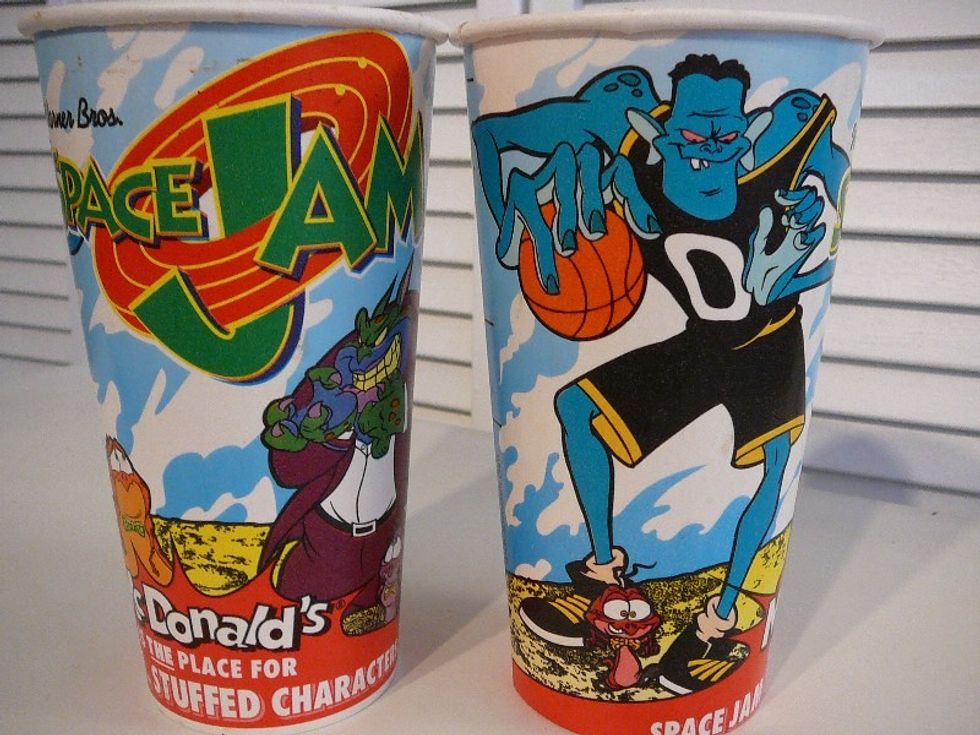 Space Jam Merchandise (1996) Source: Flickr
MJ’s on-court look, featuring baggy shorts, Air Jordan sneakers, and sweatbands, embodied the height of ’90s basketball fashion. Each Looney Tunes character retained their signature animated look, but their basketball uniforms were tailored to fit their personalities and proportions.
The film’s music and soundtrack perfectly encapsulated the ‘90s vibe, featuring a mix of hip-hop and R&B hits. R. Kelly’s “I Believe I Can Fly” became an anthem, while tracks like Quad City DJ’s “Space Jam” and Seal’s “Fly Like an Eagle” kept the energy high.
The soundtrack demonstrated how films could drive music sales and cross-media marketing.
Commercial Success
Space Jam raked in $27,528,529 in its opening weekend. Against a production budget of $80 million, the movie grossed $250 million globally (via The Numbers).
Space Jam succeeds as a light-hearted, family-friendly film, combining commercial marketing with entertainment value through its mix of animation, sports, and celebrity appeal.
For filmmakers, Space Jam offers insights into story development. The film succeeded by identifying underutilized elements (beloved characters with limited recent exposure) and pairing them with a contemporary star.
Space Jam’s story is not deeply complex, but it is tightly constructed with both the Looney Tunes and NBA arcs serving to reinforce the central message. It’s all about rediscovering joy and purpose through teamwork, resilience, and each person’s unique talents.