Why You Should Put Your Indie TV Show on Instagram
Fidel Ruiz-Healy, Tyler Walker, and Mary Neely discuss their self-distribution plans.
'Stars Diner'
It was at Sundance this year, at a wild party with a pile of snow boots by the front door, that I ran into the Stars Diner crew.
Almost a year earlier, Fidel Ruiz-Healy, Tyler Walker, and Mary Neely had created a fun, offbeat sitcom that premiered at SXSW 2025 in the Independent TV Pilot Program, and we had touched base pre-SXSW and were now meeting totally by accident months later.
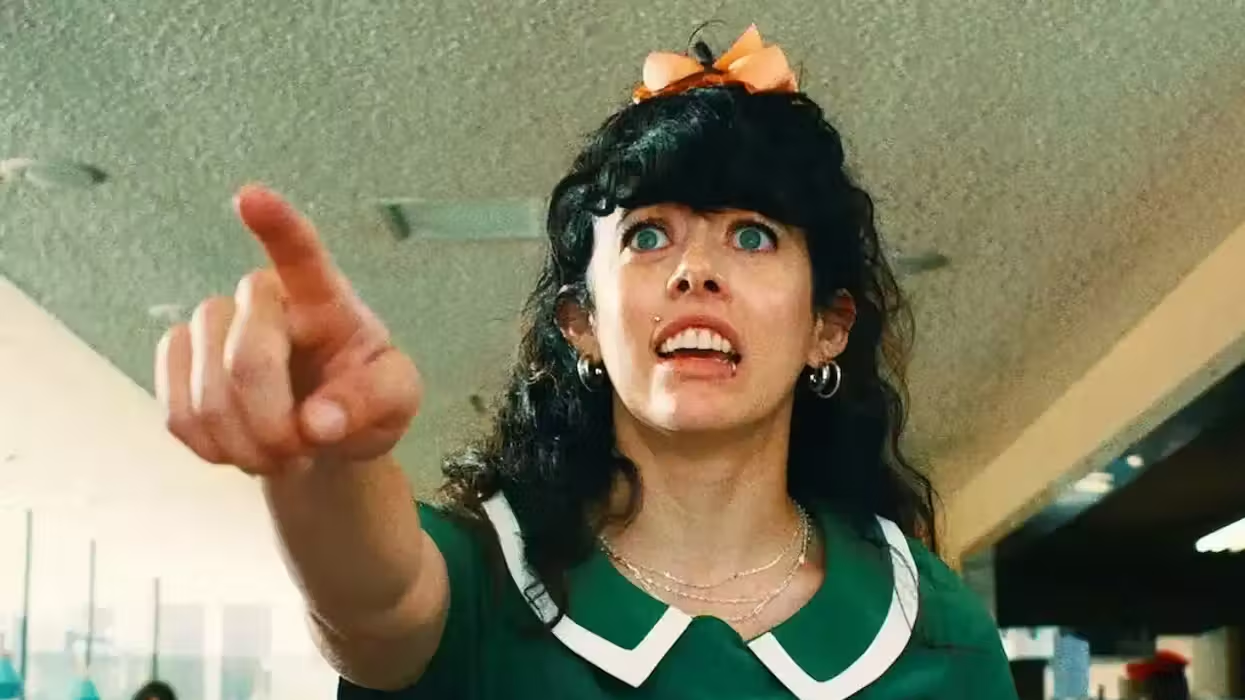
Their pilot is set in a barely functioning diner where Wendy (Neely) deals with grumpy customers, the threat of foreclosure, and a nearby volcano about to blow. Packed full of charm, the pilot is an homage to the TV shows many of us grew up with.
At Sundance, DP Ruiz-Healy and I chatted about lenses, short films, and contacts in common. Neely was gearing up for what would be a highly decorated run in the Broadway revival of Death of a Salesman.
Now, after a successful festival run with Stars Diner, they've decided to go the self-distribution route, so we got together again to talk about the project and what they hope for it moving forward.
No Film School: You've had a long journey with Stars Diner, from conception in 2024, through SXSW in 2025, and now to the online release. What do you love most about this project?
Tyler Walker: After every screening, every shoot day, and writing session, we would sit down at our local diner to have a cup of burnt coffee and toast to the power of friendship.
Fidel Ruiz-Healy: Honestly, the Stars Diner group chat. This show was born out of us just texting each other jokes about a hellish night we had in a diner in Austin and all the ridiculous things that might be causing a diner with less than 10 customers to take over three hours to bring us our water and food. Since then, we’ve come up with twenty more episodes that all started as an inside joke in that chat.
Mary Neely: Every time I re-watch the pilot, I laugh. When we were writing the first episode, we always tried to choose whatever creative decision made us laugh the hardest, and how fun is that? The series is very much teed up for endlessly silly antics.
NFS: I believe you've said you shot 14 pages in one day, which is extremely ambitious. How did you pull that off?
Fidel: Going in, we talked a lot about sitcoms and soap operas, and how those formats shoot so many pages in so little time, so we tried to mimic that production approach by having two cameras and keeping coverage simple. Tyler and I originally devised a whole shot list more in the style of our previous films, but after glancing at it for a few minutes and realizing it would be impossible to get all those shots in our limited window, we pivoted to keeping it simple.
We ended up devising a plan that used the 6K source format for cartoonish reframes, zooms, and as a backup for close-up coverage if we felt we were running out of time. Overall, it taught us a lot about keeping our day economical and trusting our gut for what we could heighten with some lo-fi post effects.
Mary: We can’t leave out the musical number or the opening song! I was in LA filming a movie in the summer, which is when we shot the interiors (14 pages in one day), but I live in New York. Fidel came east for a different job a month after our LA shoot, and we got our friend Jon to drive us up to Nyack State Park just outside Manhattan so we could steal the entire musical number that we wrote after the main day of shooting. I was getting dressed as Maria from The Sound of Music in the bushes as Fidel was setting up his tripod, hoping a park ranger wouldn’t find us.
Then five months later, after the majority of the edit was done, I went back to LA to help Tyler and Fidel finish all the practical effects, which we shot in Fidel’s living room. That was days of me going back and forth between Fidel’s house and an imminently closing Party City and a model train store in Burbank (shout out to Train Shack on N. Hollywood Way!).
NFS: What else did you learn from making Stars Diner that you've taken forward in your work?
Tyler: So many things! Shooting miniatures was a big learning curve. We had to learn how to use Adobe’s magic Rotobrush.
Fidel: For me, it was learning how to loosen the reins, goof off, and just let the project be what it wants to be. Essentially, shoot from the hip and follow your gut. We made Stars for under five grand, shot principal photography in a day, and got our friends to help out and play all the parts, and it was honestly some of the most fun and rewarding times I've had on a set. It just feels different to work in such a low-stress, low-stakes environment, and it’s an approach I’ve tried to bring to larger projects. Just keep it fun. That and, as Tyler said, the magic of After Effects and Rotobrush.
Mary: How much it rocks to choose a team of people you actually like hanging out with. The festival tour for Stars Diner was some of the most fun I’ve ever had promoting work I’ve made. Being able to have a team you can properly celebrate with is extremely important.
NFS: What should filmmakers know about working with miniatures?
Tyler: It’s a lot of fun! And now I can’t watch old movies without noticing all the miniatures. Like anytime there’s a train or a boat in a movie made before Lord of the Rings, it’s almost always a little toy in a bathtub, and it’s made movies from the 1930s and 1940s so charming.
Fidel: It will take longer than the actual production! Tyler and I played with stuff like N64-style graphics and vintage stock footage, but nothing ever clicked that matched the tone. Neither of us had any experience with miniatures and didn't have the budget to hire someone, so we just went rogue and bought as much miniature kind of stuff I could get for under two hundred bucks from a local model train store. From there it was days, then weeks, then months of trial and error to figure out how best to light it, and what focal lengths to use. On more than a dozen occasions I’d bump a corner, and the whole thing would come crashing down after working on it for a few hours. It was kind of like building a giant house of cards that left dirt and dust and fake trees in every corner of my kitchen.
NFS: The pacing of the episode is so snappy. What was the edit process like?
Tyler: Thank you! Shooting medium wides and pulling out close-ups gave us a great opportunity to control the pace and pull out all the air. What was very funny was that the laugh tracks were added in post, so our actors were just silent for a really long time on set.
Mary: It was a lot of shaving and re-ordering and re-watching, just like any other edit. We did a really helpful friends screening where we got a lot of good notes. One of the things that we had to really pay attention to was the timing of the “audience” reactions, which was one of the hardest things to refine in the edit because sometimes it would distract or take too much away from a joke, so figuring out the balance of the reactions adding or punctuating took a lot of practice.
NFS: Indie TV is a very challenging space. What was your conversation about distribution like, and how did Instagram become the answer?
Mary: We got such a strong reaction during our festival run and screenings from audiences—we literally sold out merch hats without even having a full season of the show made—but when we went around, the few comedy-centered networks and platforms that didn’t get decimated in the last few years don’t make things like Stars Diner, so we’re still looking for its forever home.
Tyler: But thankfully, the internet exists! So in the same way that we didn’t wait for permission and shot our pilot, we just decided to self-distribute the pilot and get it out into the world. We read about Instagram's new push for longer narrative content, and we thought it was a perfect platform for a show about friendship to pass and share and clip on a social media site.
NFS: Are you re-cutting the pilot for the platform, or is it the same edit that played SXSW?
Mary: No cuts, original version all the way. [Editor's note: They did shoot an intro with Mary talking about the pilot in the style of Shelly Duvall’s Faerie Tale Theatre, so that's now bonus footage!]
NFS: What, if anything, changes when the screen is a phone?
Tyler: While most filmmakers make their films for the biggest screen, we planned Stars to be watched on the tiniest screens we can find. We edited the whole movie on an Apple Watch, and did the roto on a Tamagotchi, so in many ways having it play on cell phones is a big step up in scale. When it played on a large screen with high-fidelity speakers, we were frankly embarrassed by the low quality.
Mary: A lot of our promo reels have been resized to fit vertically, but we’re keeping the whole episode in its original aspect ratio. Obviously it’s not as powerful as seeing it in a theater or on a TV, but hey, we’re all looking at our damn phones way more than anything else, so if people watch it because of that, great.
NFS: What's the piece of advice you keep giving other filmmakers who ask how you did this?
Mary: Consciously prioritize having fun, and you’ll have fun.
Tyler: Work with your friends! Keep the shoot day under ten hours and ask your funniest and most talented friends to show up and goof off!
Fidel: Keep it cheap! We made this with very little money and tried to keep it low stakes from conception through post. Helps keep the stress that potentially arises from intense external forces.
NFS: What's next for Stars Diner as a series?
Mary: We have a two-season bible with so many incredible episodes that we want to shoot the same way we made the pilot: with our friends, even more miniatures, and a lot of creative constraints. We just need the money!
Tyler: The concept of the show is like a monster-of-the-week type thing, but instead of different monsters, different movie and TV tropes sit down and order a coffee. We have so many ideas—Wendy gets small and has to fight off cockroaches and mice like in The Borrowers, the diner turns into the OK Corral, goths, Power Rangers. We’ve picked out our six favorites, and hopefully when our schedules clear up we can shoot them all out.
Fidel: We want to make as many more as we can.
You can watch Stars Diner on Instagram.