I was chatting yesterday with the Oscar-nominated filmmakers of Jane Austen’s Period Drama, a comedic short. Julia Aks and Steve Pinder are fresh off an Oscar campaign and ready to tackle what’s next, so talk turned to upcoming projects. They live in a world of whimsy and fun in their comedy, and I tend toward horror.
Aks mentioned that the two are really related, and it’s true, which is part of what we’re talking about today.
The other half of today’s topic is inspired by another recent conversation I had with a DP who’s doing pickups on a student film that has grown from a short to a feature. It’s a new filmmaker doing the most. It’s very dark and dramatic with death and drugs and car crashes, and they’re giving it their all, and learning as a first-time filmmaker at the same time.
That’s why this Lofi Cinema video resonated with me, I think. This essay proposes that hard, dark drama isn’t the best place to start as a new filmmaker, and comedy and horror can be more forgiving genres. Let’s get into it.
Stop Trying to Make Your Masterpiece First
As Lofi Cinema points out, it makes sense that as a new storyteller, you want to do what the greats are doing. You want to make your opus right away, and that usually means drama. That’s “serious” filmmaking, right? That’s what usually wins Oscars, and many of us wouldn’t mind a golden statue.
But it’s a hard mark to hit on the first try.
That’s not to say don’t try, of course. But maybe be easier on yourself and temper your expectations. You’re probably not going to be Tarkovsky right away. And that’s okay.
But one avenue to explore (as many other respected filmmakers have) is comedy and horror.
Both exist to subvert expectations. A joke is a setup that goes somewhere the audience didn’t see coming. A scare is the same thing, except instead of laughing, the audience jumps out of their seat.
As Zach Cregger explained to Bloody Disgusting after making Barbarian, moving from sketch comedy to horror felt natural because both are about those subversions.
“It’s all about being a step ahead of the audience, zigging when they expect you to zag, and timing. It’s just timing and tone. That’s the anatomy of a joke; that’s the anatomy of a scare.”
Both genres also demand physical responses. You either laugh or you gasp. There’s no coasting.
Timing Is Everything—and Both Genres Will Teach You Fast
Writing comedy and writing horror come down to the same fundamental instinct of timing, which is exactly what I said to Aks and Pinder. It’s all about a build-up and release, and you have to get that release just right in order to surprise. And as we've written about before, without those few seconds of tension to build anticipation, both the scare and the laugh fall flat.
Comedian-turned-director Andre Hyland said it too when he talked to us about making his horror short Old Haunt: “I found the mechanics for comedy and horror to be fairly similar: build tension then release.”
Laughter is the release in comedy. A jolt or scream is the release in horror. Sometimes you get both in horror comedy.
In drama, if a moment doesn’t land, you can suffer a bit more for it. The release is more subdued and often less tidy, especially with first-time filmmakers. There might be something off in the performance, maybe the beat is a bit overwrought and too dramatic, so it reads as funny when it’s not supposed to, or maybe the lack of resolution lets the moment go too long—there are a number of other production factors that can contribute and just lead to awkwardness.
If you can understand how to build up that tension and reach a moment of release, you can have the foundation to move more easily into drama.
 Barbarian Credit: Warner Bros.
A Note on Music and Genre
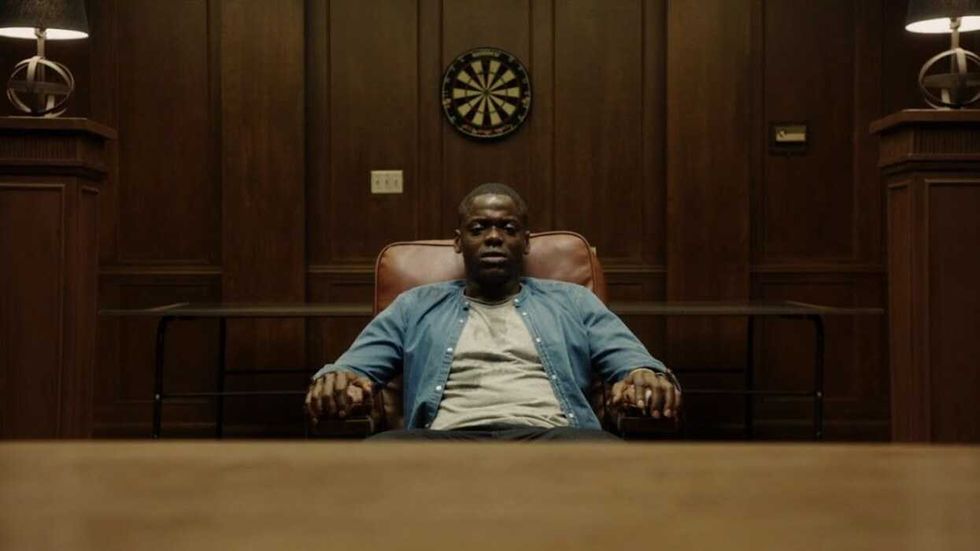
To show how horror and comedy are related, the Lofi Cinema essay has a great demonstration of how the soundtrack influences the image. They take a tense scene from Get Out (Walter running at Chris in the dark) and swap in upbeat music. Suddenly, it plays like a weird comedy.
Horror often plays with music to unsettle the audience. This is known as the soundtrack dissonance trope. Think “Hip to be Square” in American Psycho or “Singin’ in the Rain” in Clockwork Orange.
The essay calls out Reservoir Dogs and “Stuck in the Middle With You,” too. Although it’s not horror, the moment itself is scary and disturbing. We could also point to Anatomy of a Fall and its usage of that instrumental steelpan cover of 50 Cent's “P.I.M.P.” while something terrible is happening.
You can’t always do the same thing in drama. A needle-drop either has to be really earnest or just lean into its inherent corniness. I’m thinking specifically of “Ode to Joy” in Die Hard, which is a little silly and melodramatic but still works, especially since it’s an older film.
If you try to play dissonant music in a dramatic moment, you risk leaning into comedy.
Your Tiny Budget Is an Asset
Both genres were practically engineered for filmmakers without money. You can create horror on a no-budget production. Horror doesn't need polish. Horror fans aren't looking for the highest-quality filmmaking or the biggest Hollywood stars. They're looking for scares, and those are cheap to produce.
Comedy has the same flexibility. Clerks was shot overnight in the store where Kevin Smith actually worked. Films in this genre can work without stars, especially at the indie level.
 Get Out Source: Universal Pictures
The Career Pipeline Between Comedy and Horror Runs Both Ways
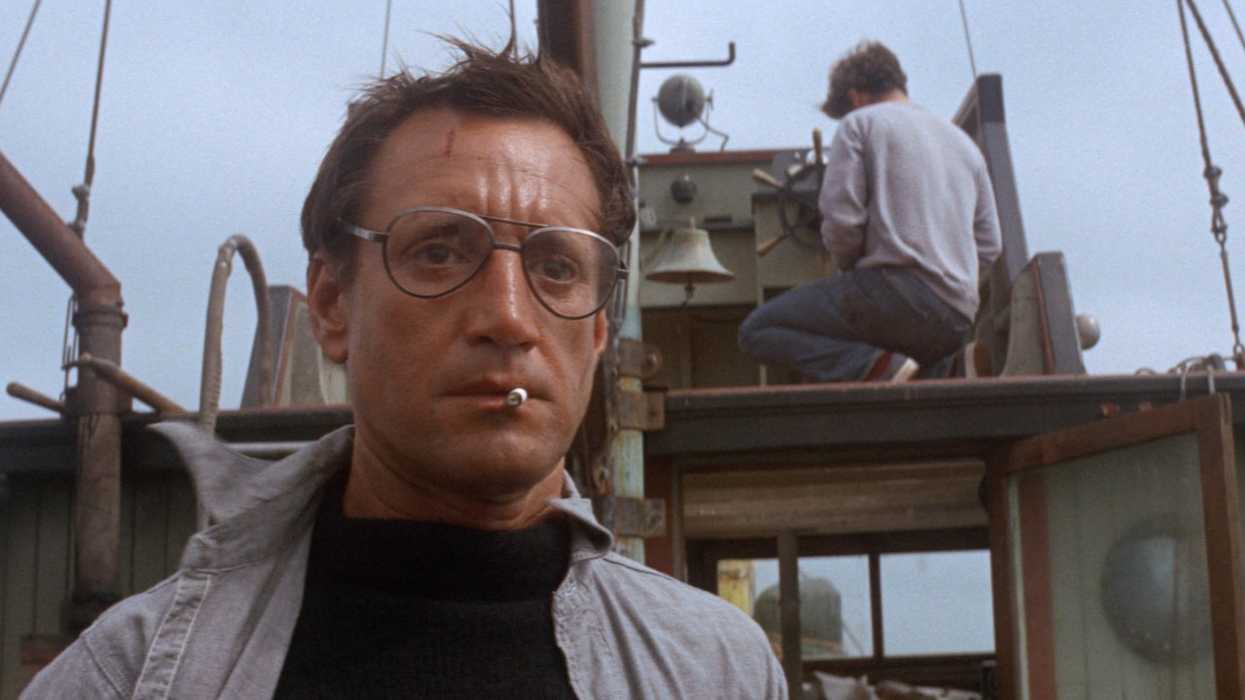
Steven Spielberg made Jaws before Schindler’s List. Peter Jackson started with Bad Taste before he became an Oscar-winner who shepherded the Lord of the Rings franchise. Sam Raimi spent his teens making slapstick comedies with Bruce Campbell and Rob Tapert, obsessed with The Three Stooges. He built his whole style through The Evil Dead.
Comedians keep crossing over. Jordan Peele went from sketch comedy to announcing himself as one of the most brilliant horror filmmakers of the modern era with Get Out. John Krasinski built tension in A Quiet Place after years playing Jim on The Office. Since Peele made that transition, comedians like Chris Rock and Danny McBride have also put their stamp on horror cinema.
Genre filmmaking often gets a bad rep as the lowbrow side of Hollywood, but it’s just not true. Horror and comedy are often extremely creative spaces, and if you want to work in them, great. If not, consider starting there and putting in the hours as a beginner before you transition elsewhere.