Analyzing ‘The King’s Speech’s' Most Iconic Line as Social Commentary
Three words that remind you to fight for your place in society.
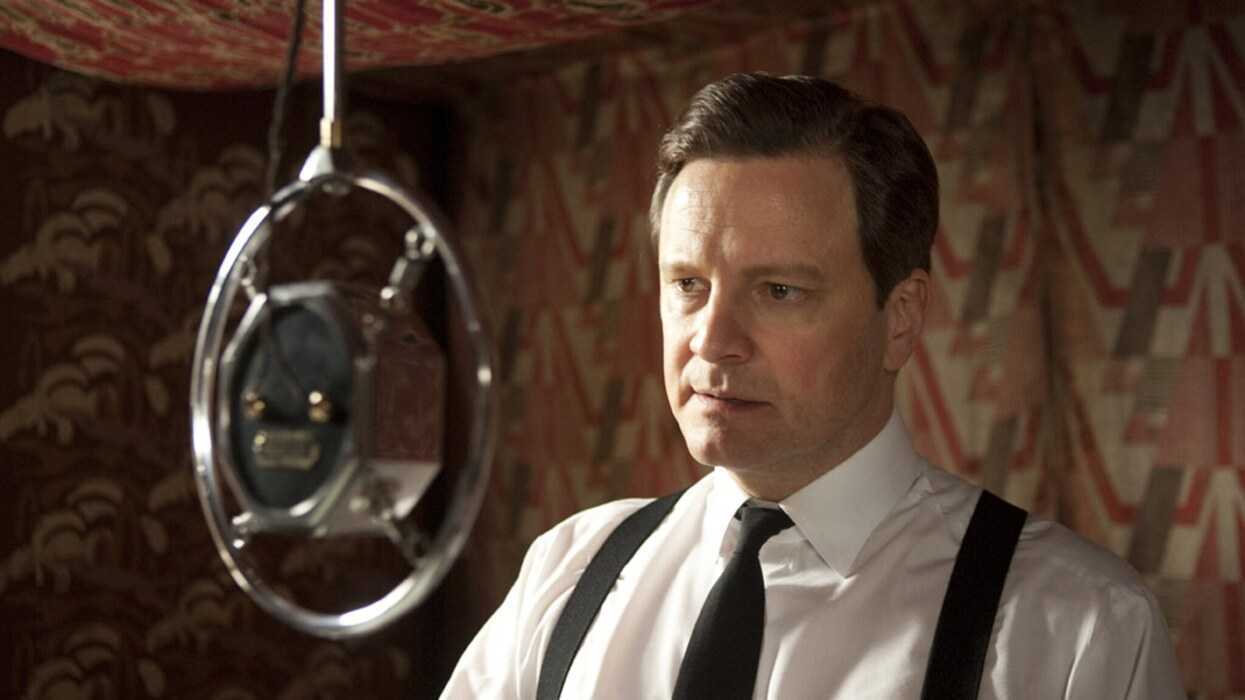
The King's Speech (2010)
Tom Hooper's 2010 film The King's Speech centers on King George VI's struggle to overcome a debilitating stammer and claim his voice as monarch.
The film builds to a pivotal moment when Bertie, pushed to his breaking point by speech therapist Lionel Logue's provocations, roars three defiant words. "I have a voice!"
This declaration resonates beyond one man's personal triumph.
In a society where physical and speech disabilities often disqualify individuals from leadership roles, the film presents a king (arguably the most visible public figure in the British Empire) fighting for the same recognition that countless people with disabilities seek daily.
In this article, we uncover how the movie’s line, “I have a voice,” is a cry of rebellion from suppressed voices.
The Story
Inspired by a true story, The King’s Speech revolves around King George VI’s journey to become the king of the British Empire after his father's death.
King George VI, formerly Prince Albert, Duke of York, also known as “Bertie” (Colin Firth), was the second son of King George V. The prince had a stammer, struggling to finish even a single sentence in one go. Because of this speech impediment, nobody considered him fit for public leadership.
The film begins with the closing ceremony of the 1925 British Empire Exhibition at Wembley, where Bertie is addressing the crowd; his wife, Elizabeth (Helena Bonham Carter), is by his side.
But the speech is broken by the young prince, who stammers endlessly, leaving a crowd of thousands unsettled and judgmental of their own royalty.
Deeply embarrassed, the prince seeks multiple speech treatments, but nothing works until the duchess gets him an appointment with Lionel Logue (Geoffrey Rush), an Australian speech therapist without medical credentials.
Though skeptical, Bertie agrees at the duchess's insistence. This therapist’s methods were vastly different from the ones Bertie had been to so far.
In their first session, Logue has Bertie recite Hamlet's “To be or not to be” soliloquy while playing classical music via headphones, and records the entire recitation. Irked, Bertie does as he is told, and at the end of the session, Logue gives Bertie the recording.
Even before the death of Bertie’s father, King George V (Michael Gambon), it’s apparent that Bertie’s older brother, David, the Prince of Wales, is going to make a very unsuitable leader. Their father urges Bertie to develop the skills necessary to speak to their people.
Bertie plays the recording from Logue’s first session, and what he hears leaves him shocked and shaken. Not a single stammer.
Bertie realizes that his lifelong speech impairment is related to his childhood traumas. He had a strict father, underwent forced right-hand training despite being naturally left-handed, and wore corrective splints for knock-knees.
Growing up, with no one to lend him an ear, Bertie never learned how to put his words together.
The king dies, and David is crowned King Edward VIII, but is soon forced to abdicate due to his romantic relationship with Wallis Simpson. Bertie will ascend the throne next as King George VI, but must first prepare his speech.
Themes
At its core, The King’s Speech explores how many of our adult issues are rooted in our childhood experiences.
But when you dig deeper, the film addresses a darker truth—how abled individuals have denied space to the disabled.
As a storyteller, Hooper also urges the disabled to claim their rightful space in society. Instead of adjusting, he urges them to accept themselves, to speak up, and to make their presence felt, especially if someone is trying to deny them their voice.
The Scene
It is an emotional scene in which Bertie is falling into self-doubt. He and Logue are alone in Westminster Abbey, where St. Edward's Chair is placed. Logue kneels before Bertie, explaining that when he started practicing as a speech therapist, there was no formal education—just a process of healing through personal experience.
But Bertie is not satisfied with the answer. In an accusatory tone, he accuses Logue of fraud, claiming that he tricked him into believing that any good could come out of the speech therapy, just because he didn’t want to lose a high-profile client.
Projecting the doubts of the people around him, Bertie begins to spiral.
Meanwhile, Logue has sat on the king’s chair. When Bertie turns around to look at Logue, he is furious to see him sitting on the throne. He commands Logue to get up, but Logue doesn’t take him seriously and continues to say why it’s no big deal if he is seated on the throne that has a royal legacy.
The argument escalates slightly as the two talk over each other, and suddenly Bertie raises his voice. “Listen to me, listen to me.”
Logue replies, “Listen to you. By what right?”
Bertie says, “By divine right, if you must. I’m your king.”
“No, you’re not,” Logue snaps. “You told me so yourself. You said you didn’t want to. Why should I waste my time listening?”
Bertie interrupts him, roaring, “Because I have a right to… I have a voice!”
The discussion comes to a sudden halt as Logue gazes proudly at Bertie. There are a few moments of silence.
Logue says, “Yes, you do.”
Without another word, he gets up from the chair. Standing eye to eye with Bertie, he says, “You have such perseverance, Bertie. You’re the bravest man I know. You’d make a bloody good king.”
What the Quote Reveals
What makes this moment powerful is that a quote such as “I have a voice” is delivered by a king. To me, it showcases that stereotypes and public judgment do not discriminate.
Here is what it signifies.
1. Acceptance of Oneself
The line marks the first time Bertie ever stands up for himself, subtly highlighting how he had doubted his own competency and judged his merit by his shortcomings until this moment.
His taking a stand marks the moment he has finally accepted himself. He deserves respect, empathy, and most importantly, acceptance.
2. Claiming What’s Yours
King or not, everyone deserves to be heard. Democracy allows every citizen the right to speech, where they can speak their minds freely without hampering the law and order of the country.
In reality, discriminatory criteria determine whose voices will be heard. In this case, a speech impairment had rendered the monarch unheard.
When Bertie asserts his right to speech by emphasizing that he must be heard because he has a voice, it’s him claiming what’s duly his.
3. The Power of Words
The moment also demonstrates how words, in the right tone and setting, are extremely powerful. The phrase is authoritative and backed by Bertie’s rage-triggered confidence; it becomes a command that Logue instantly obeys.
This obedience becomes a mark of healthy respect before a deserving king like Bertie.
The King’s Speech is a movie we recommend. It’s a reminder to us to value ourselves.