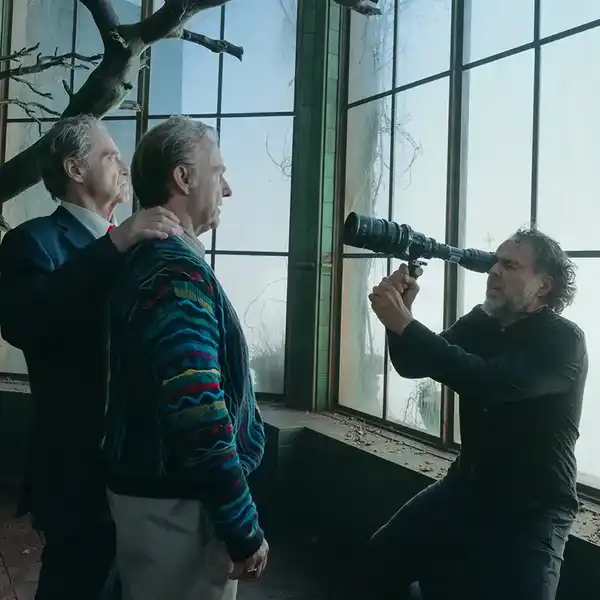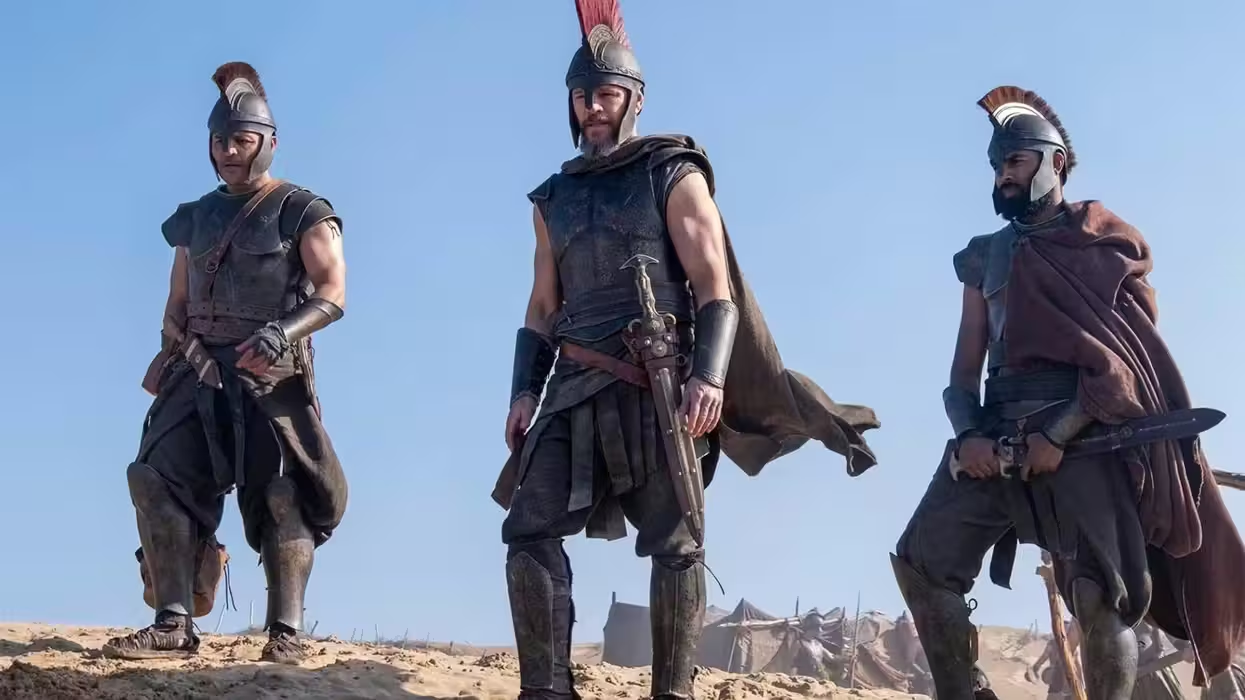
With an opening weekend that crushed all projections, Christopher Nolan's The Odyssey updated the longest-running myth in Earth's history for audiences across the globe.
People flocked to see the film in 70MM IMAX and smaller formats, solidifying Nolan as the biggest draw of any director working today. It also silenced all the sniveling online debates on whether or not a cultural war would derail this movie.
The Odyssey is the biggest movie in the world, and will probably remain that way for quite some time, especially as we shift into awards season and it starts that marketing run.
But today, I want to talk about the ending of the movie that left everyone talking in the lobby of my theater.
Let's dive in.
'The Odyssey' Plot
Before we get into the movie, let's go over what happened on Odysseus's journey to Ithaca.
The movie kicks off with a partially non-linear narrative, starting with the classic line, "In a time of apparent magic..."
Over on the island of Ithaca, King Odysseus (Matt Damon) has been missing in action forever following the Trojan War, leaving his kingdom in utter chaos.
A group of sleazy nobles—led by Antinous (Robert Pattinson)—are aggressively hitting on Odysseus's wife, Penelope (Anne Hathaway). They want her to pick a new husband and thus have a new king for Ithaca.
But Odysseus's son, Telemachus (Tom Holland), wants to be king, although that bid is not taken seriously by the suitors, and his rumblings with them are becoming more dangerous as they grow more impatient; it's been 20 years since anyone has even seen Odysseus.
A loyal, mostly-blind servant named Eumaeus (John Leguizamo) is Telemachus' only connection to his long-lost father, since he had to grow up and become a man without him. Telemachus decides he's going to go find his father and bring him back to help him rid his house of these suitors and to save his mother.
He heads out with his bodyguard and teacher, Mentor, to ask King Menelaus if he knows anything about his dad.
Antinous finds out about the secret trip from his lover (Mia Goth), who happens to be Penelope’s handmaid. He schemes with another suitor to jump Telemachus on his way home and murder him and to send people along the journey to kill Telemachus as well.
When Telemachus finally reaches Sparta, Menelaus (Jon Bernthal) and his wife Helen (Lupita Nyong'o) aren't sure if Odysseus is dead or alive, but they dish out some incredible war stories about him, and we see the toll that the war in Troy took on them, too.
We then flash back to learn that Odysseus was the ultimate mastermind who cooked up the famous Trojan Horse trick. He uses a soldier named Sinon (Elliot Page) to fool the Trojans into dragging the giant wooden horse inside their city walls. That doesn't go well for Sinon, as he is shot and killed right away.
But the trick works, and the Trojans drag the horse to the temple of Athena behind the walls and erect it. They see it as a peace offering and assume the war is over.
That night, Odysseus and his men exit and ransack the city.
Afterward, the war is over, and it's time to go home. Agamemnon (Benny Safdie) and his crew sail one way, and Odysseus, sick of them, decides his men would sail the other, saying they can hit ports along the way for food and other needs.
They hit an island first and follow a sheep into the home of the Cyclops Polyphemus. There, the Cyclops eats a lot of Odysseus's men and traps them in the cave with a boulder.
They manage to blind him and escape, but it turns out the Cyclops is Poseidon’s son, which gets them cursed and totally lost at sea.
Then they land on another island where giants in knights' armor attack them, causing some more casualties as they flee.
On another stop, his crew members, now assuming Odysseus is maybe not leading them to safety at all times, leave him on the beach. They unfortunately run into the witch Circe while trying to get food, and she promptly turns them into pigs.
After Odysseus accidentally kills a guy who had been transformed into a deer, he realizes there's magic on this island and looks for his men. When he comes upon Circe and realizes she's a witch, he barters with her and promises not to kill her sister, who is now a bird, if she fixes the men.
She does, and warns him that the only way back to Ithaca is through a detour to the Underworld, where they can point him the right direction but will also force him to face his fears.
They sail to the Underworld, where they can speak with the dead. A prophet named Tiresias warns him that only Odysseus is going to survive this trip, and to get home he's going to see each of his men die. Odysseus vows to fight against this fate.
Before leaving, he also runs into Sinon’s ghost, who calls him out for using him as a disposable pawn in the Trojan Horse scheme and reveals that Antinous was the one who manipulated Sinon into taking his place in the army to begin with.
Now, he's one of the many innocents who Odysseus was willing to see die in order to win this war.
Finally, the ghost of King Agamemnon shows up to warn him that his own wife murdered him the second he walked through the door after the war, so you never know what awaits you when you finally get home.
They sail onward, barely escape a horde of angry ghosts, and manage to mostly survive encounters with the Sirens, Scylla, and Charybdis.
Unfortunately, things fall apart on the island of Thrinacia.
That place is overrun with cows, but they know they're not supposed to eat them.
Eventually, the crew gets so hungry they ignore the order, and everyone, but Odysseus, eats a cow. Then they try to sail away, but Poseidon unleashes a massive storm that wrecks the ship and kills everyone except Odysseus.
He washes up on the island of Ogygia, where a nymph named Calypso falls madly in love with him and keeps him drugged on magical lotus flowers for seven full years while he completely loses his memory.
But as she studies him and feels bad for him, she eventually helps him remember who he is and what he's left behind. Odysseus then builds a raft to try to sail home, and despite it being kind of rickety, he makes it all the way back to Ithaca, where he wakes up on shore to a very different place than he left.
Odysseus immediately goes to find Eumaeus, who tells him that Antinous sent assassins disguised as priests to jump Telemachus and Mentor at a temple.
We cut over to them to show the ambush that killed Mentor, but that Odysseus shows up at and saves his son, all while using the fake name "Sinon," in order to send a message to Antinous.
Antinous is worried, and he and the rest of the suitors make Penelope promise to pick a new suitor ASAP. And the elders agree; they need a new king because there are rumors of these Sea People who have been attacking islands and who they need to raise a defense against.
Telemachus sneaks his disguised dad into the palace, where Odysseus's ancient dog recognizes him right before dying of old age, and Telemachus realizes the stranger is actually his dad.
That night, at a feast where Penelope announces she is to pick a new suitor the following night, a disguised Odysseus, as a beggar, drops heavy hints to Antinous that he knows all about his betrayal, which gets him beaten up by Antinous before Penelope steps in.
Later, Odysseus privately reveals his true identity to Penelope and confesses his crushing guilt for violating the laws of hospitality with the Trojan Horse. They call this the law of Zeus, and he feels his violation of this law kind of sent a ripple effect through the world, as he now sees this law's violation to be the root of all evil.
He admits to Penelope that Odysseus (she doesn't know it's him yet) is alive, but has severe PTSD from killing innocent Trojans and desecrating Athena’s statue. He begs for Penelope's forgiveness for Odysseus and says her husband will come back when she needs him the most.
'The Odyssey' Ending
'The Odyssey'
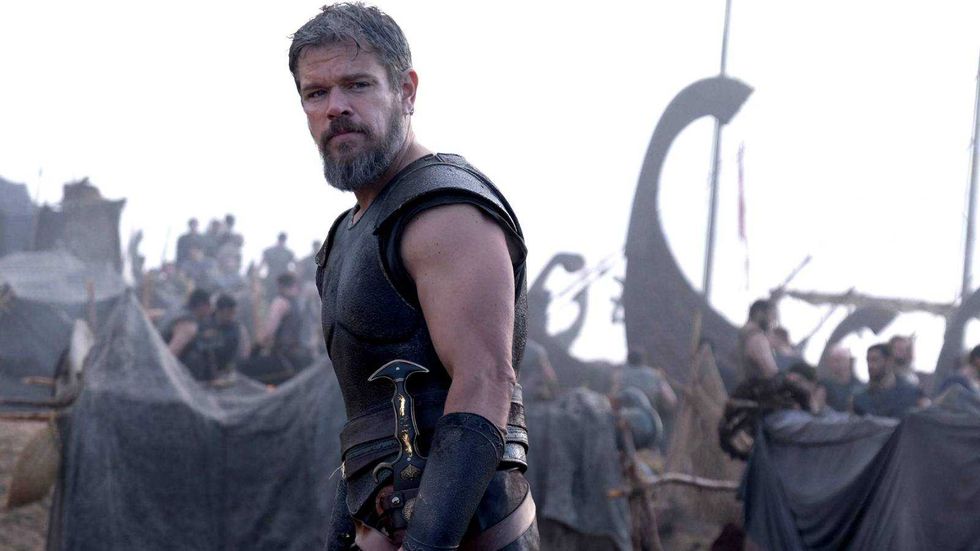
Credit: Universal PicturesThis epic tale all wraps up in the Ithaca palace.
Penelope sets up a challenge for the suitors the following night. She'll marry whoever can string Odysseus's legendary heavy bow and shoot an arrow cleanly through twelve axe heads.
This was a trick Odysseus used to do and one that she says will give them a worthy successor.
All of the arrogant suitors fail at the task, but Odysseus steps up, strings the bow effortlessly, hits the target, and reveals who he is.
That's when they all realize they're in the presence of the king, and they have been treating him badly, and he knows it.
Total chaos erupts.
Odysseus shoots one suitor dead on the spot, Telemachus takes down a traitor trying to help the suitors, and Odysseus corners and kills Antinous.
It's an epic battle where he delivers vengeance on them for breaking Zeus's laws and also where he starts to cleanse his ideas of when violence is just.
With their leaders dead, the remaining suitors surrender.
Instead of taking back his crown, Odysseus officially hands the throne down to Telemachus. He decides that after his journey and sins, he belongs in exile.
Odysseus leaves Ithaca with Penelope to spend the rest of their days in peace, sailing west and hoping that history will eventually forget his mistakes.
Explaining The End of 'The Odyssey'
'The Odyssey'
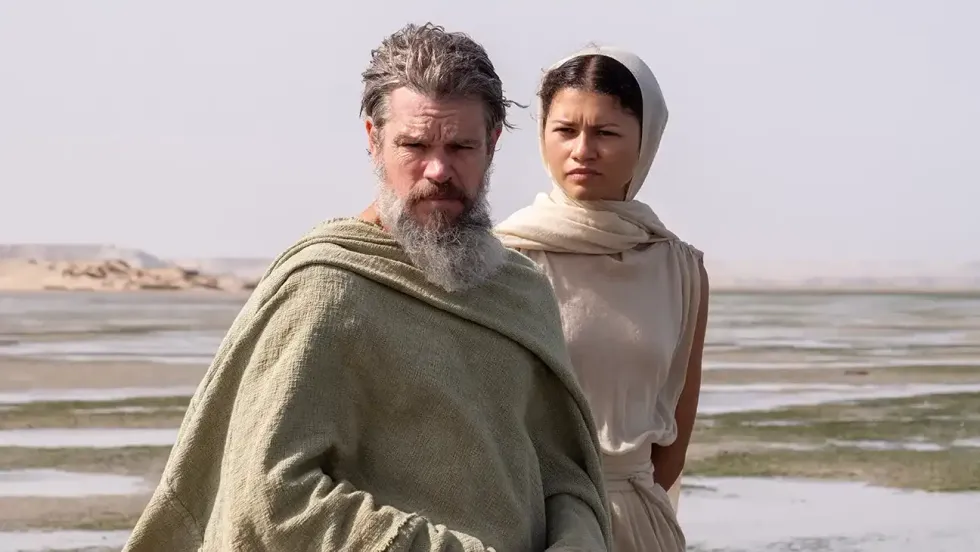
Credit: UniversalOkay, there's so much to unpack in this movie. It's sort of the complete distillation of Homer's text with Nolan flair.
We get some deviations from the original ending. In the Homeric book, Odysseus’ downfall stems from his hubris after defeating the Cyclops Polyphemus. There, he boasts his true name to Poseidon’s son, which invites the god's wrath over and over again as he tries ot sail homeward.
But Nolan wanted this movie to feel more grounded, so he regineered that incident to be Odysseus shooting an arrow at the Cyclops after blinding him, showing his hubris.
All of that was wound up in the big reveal that he had PTSD from the Trojan War, and that he's realized that the Trojan Horse itself was a huge mistake; it violated xenia (Zeus's ancient law of hospitality).
That violation can be seen over and over again in all the stories in the Odyssey, as Odysseus and his men become the feared sea people, who sail to every shore and violate the law over and over on their quest to get home.
They also have the law violated on them, which shows man has completely broken down and chosen violence when they ignore Zeus's laws.
By making the Trojan Horse the moral point of no return, Odysseus’ entire decade-long journey shifts from a hero trying to get home into a guilt-ridden quest for absolution.
And those visions of Athena along the way?
The humungous reveal here is that Zendaya is not Athena, but a helpless priestess for the goddess Odysseus had men behead in cold blood when taking the city.
She haunts him and the entire movie as he realizes he's gone too far and spilled so much innocent blood for things, and we also learn Agamemnon only undertook the war in order to get better trade routes, and was willing to kill his own daughter as a sacrifice to the gods to get it.
All around Iyessus, there are moral failings, and he laments not being up to being the better person in all these situations.
The other change from the book was exile.
As we get to the end with the suitors, we
In the original epic, Odysseus slaughters Penelope’s suitors, asserts his divine right as king, and stays in Ithaca.
But that didn't really fit the narrative that Nolan had laid out.
So he has Odysseus confess his sins to Penelope before revealing his identity, reframing his journey through grief rather than pride.
And then after killing the suitors to save his son Telemachus, Odysseus realizes he cannot simply resume his throne in a broken world, so he hands the keys of the kingdom over to someone who has learned to follow Zeus's laws, his son.
Then Odysseus chooses exile to sail to the west to bury his fallen soldiers and seek peace. And he hopes that Telemachus will rebuild Ithaca in a way that honors Zeus's laws.
Summing It All Up
When you're adapting any sort of old legend or even a new book, your job is to pick the parts that will make the best movie and to make it feel relevant.
Nolan took the heart of The Odyssey, but he made the thing personal to him, which was not only staggering to look at, but also had a clear moral center and was grounded in a very interesting portrayal of the cost of war and of leadership.
I found this to be a poignant and excellent movie with a lot of depth in the narrative.
Let me know what you think in the comments.
- Christopher Nolan's 'The Odyssey' Owns All The IMAX Screens for an Unprecedented Month ›
- The New 'Odyssey' Trailer is Astonishing ›
- Christopher Nolan's 'The Odyssey' Proves Practical Filmmaking Still Wins ›
- Why History Nerds Are Mad at Nolan’s The Odyssey—And Why It’s Fine ›
- ‘The Odyssey’ is Christopher Nolan’s Most Gargantuan Film Yet ›