The Question from ‘Shutter Island’ That Breaks the Soul...and Mind
How the line, “Which would be worse—to live as a monster or die as a good man?” turns the thriller, Shutter Island (2010), into a moral tragedy.
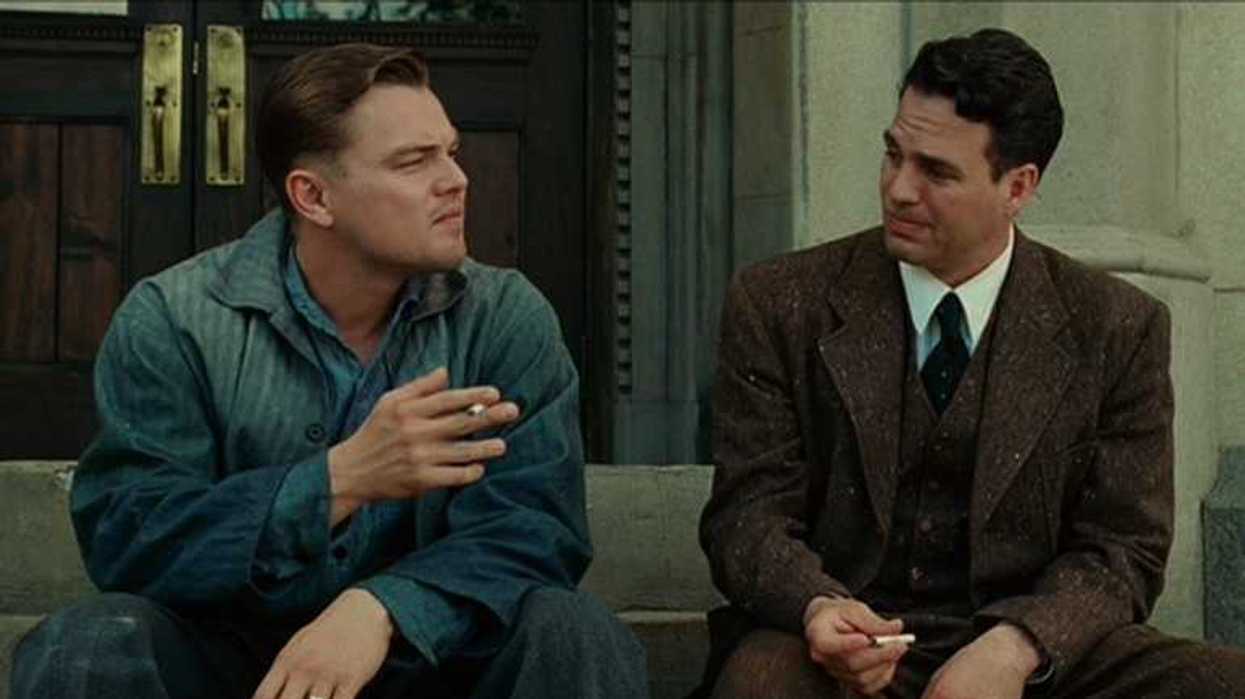
'Shutter Island' (2010)
The experience of watching Shutter Island (2010) goes through three stages: engagement, amazement, and bafflement.
For the majority of the movie, you are engrossed in what you think is a noir “detective investigation” thriller. Then comes the shocker: the detective turns out to be a patient in the asylum, and you go, “Wait, what?”
And, during the falling-action, when you think the story has reached a definitive conclusion, DiCaprio says this line, causing you to squint your eyes, crumple your face, and experience the “What the…” moment.
There are movies with twists, and then there is this one, which twists the twist. No wonder it prompts you to Google the plot and see if you missed any clues. Is he mental or not? Is he Teddy or Andrew? What’s going on?
Then it dawns upon you. It’s one of those “open for interpretation” movies. What you think, goes. And whatever you think, it still confuses your mind and also breaks your heart.
This one single line changes the whole vibe. It ends the movie on a devastating note, which could either be a fact or a choice. Either way, you end up with a truth that is too heavy to carry.
(P.S.: The article contains spoilers.)
The Premise
U.S. Marshals Edward “Teddy” Daniels (Leonardo DiCaprio) and Chuck Aule (Mark Ruffalo) come to Ashecliffe Hospital for the criminally insane. Their motive is to investigate Rachel Solando, a patient at the hospital, who drowned her three children. Teddy also becomes aware that the doctors at the asylum might be involved in illegal experiments on patients, including lobotomies. Aside from this, Teddy also has an ulterior motive: to find Andrew Laeddis, possibly a patient at the asylum, who once started a fire that killed Teddy’s wife, Dolores.
As time passes, Teddy’s investigation dwindles, and even more mysteries arise. However, the true shock comes when he is made aware that he himself is Andrew Laeddis, the mental patient incarcerated for murder.
Andrew’s wife, Dolores, was manic depressive, and it was she who started the fire that burned down their house. Instead of seeking psychiatric treatment for her, Andrew moved his family to a lakehouse. As her mental condition worsened, Dolores ended up drowning their three children, prompting Andrew to kill her.
Andrew was taken over by guilt and, to deal with it, he created an alias, U.S. Marshal Teddy. All this investigation was an elaborate roleplay. The medical staff, including Chuck Aule, who is actually Dr. Lester Sheehan, actively supported it in hopes that Andrew might break out of his delusion.
Andrew is informed that this is not the first time he has achieved this state of lucidity; he had done it bbefore buthad quickly regressed. Dr. Cawley (Ben Kingsley), the senior psychiatrist, cautions that if he fails to maintain lucidity this time, he will be lobotomized.
The Scene That Reframes the Whole Movie
After all the mysteries (?) have been resolved, Andrew has a quiet moment with Dr. Sheehan. Everything seems to be going well until Andrew refers to him as “Chuck,” indicating he has regressed into a delusional state. Just before he is taken for the lobotomy, Andrew says, “Which would be worse—to live as a monster or die as a good man?” It stuns Dr. Sheehan.
The Anatomy of the Final Choice
From Teddy to Andrew
This is the moment where we see the confident Teddy collapsing into the broken Andrew. This transformation has been a rough ride. He finally acknowledges and accepts the fact that he is not an iinvestigator buta mentally ill person. He not only failed to protect his children but also killed his wife. This realization is a “win” for the doctors, but for Andrew, it’s the start of an impossible nightmare.
Living as a Monster vs. Dying as a Good Man
When Andrew refers to the “monster,” he is referring to his past—the man who let his children die, the man who ignored the urgency of medical attention for his wife, and the worst of all, the man who killed his manic-depressive wife.
Now, in his supposed “lucid” state, he might not be called insane, but he will have to live every second of it under the crushing weight of guilt. Every moment of being aware of what he did. And that feels worse than death.
Beyond the Twist
The Doctors’ Failed Victory
When Andrew remembers the truth, Dr. Cawley and Dr. Sheehan think they have succeeded in his treatment. But their perception of “sanity” and “insanity” is ttechnical andquite black-and-white. They don’t take into account the nuanced nature of sanity. Sanity is not a gift when it unleashes a nightmare of painful memories. It may be a medical success for Cawley and Sheehan, but for Andrew, it translates as personal hell. This moment shows the irony of a cure that makes a person want to stop eexisting andturns a medical win into a tragedy.
Identity as a Shield
For Andrew, “Teddy Daniels” is essentially not a ddelusion buta survival mechanism. Teddy is his “I’m a good man” story. Without it, Andrew is exposed to the crushing reality. Without Teddy, he has no defense against his own mind. Without Teddy, Andrew has nothing to live for. And that’s why, when Teddy is no more, Andrew also chooses to exit on his terms.
Conclusion
Ironically, for a psychological thriller, this final line doesn’t explain or untangle the mystery. It judges it instead. And that’s the brilliance of Shutter Island—its pivot from mystery to philosophy. Some may perceive the ending as Andrew succumbing to his illness, but in reality, he is choosing a peaceful void over a painful reality.
Ultimately, it’s a haunting end to a painful journey that proves some truths are simply too heavy to survive.
- The 14 Greatest Movie Endings Ever Filmed ›
- These Are 8 Movie Endings That You Never Saw Coming | No Film School ›
- 9 Classic Noir Horror Films That Invented Psychological Terror | No Film School ›
- 9 Movie Twists That Flipped Their Narratives | No Film School ›
- The Ending of 'Shutter Island' Explained | No Film School ›