What Are the Colors of Love in Cinema?
It's not just red anymore.
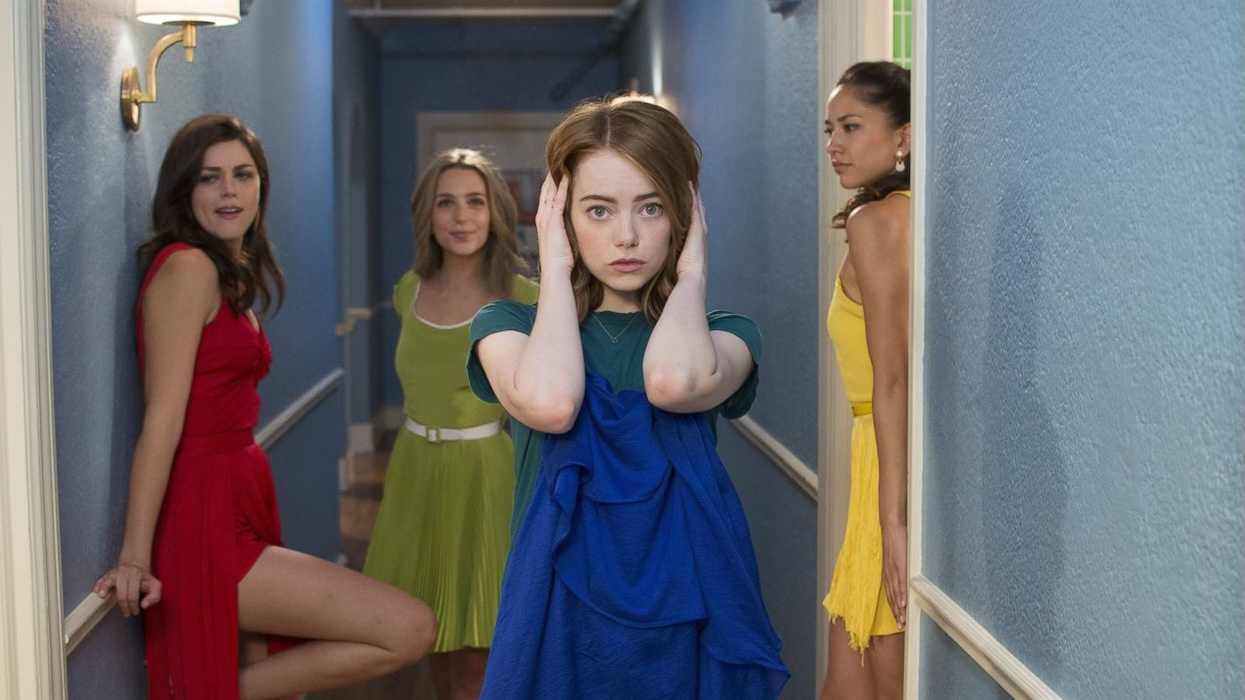
'La La Land'
One of the things that I find so cool about filmmaking is that three different directors can tackle the same subject, and you can get three completely different interpretations.
In the world of cinematography, color is more than just an aesthetic choice; it is a powerful tool for emotional storytelling. And you can use different colors to display different emotions, or the same emotion, depending on what you're doing with the story.
Case in point, I found this awesome YouTube video where we see how different directors and cinematographers often use distinct palettes to represent the same universal human experience.
Let's dive in.
The Colors Of Love
I think if you had to pick a color for love off the top of your head, you'd probably choose red. But what if that doesn't fit the scheme of your movie?
That's where some color theory comes into play and color palettes.
Well, these three directors want to do something very different.
Purple: The Romantic Dream in La La Land
In Damien Chazelle’s La La Land, love is often bathed in a lush, magical purple. This hue reflects the "City of Stars" atmosphere.
The idea here is that purple literally blends the passion of red with the tranquility of blue in order to find a more stable kind of love, like what's being sought out in the movie.
It captures the dreamlike, almost surreal quality of Seb and Mia’s romance, especially during their twilight walks and jazz club encounters. And in the end, we know that neither is the other's pruple kind of love...so it also gives them a thematic lesson.
Blue: The Melancholy of 500 Days of Summer
While blue is frequently associated with sadness, in 500 Days of Summer, it serves as the signature color for love and obsession.
Marc Webb famously used blue to draw the audience's eye toward Summer (Zooey Deschanel). We saw blue in her eyes and her wardrobe. We saw it in the bird that lands on JGL's shoulder when he's in love with her.
There are lots of pops of blue. Even when his heart breaks, and he feels blue.
In this context, blue represents a love that feels cool, refreshing, and yet slightly detached. It's a reflection of the projection-based feelings for Summer.
Yellow: The Intense Warmth of Whiplash
How about a love that hurts? Love doesn't always have to be between two people; it can be the love for a craft.
What's fun here is that we go back to Chazelle for a different color of love.
In Whiplash, the screen is often saturated in a sickly, intense yellow. While the film focuses on a toxic mentorship, the yellow tones highlight the sweat, the late-night practice sessions, and the obsessive "love" Andrew has for jazz drumming.
It feels warm but high-pressure, representing a love that is consuming, gritty, and physically demanding.
Summing It All Up
As these films demonstrate, there is no "correct" color for an emotion. You pick the one that fits your film and fits the kind of emotion you want from everyone.
Whether it’s the whimsical purple of a musical, the focused blue of a quirky rom-com, or the harsh yellow of a psychological drama.
Working with an editor and your cinematographer to color grade and to help define the specific "flavor" of love the characters are experiencing.
Let me know what you think in the comments.