Decoding the “Milkshake” Metaphor from 'There Will Be Blood'
Unpacking the power, greed, and madness behind Daniel Plainview’s bizarre but iconic outburst in There Will Be Blood.
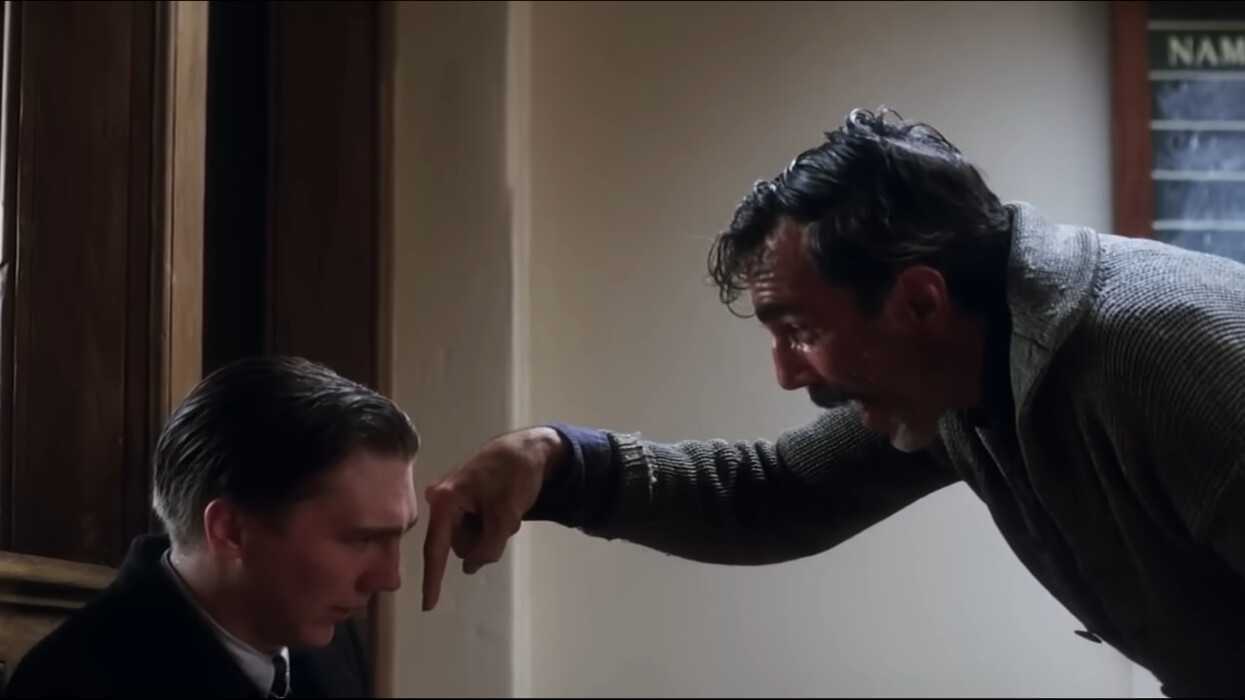
"There Will Be Blood" (2007)
The “I drink your milkshake” is one of the most unbreakable scenes—finales. When some people hear Daniel Day-Lewis’ name, it’s the first thing that comes to mind. Others experience a fever dream that lingers long after they have left the theater. This is one of those cinematic moments that will never be forgotten, regardless of whether you sat in stunned silence, giggled, or shuddered.
The epic of oil, ambition, and American greed, directed by Paul Thomas Anderson, was praised as one of the greatest movies of the twenty-first century. Daniel Plainview (Daniel Day-Lewis), a silver-tongued prospector who bases his empire on drilling, deceit, and sheer willpower, is at its core. He is a man defined by dominance rather than love or loyalty.
And the result is a cinematic explosion wrapped in a milkshake metaphor when his rivalry with preacher Eli Sunday (Paul Dano) reaches its grotesque conclusion.
But why this metaphor? How come the innocent, wholesome image of milkshakes and straws comes to symbolize capitalism, greed, and complete destruction?
This article analyzes that notorious scene by breaking down its literal meaning, symbolic significance, and character importance before examining how it changed from a terrifying climax to one of the most memorable lines in popular culture.
The Scene in Context: A Final Confrontation
The Setup: A Lifetime of Rivalry and Deceit
From their initial encounter over land rights to their final confrontation in a hostile bowling alley, the Plainview-Sunday feud has lasted for decades. Eli Sunday, the aspirational preacher, is the antithesis of Plainview in that he conceals his ambition in sermons and faith, while Plainview conceals his greed behind promises of advancement. Both men are desperate to control the same community, and their relationship is a tug-of-war between religion and money.
The balance has shifted by the time the last scene takes place. Rich, lonely, and engulfed in alcohol is Plainview, while, once a fiery preacher, Eli is now a desperate man looking for financial salvation. He arrives at Plainview’s estate under the pretence of a business deal involving the Bandy property. Eli is unaware, however, that Plainview has already used nearby wells to drain the oil from it. What comes next is not a negotiation—it's execution.
The Performance: Power Dynamic in the Bowling Alley
The location is an important consideration. Nestled inside Plainview’s mansion, the bowling alley has the atmosphere of a private kingdom rather than a game room. The sound of pins colliding reflects the impending psychological conflict. Eli growls in a desperate attempt to become relevant, while Plainview sits in the shadows, inebriated but lethal.
The disparity in power is obvious. Spread out and mocking, Plainview represents complete control. Eli struggles for words and begs for forgiveness after losing his pulpit charisma. A final duel between two men, but with words and humiliation as the weapons, before violence takes over, creates an atmosphere that is equal parts theater and nightmare.
Deconstructing the Metaphor
The Literal Explanation: Draining the Neighbor’s Straw
Plainview’s analogy is essentially an oil-drilling lecture. He explains that if a nearby pipeline has already tapped into the same reservoir, the oil beneath Eli’s land is worthless. The “straw that stretches across the room” analogy stands for Plainview’s capacity to extract resources from beneath Eli’s land without ever having to set foot on it.
In this instance, milkshake is the metaphorical liquid that created Plainview’s empire—oil, or black gold. When he yells, “I’ll have your milkshake,” he is teasing Eli with the harsh reality that Planview has already taken everything valuable, his land is dry, and he has no leverage left—“I drink it up!”
Although the metaphor may seem ludicrous, it perfectly captures the brutal efficiency of resource theft.
The Symbolic Meaning: The Essence of American Capitalism
The milkshake speech is more than just drilling mechanics; it’s the epitome of capitalism at its worst. It’s about depleting others until nothing is left, not about collaboration or fair competition. The milkshake is more than just oil; it’s also money, power, and the appearance of opportunity. Plainview represents a mindset in which defeating competitors is the only way to achieve success.
At this point, the scene goes beyond its narrative. The irony of it all is highlighted by Plainview’s innocent analogy: an empire based on exploitation presented in playground language. However, the message is extremely ominous and dead serious. It depicts the dark side of American industry in general as well as the monopolistic greed that characterized the oil boom.
The Historical Roots of the Milkshake Line
Ironically, Paul Thomas Anderson did not coin the metaphor of the milkshake. This metaphor is rooted in the Teapot Dome Scandal, known as the biggest political corruption scandal until Watergate came along.
Senator Albert Fall, accused of accepting bribes from oil companies in exchange for drainage rights, used the following statement to explain drainage rights in his defense speech during a 1920s U.S. Senate hearing:
Senator Albert Fall, accused of accepting bribes from oil companies in exchange for drainage rights, used the following statement to explain drainage rights in his defense speech during a 1920s U.S. Senate hearing:
“If you have a milkshake and I have a milkshake, and my straw reaches across the room, I can drink your milkshake.”
As you can see, Anderson took the line, almost verbatim, and dropped it into Plainview’s mouth.
The scene is enhanced by this minor detail. What started out as dry legalese became one of the most memorable scenes in the movie. It serves as a reminder to filmmakers that even in ancient congressional transcripts, inspiration can be found in the most unlikely places.
Daniel Plainview: The Sum of All Greed
The Ultimate Declaration of Self
Plainview conceals his heinous ambition behind a meticulously constructed persona for the majority of the movie. He identifies as a family man. He assures communities of prosperity. He acts as though the greater good is connected to his success. However, the mask falls in the bowling alley. His most unvarnished self-expression is in the milkshake monologue.
This “shedding of the skin” is encapsulated by Day-Lewis’ delivery. He makes ugly slurping noises to punctuate the words, chews them, and spits them out in addition to simply saying them. The metaphor sounds both ridiculous and terrifying because of the manic energy in his voice. Plainview ceases to act human at that point. In one drunken, unholy sermon, he comes out as greed personified.
Beyond Business: A Deep, Personal Hatred
To interpret the milkshake rant as solely about oil would be a mistake. Plainview already has more money than he can spend, so he doesn’t need any more at this time. He longs for Eli’s destruction, specifically. Eli, a preacher who dared to confront him in public, slap him in church, and assert his moral superiority, has been his biggest annoyance for years.
The milkshake is the knife-twist. Winning is insufficient for Painview; he also needs to degrade Eli, rob him of his honor, and crush his remaining pride. It seems inevitable when the verbal abuse turns into physical aggression. The scene is more about the total destruction of a despised rival than it is about business logic.
From Cinematic Moment to Cultural Phenomenon
Why It Stuck?
“I drink your milkshake” has gone farther than a few lines in contemporary film. People yell it at sporting events, throw it into political discussions, and remix it into online memes. Its oddness—a Victorian-looking oil baron describing corporate dominance with playground jargon—contributes to its stickiness. It is immediately quotable due to its absurdity.
However, its cultural legacy also demonstrates its adaptability. When taken out of context, the line is left open to jokes about stealing fries at lunch, power struggles, and other forms of ridicule. While moviegoers adore it for the deeper threat it symbolizes, the internet seized upon it because it is so outrageous. Seldom does a scene serve as a meme and a document of film history, but this one does.
The Writing and the Performance
Behind the meme is an incredibly sharp filmmaking. The metaphor created by Paul Thomas Anderson’s script is both absurd and profound. It condenses Plainview’s whole worldview into a single ridiculous picture, demonstrating that excellent writing doesn’t always require flowery language but rather must get right to the point.
Daniel Day-Lewis comes next. His performance detonates the line rather than merely carrying it. His dedication to Plainview’s fury, his inebriated demeanor, and his erratic delivery turn the scene into a legendary one. The line would have been left sounding bizarre—not in a desirable way—and quickly forgotten if Day-Lewis hadn’t been so fierce. It became legend with him.
The Last Slurp
There Will Be Blood’s final line isn’t the only oddity in the “I drink your milkshake” scene. It is the central theme of the movie, summarizing all that Paul Thomas Anderson intended to say about power, greed, and the meaninglessness of success. With a performance so powerful that it burns itself into cinematic memory, what starts out as a business metaphor turns into a personal grudge.
It works on all levels, which is why it endures. It’s strangely poetic, yet disturbing, yet funny. It conveys the hunger of capitalism in a manner that no economics lecture could. The chilling picture of a man who has consumed everything around him and is now completely alone is what it leaves us with.
Ultimately, the milkshake from Painview’s rant didn’t belong only to Eli Sunday; it belonged to all of us. And he drank it up.
- This 360° Video of Jonny Greenwood Rehearsing 'There Will Be Blood' Score is the Best Thing You'll See All Day ›
- Watch Quentin Tarantino Gush over 'There Will Be Blood' for 10 Minutes ›
- Video: A Mathematical Breakdown of the Cinematography in 'There Will Be Blood' ›
- Watch: The Notorious Evolution of Daniel Plainview's Character in ... ›
- Watch: Daniel Day-Lewis on 'There Will Be Blood' and the Birth of an ... ›
- Is Daniel Plainview the Villain of 'There Will Be Blood'? | No Film ... ›
- 4 Ways 'There Will Be Blood' Lives Up to Its Title | No Film School ›
- How They Created the Natural Look in 'There Will Be Blood' | No ... ›
- Walter White vs. Daniel Plainview: Two Men Who Destroyed Everything in the Name of Greatness ›
- Why Is There So Much Junk Food in 'Teenage Sex & Death at Camp Miasma'? | No Film School ›