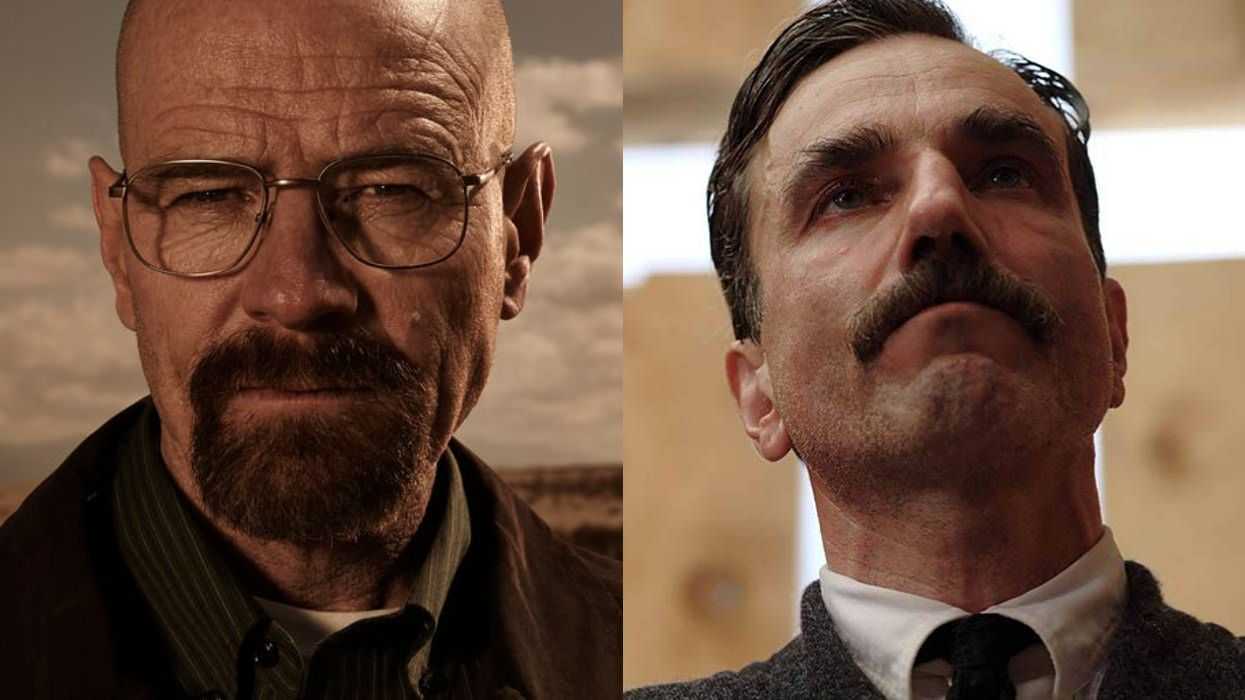
When given a reason, even a decent man can unleash his dark side in a capitalistic world.
Originating from the pit of greed, Walter White (Bryan Cranston) from Breaking Bad and Daniel Plainview (Daniel Day-Lewis) from There Will Be Blood are two of the most compelling characters to grace the screens.
Although both start from comparatively humble beginnings to become emperors of their own world, the paths they both take are strikingly different and filled with bloodshed.
Let's get inside both these characters’ psyches and find similarities and differences Walter White and Daniel Plainview share in their character arcs.
Who is Walter White? — Say My Name!
 Breaking Bad (2008-2013)Credit: American Movie Classics (AMC)
To begin with, Walter (Bryan Cranston) is a humble, brilliant, and overqualified chemistry teacher who earns a modest salary. He gets sidelined from a company that he helped build with his college friends. The bad luck mocks him even more as the beaten-down family guy gets diagnosed with terminal lung cancer. These circumstances lead him to the edge as he enters the world of cooking meth.
A Short Analysis
The cancer comes as a shock to Walter, but in many ways liberates him from his need to be good and his fear of taking risks. And as we all know, he secretly becomes a meth chef and finds out he is the best of the best.
Through his decision to cook meth and get involved in drug cartels, his inner self lets out the selfish monster within him, little by little.
His reason to cook meth — to provide for his family — is just to fuel his own pride and ambitions that he could not achieve yet, despite being smart enough. Over time, he builds an empire for himself under the name “Heisenberg,” but ultimately falls from grace. All along, creator Vince Gilligan wanted to turn Walter “from Mr. Chips to Scarface,” and he succeeded.
Who is Daniel Plainview? — I Abandoned My Child!
 There Will Be Blood (2007)Credit: Paramount Vantage, Miramax
Right from the first sprawling and ominous frame, Daniel Plainview is a businessman who just wants oil, and he’ll do anything for it. Oil is his Meth. Through his relentless pursuit, he builds an empire of oil-digging by thrashing his competitors out of business and colonizing people’s land by a play of faith, religion, and goodwill.
A Short Analysis
Daniel Plainview is the cinematic embodiment of greed, competitiveness, and hatred. From the very first scene, he is shown as a man ready to maim himself to fulfill his ambition of getting rich and successful.
Moreover, he uses his son to be framed as a good family man to gain the trust of landowners and his business partners — we realize this when he sends the boy away to boarding school as his deafness becomes a problem in his business.
Even if it takes using Eli as a spiritual mediator to cheat and win over people to dig up their oil-rich lands, Daniel will do it! But in the course, he destroys each one of his relationships.
What Connects Both Walter and Daniel in Their Narratives
While both have different arcs and stories they follow, both men are:
Extreme Narcissists with a Screaming Superiority Complex
Walter White
 Breaking Bad (2008-2013)Credit: American Movie Classics (AMC)
The fact that Walter chose to cook meth instead of getting financial help from Gretchen (Jessica Hecht) and Elliot (Adam Godley), in a way, destroyed his family (so much for his pride).
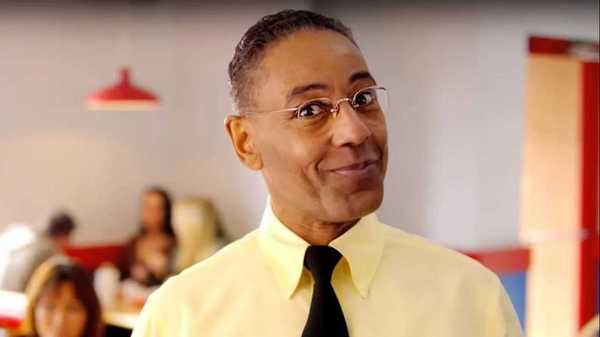
Moreover, his constant urge to prove he is the smartest in the room shows — he challenges and kills Gus Fring (Giancarlo Esposito) because he didn’t want to be controlled and work under somebody. He builds an empire under his own name, “Heisenberg,” and manipulates Jesse Pinkman (Aaron Paul) several times to get things done his way. Moreover, Walter kills Mike (Jonathan Banks) because he just couldn’t stand losing an argument to him on why Walter is the gist of everything going wrong in their business.
In S5-E7, Walter confronts a drug lord named Declan (Louis Ferreira) in the desert and delivers, “Say my name,” to which Declan replies, “Heisenberg,” and White responds with, “You’re goddamn right.”
For me, this is what drives him. This line defines Walter White’s arc. His whole charade was to earn acknowledgment, not just money.
Daniel Plainview
 There Will Be Blood (2007)Paramount Vantage, Miramax
In the case of Daniel Plainview, he sends H.W. (his son) away for the sake of his business, cheats landowners for gains, and thinks he is above everyone. He sees others only as obstacles in his path or leeches to be discarded once used.
He has a heightened superiority complex like Walter White and can’t stand being disrespected — remember the scene where he violently drags Eli Sunday (Paul Dano) into the mud in front of everybody.
He even tells Eli Sunday that “There is a competition in me. I want no one to succeed. I hate most people.” So when Eli slowly comes out to be a rival using religion, it doesn’t sit well with Daniel, and we even see him crushing Eli’s head with a bowling ball at the very end.
Although these men’s paths to status were different, they both hated people’s guts, didn’t like being disrespected, and were full of pride and a sense of superiority.
What Sets Walter and Daniel Apart
There are two major aspects in which they differ a lot.
1. Starting Points
We see Walter White start as a sympathetic figure — a chemistry teacher earning a modest salary with a side job at a car wash, rejected from Grey Matter Technologies (which he helped found), and then succumbing to terminal lung cancer. For the most part, his entry into the crime world is activated due to circumstances. He is not inherently a bad man, but becomes one due to his repressed emotions and hunger for acknowledgment.
But in the very first 15 minutes of There Will Be Blood, we see Daniel break both of his legs while mining oil. He is not driven by desperation; he was born desperate with a strong will to achieve success at any cost. He already has the predator residing in him; it just grows bigger over time.
2. Reflection of Guilt
As Breaking Bad begins to conclude, Hank is killed, a large part of Walter’s money is gone, and his family leaves him. He is all alone. Walter White finally realizes what he’s done. It’s a moment of reflection, and he even admits to Skyler (Anna Gunn) one time, “I did it for me,” not for them. Then, he goes on to die alone in his meth lab.
On the other hand, Daniel reflects no guilt even at the end when he mercilessly kills Eli to a pulp with a bowling ball — only bitterness. He cursed and drove away his son. Now, he is drunk and alone in his mansion. Unlike Walter, Daniel never becomes self-aware — he never asks why he is empty inside.
Summing Up
These characters are masterpieces of writing. They both show us two similar yet different outcomes. Both built an empire based on violence and lies. But in the end, one lives on, and the other dies. One finds clarity, and the other remains bitter. But both end up alone with no one to share what they have earned.
I have a question. Among these two characters, who do you think is a better businessman?
Let us know in the comments.
- Decoding the “Milkshake” Metaphor from 'There Will Be Blood' ›
- Is Daniel Plainview the Villain of 'There Will Be Blood'? ›
- Our Favorite Lessons on Screenwriting from 'Breaking Bad' ›
- Was Walter White a Cannibal? ›
- Is Dialogue Overrated? Vince Gilligan Thinks It "Carries Too Much Weight" ›
- Deconstructing a Masterpiece: How Vince Gilligan Wrote 'Breaking Bad' ›