"Maybe they love it. Seeing us hate each other. Watching us kill each other off. Feeding on our own cold f*ckin' hearts."
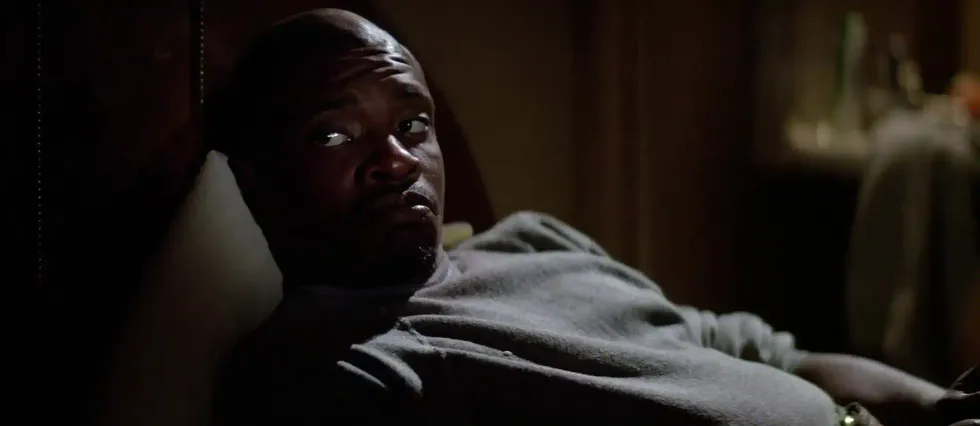
Do you know this line? That's Frank (Keith David), worn down and talking to Nada in John Carpenter's 1988 sci-fi brawler They Live.
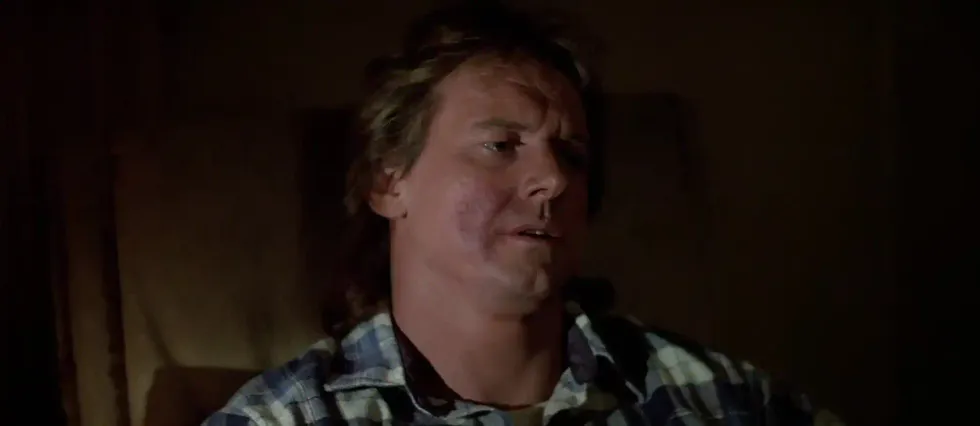
They’ve just beaten the heck out of each other in a fight over perception, which Nada (Roddy Piper) won, forcing Frank to open his eyes to the corruption all around them. The line comes in a scene soon after, which gives us two broke guys in a rundown apartment sharing beers, no score swelling underneath. The delivery is even, calm.
But this conversation carries the whole thesis of the movie—the idea that whatever runs the show up top would rather we spend our fury on each other than send it upward. For anyone writing a script, the smuggling job can be something great to study.
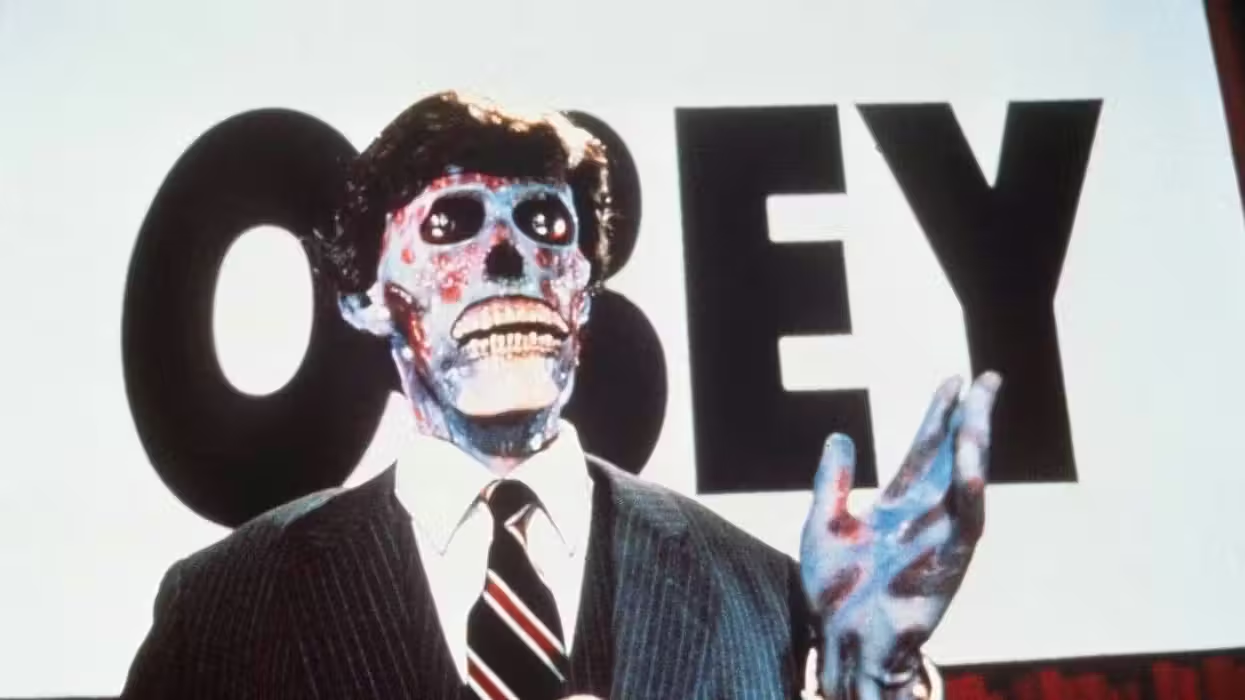
Refresher on the story, if it's been a while? Nada is a drifter hunting for work in Los Angeles who finds a box of plain sunglasses. When he puts them on, the world drops to black and white, billboards flatten into one-word orders like OBEY and CONSUME, and a chunk of the ruling class turns out to be skull-faced aliens keeping everyone docile through their screens.
We've broken down the way Carpenter drops us behind Nada's eyes the instant those glasses go on. Frank is the coworker who takes Nada in, and their friendship is the movie's spine.
 They Live Credit: Universal Pictures
The Scene
As we mentioned, the scene comes after the two men’s notoriously long fight. It grants them a moment of quiet.
Nada reveals to Frank that he is a born-again Christian… thanks to his abusive father. He talks about the time his father held a knife to his throat and threatened his life, “like he was sawing down a little tree.”
That’s when Frank responds, obliquely, "Maybe they've always been with us. Those things out there. Maybe they love it. Seeing us hate each other. Watching us kill each other off. Feeding on our own cold f*cking hearts.”
Nada, energized, says there will be “hell to pay” for the creatures. They drink their beers.
How a Cynic Sees Things
Frank is the cautious one of the two. Over those drinks, he gives Nada his read on how things function, and also tries to explain why he had the tough childhood he did. Maybe the aliens have always been around, gumming up the works. The people holding the money and power set the terms.
Before meeting Nada, his instinct is to keep his head down and keep his paycheck rather than go chasing a fight he figures he can't win. That worn-down pragmatism is what gives the line about feeding on our cold hearts its weight. When the guarded, keep-me-out-of-it character is the one admitting the machine runs on the hatred we turn on each other, it hits because he's not the type to oversell.
Carpenter won't let the despair sit there, though. Nada's reply comes right on top of it. "I got news for 'em. There's gonna be hell to pay." The scene turns from surrender to defiance.
If you have a hard truth to plant in a script, try giving it to the character least likely to sermonize, then let someone else knock it back across the table. There’s some conflict in the scene in the tension between their honesty and different worldviews.
 Credit: Universal Pictures
The Name on the Screenplay Belongs to the Man Saying the Line
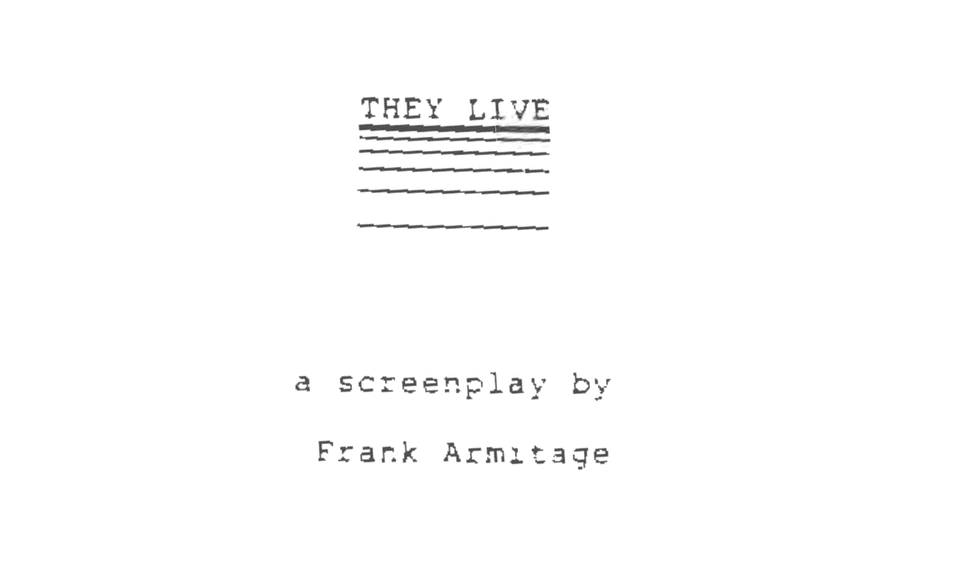
Carpenter kept his own name off the They Live script. The opening credits hand the screenplay to a "Frank Armitage," which, as the American Film Institute notes, was a pseudonym. And, not by accident, the full name of Keith David's character.
Per AFI, the pen name nods to a figure in H.P. Lovecraft's "The Dunwich Horror." They Live itself is an adaptation of a short story. Carpenter shrugged off a solo writing credit because Ray Nelson's source story carried the structure, and both Piper and producer Sandy King chipped in ideas. So one of the film's darkest thoughts arrives from a man who shares a byline with its writer.
Even so, Carpenter put plenty of himself and current events in the story. Turner Classic Movies notes that Carpenter peppered the dialogue with real political language of the era. One alien pundit even parrots Reagan's "Morning in America" refrain straight into a camera. A Universal executive reportedly griped that the whole film's premise was off, since everybody sells out, and that's simply how life works, so Carpenter took the complaint and gave it, nearly intact, to one of his aliens.
The people who argue with you might write your best villain. Keep a notebook on hand and write down those too-good-to-be-true, life-is-stranger-than-fiction lines. Then use them.
Genre as Packaging
Carpenter tucked his very real frustration into the pulp-action genre here. The film features a pro wrestler in the lead role, skull-faced aliens, a corny line about chewing bubblegum, and that marathon slugfest. Underneath, critics have pointed to the script as a blunt piece on class politics and the manipulation of the masses, but the story stays goofy and fun above it all, ending in a blaze of glory.
That B-movie coating is what lets the ideas reach a wide audience. Distrust of authority and a slow-burn payoff are Carpenter signatures we've cataloged before. They Live just makes them a clearer target.
You can write a fun story. But its theme can still be as heavy and important as the one here.
 They Live Credit: Universal Pictures
Why the Line Still Lands
The quote resonates now because the anxieties under it never went out of style. There’s a widening distance between the people at the top in the glass towers and the ones sleeping at their feet, which Carpenter framed almost literally in They Live, in shot after shot.
Frank's exhaustion reads as current because the conditions that made him tired (sorry to say) never got fixed. I’m sure it wasn’t his intention, but Carpenter’s theme here has a shelf life. But in general, finding those universal good vs. evil stories is always going to resonate with audiences.
They Live lands high on our ranking of Carpenter's best for a reason, and this one line is a gift to writers. Find the character least likely to moralize and give them the truest thing your story has to say.