Ho, ho ho! Tis the season for The Polar Express to be back on our TVs.
You probably remember that conductor punching tickets, clearly with the face of Tom Hanks, who's oh-so-delighted to talk-sing about hot chocolate.
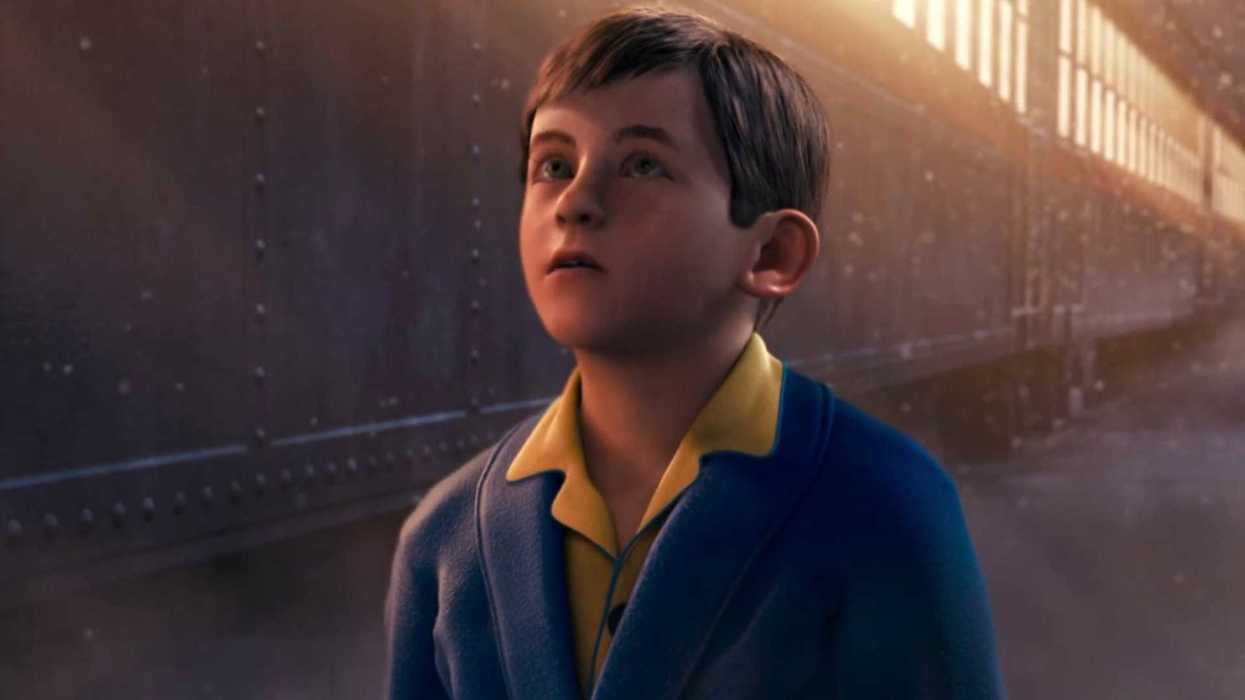
But Hanks isn't only the conductor. He also played the lead boy, his father, the train's conductor, a hobo, and Santa Claus. Hanks voiced each of those except the boy, whose lines were read by child actor Daryl Sabara. (Hanks also technically plays the film's narrator, bringing the actual total to six.)
Robert Zemeckis made the film with performance capture, which is different from motion capture and involved actors wearing up to 150 reflectors all over their bodies.
Zemeckis told The Los Angeles Times that he briefly considered having Hanks play every character, but it probably wasn't feasible. As it was, Hanks completed his performances in 38 days.
This is a story about technology, but the useful part for filmmakers is the creative logic behind the casting stunt. We'll look at how Hanks decided which characters to play, why the shoot felt like theater, and more.
- YouTubewww.youtube.com
Why One Actor Played Every Grown-Up
Having one actor in multiple roles can feel kind of gimmicky, right? But Hanks says there was a story reason behind the choice.
Hanks told MovieWeb in a Nov. 2004 press interview:
"When Bob [Zemeckis] explained it enough to me so that I could understand the process we were doing would make it possible for grown-ups to play the kids, that opened up a lot of opportunities for one aspect of it. But then came, where are all these adults coming from? And what they are, in my sensibilities, is they’re all the caregivers. They’re all the authorities in this boy’s life and he imagines them as variations on himself and variations on his uncles and variations on his father. As well as the great mystery of how he would have imagined Santa Claus needed to be himself. Santa Claus to this boy was not this roly-poly accountant that came down the chimney every day. He was this huge, muscular man that had to lift up this massive package, this sack of presents. He had to be a big, strong guy."
I love the idea that the main character is seeking himself and those he loves in the adults around him. So in that way, Hanks sees every adult, as well as the child, as almost an extension of how he sees the world.
For writers and directors, doubling or tripling actors can be a POV choice. If your story lives inside one character's head, casting can show the audience how that character sees the world.
Know Your Limits on Test Day
As we now know, Zemeckis entertained the idea of having Hanks in every single role. Hanks told MovieWeb the story, too. But he wasn't as sold on it.
"Bob at one point said, ‘I think you should play every role in this movie because then we could do it. You could play every role!’ But I said, ‘Well, wait a minute. There’s girls in this movie. I’m going to play every elf?’ He said, ‘Yeah, it’ll be great.’ There’s only so much that I can internally grasp as an actor and on the day of tests that we did I played five or six or seven roles in the course of that day, and I said, ‘Bob, I’m exhausted here.’ So in my mind, I had a track on the five characters that I played. I could understand the differences between them all and I understood how they related to the boy and I understood what the boy’s perceptions of them were. And it was just a circumstance where it was doable. It was possible without having to do it in the way, like say for example, Jerry Lewis made The Family Jewels or something like that."
Test days exist to find your ceiling. Hanks capped the count at the number of characters he could keep distinct in his head.
Small-crew directors should know what you're asking of your actors. Even in a "normal" live-action film, if you have a lead who is in almost every scene, that's emotionally and physically taxing. Don't demand too much.
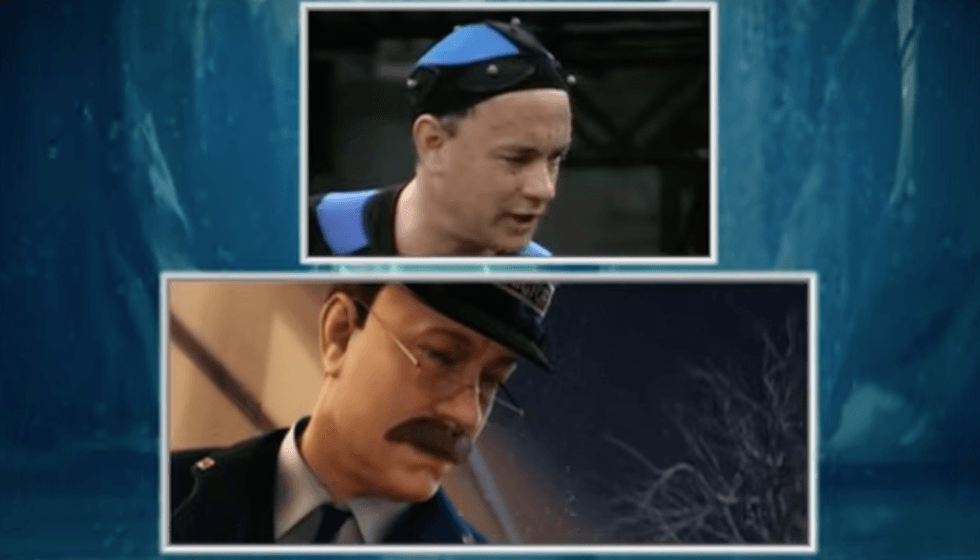 'The Polar Express' Credit: Warner Bros. Entertainment
Performance Capture Felt Like Theater
“I found that it is actually a return to a type of acting that acting in films does not allow you to do. It was exactly like rehearsing a play in the round. You don’t have to worry about lights, angles, rails, cameras, over the shoulders coverage. We essentially did a great series of 10 or 15 minute plays in which we did it real, we did it all in real time, and when we were done Bob [Zemeckis] had everything that he needed to. So, as far as being an actor goes, it was a blast.”
When you split performance from coverage, you might gain something in that you protect your actors' momentum.
Any Actor, Any Role
Hanks was enthusiastic about what the tech could become, with caveats. Anyone could perform anyone, opening up creative avenues.
"Any actor can now play any role. Height doesn't matter. Race doesn't matter. Hair color doesn't matter. Even gender doesn't matter," Hanks told the LA Times. "If Meryl Streep can perform a great Abraham Lincoln, now she can do that in a movie."
Zemeckis also told LA Times, "It's going to be hard to go back. It's so liberating not to deal with any physical restrictions."
Later, we saw Zemeckis' Beowulf and A Christmas Carol made with the same technology, and then the de-aging in Here (per People).