7 Richard Linklater Films That Quietly Changed Modern Cinema
These are movies that deal in time and invest in moments!
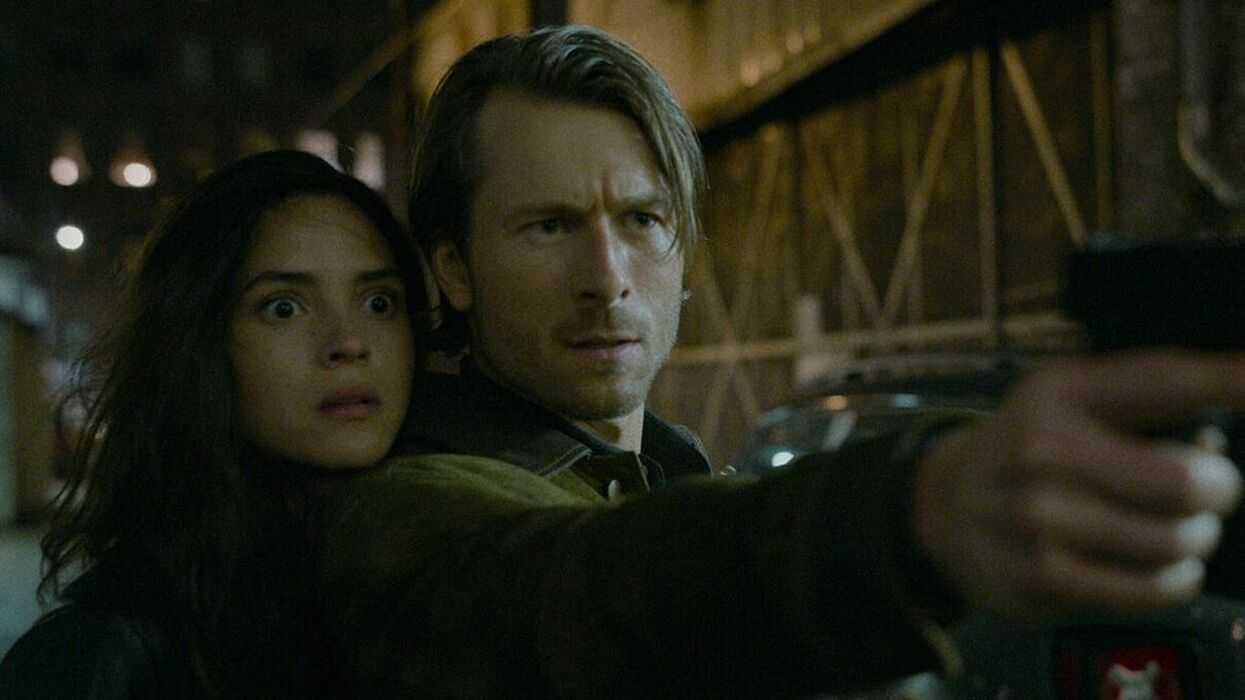
Hit Man (2023)
As a self-taught filmmaker, Richard Linklater tops the list of every film buff who appreciates the surrealist artistic approach toward emotions and expressions.
He has always been known for swimming against the tide, chasing moments and characters to create stories out of the often "unnoticed" in our day-to-day grind.
If you’re looking to watch movies that make you stop and think about the fleeting moments and the impossible “could haves” of your life, Richard Linklater's movies are for you.
In this article, we’ve compiled his best work.
7 Best Richard Linklater Movies
In his career so far, Linklater has directed 23 feature films, with Merrily We Roll Along being his next significant one, scheduled for release in 2040.
That date is correct. He’s following a similar treatment to that in Boyhood, an encapsulation of the life of a man over 20 years.
Here are our top picks from Linklater’s filmography.
1. Dazed and Confused (1993)
A story that revolves around a single day, Dazed and Confused follows an entire school of students on their last day of high school, when discipline and rules fly out the window, and the teenagers unleash the beast within.
The film evokes a sense of nostalgia and timelessness, capturing a growing person’s search for identity and conformity as they try to fit in or settle into a new phase of their life. The narrative also highlights the coming-of-age social hierarchies and rituals that govern a young adult’s life and examines how these rituals are a vicious loop that dictates inclusion or exclusion.
Linklater doesn’t focus on a single protagonist. He follows several narrative threads from various cliques and perspectives, interweaving them to offer a more panoramic view of the chaos unfolding in real time.
Dazed and Confused doesn’t try to school you. It’s a raw portrayal of the humor, awkwardness, and poignancy of growing up.
2. Boyhood (2014)
Filmed over 12 years, Boyhood was an experiment that won three Golden Globes and two BAFTAs. It also got an acting Oscar.
The narrative captures the childhood of a young boy, from first through 12th grade, focusing on his evolution as an individual until near-adulthood.
The film was shot for only a couple of weeks each summer over 12 years, with the same cast, capturing the passage of time within a single family.
3. The Before Trilogy (1995, 2004, 2013)
Have you noticed that the first and second films, and the second and third films in the trilogy, were released nine years apart, mirroring the exact time span between Jesse and Céline's first meeting and their reunion, and then life as a married couple with twins? I love that Linklater leaves such clues even in the simplest of his narratives.
The trilogy follows Jesse and Céline, who first meet on a train ride and end up spending a night together in Vienna, wandering the streets, discussing the possibilities in their life, and slowly falling in love.
The sequels follow the couple as they’re brought together by fate and eventually tested by their love for each other. All three films highlight three different stages of love, focusing on the changes two people undergo over the course of a relationship and their lives. Once again, Linklater uses time as his primary storyteller to flesh out a romance.
4. School of Rock (2003)
Only if I could soak in the go-getter attitude of Dewey Finn, half my battles as a filmmaker would be won, I believe. In a world where opportunities are gatekept, Finn is an inspiration.
After he is thrown out of his rock band, Finn takes a job as a substitute teacher at an elementary school, where he begins training his class of children in music to form a rock band of their own.
Don’t blame me if you choke on your popcorn laughing at this one!
5. Slacker (1991)
This low-budget indie film follows slackers around Austin, Texas, for an entire day, giving us a chance to perceive humanity’s stagnation through the city's perspective.
The narrative follows no particular plot. Instead, it takes us around, following eccentric drifters and social oddballs all over the city, connecting different chapters with sheer coincidences. The treatment is inspired by surrealist films such as Luis Buñuel’s The Phantom of Liberty, in which the camera jumps from one character to another as they walk in and out of each other’s lives, with the narrative shifting between different characters.
Slacker is considered one of Linklater’s best works and marked his breakthrough in the industry.
6. Tape (2001)
An iconic single-location film, Tape unfolds inside a motel room in Lansing, Michigan, where three friends meet for the first time since high school in an attempt to process a painful memory of the past involving possible sexual misconduct.
All three characters remember the incident differently and play complex and cruel psychological games on each other, using memory both as a weapon and a shield to shift accountability.
The entire narrative is governed by the urgent desire to get something off their chests. However, clarity remains elusive, inviting the audience to interpret the truth through their own perceptions of justice as the three revisit their trauma over an hour and a half in real time.
Tape is a minimalist film done right! It shows that all you need is a strong script, a camera, and good actors to make a good film.
7. Hit Man (2023)
Linklater’s Hit Man is nothing like his other works. The narrative follows a professor who works undercover for the city police department, posing as a hitman to help stop planned murders before they happen.
However, things get rough for him when one day he meets a woman at his undercover job who wants to hire him to kill her abusive husband.
The narrative steers clear of the psychological intensity often associated with crime thrillers and relies on the absurdity of the situation, as our hitman falls in love with the woman in question and must now protect her from being arrested for a murder conspiracy.
It’s humorous, it’s edgy, and it's definitely one of a kind. I can’t believe that I missed out on Hit Man in my earlier article about the most oddly satisfying endings of all time, because that last shot? A cinematic delicacy in an array of emotions!
Let us know in the comments which Linklater movie is your favorite!
- The Richard Linklater Approach to Filmmaking: Tips from His Searchlab Lecture ›
- How to Write a Movie That Takes 12 Years to Shoot: Richard Linklater on Writing 'Boyhood' ›
- 6 Essential Films According to Richard Linklater ›
- Richard Linklater's Indie Film Strategy ›
- 7 Screenwriting Tips from Richard Linklater ›
- Richard Linklater Praises Robert Redford's Indie Advocacy ›
- Why Richard Linklater Thinks You Won't Make It in the Film Industry ›