'Train Dreams' Ending Explained
Clint Bentley’s adaptation of Denis Johnson’s novella is a masterclass in quiet, atmospheric storytelling. But what does that final shift to the Space Age actually mean?
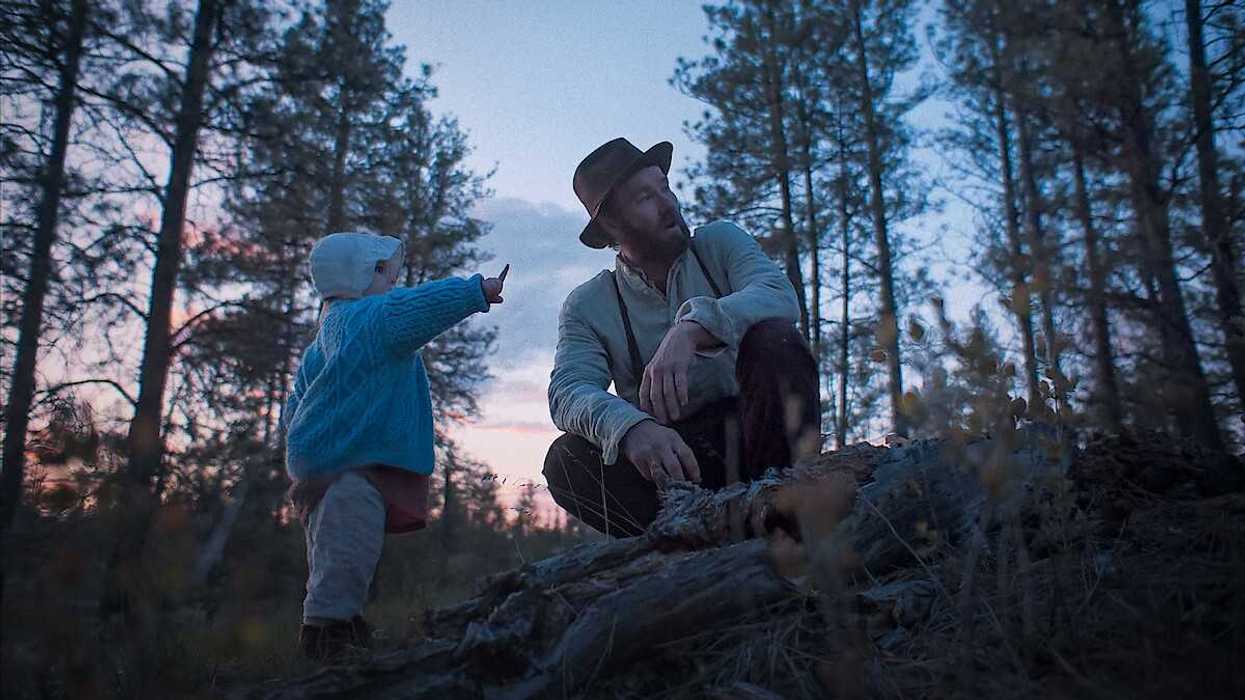
'Train Dreams'
Ever since Train Dreams came out, it feels like everyone is talking about it online. It's a brilliant movie that has such deep emotions and such an interesting story that people can't help but pick it apart and discuss all of the meanings of what happens on screen.
The movie was directed by Clint Bentley and stars a soul-weary Joel Edgerton. It's an adaptation of Denis Johnson’s beloved 2011 novella. The film chronicles the life of Robert Grainier, a railroad laborer in the American West who loses everything, yet keeps living, looking for purpose and meaning.
Today I want to talk about the ending of Train Dreams, what happened to the "Wolf Girl," and what we can learn from its portrayal of time and grief.
Let's dive in.
- YouTubewww.youtube.com
The Plot of Train Dreams
To understand the ending, we have to look at the tragedy that shapes Robert Grainier’s (Edgerton) existence across the movie's sprawling story.
Robert is a simple man, a logger and railroad worker in the early 20th century. He builds a home for his wife, Gladys (Felicity Jones), and their infant daughter, Kate.
While Robert is away working on a bridge, a massive wildfire sweeps through their valley. He returns to find nothing but ash. He never finds the bodies of his wife and child, but they also never come home.
This leaves Robert in a state of suspended grief.
He rebuilds his cabin on the same spot and becomes a hermit, drifting through decades of labor while the world modernizes around him, and he stays the same.
Throughout the film, the line between reality and the supernatural blurs. Robert is haunted by the ghost of a Chinese laborer (Fu Sheng) he saw killed years prior, and he is tormented by the possibility that his family somehow survived the fire and went "wild" in the woods.
The Ending of Train Dreams Explained
The film’s ending is a series of vignettes that jump forward in time, showing Robert aging as the frontier closes and the modern world takes over the wilderness he once knew.
There are two major events that define the ending...
1. The Wolf Girl
Late in the film (and in Robert’s life), an injured, feral girl appears at his cabin. She moves on all fours and howls. Robert convinces himself this is his daughter, Kate, who would have grown up wild in the forest and was possibly raised by wolves.
This is his chance for closure.
Robert splints her broken leg and cares for her for a single night. But by morning, she's gone. The film leaves her identity ambiguous. Is she actually his daughter? A lost indigenous child? A hallucination born of forty years of solitude?
The "truth" doesn't matter. All that matters is that this gives Robert the ability to be a father, something taken from him by the fire. He gets to save a child's life, giving him closure for not being there when his family burned.
When the wolf girl vanishes back into the wilderness, she takes his active grief with her, leaving him in a state of quiet acceptance of what his life is now.
2. "That's Us"
The film’s most jarring leap happens near the very end. We see an elderly Robert in the 1960s. He is in a modern town, looking through a shop window at a color television set. This is so different than the frontier he explored as a logger, and he's startled by the modernity all around him.
On the screen is footage of the Space Race—likely John Glenn orbiting the Earth.
Robert has no idea what all this means and is confused by the man on screen. A woman beside him watches the astronaut and says, "That's us."
In that moment, Robert realizes that all of humanity has advanced in ways he never actually thought possible, and that over the course of his life, he's gotten to see this remarkable leap.
After seeing that, Robert takes a ride in a biplane.
While in the air, he looks down at the landscape he spent his life hacking away at with axes and saws. It's all very, very different now.
- YouTubewww.youtube.com
What Does The Ending of Train Dreams Mean?
The film ends with the sense that Robert’s time has passed, but he is part of the continuous flow of history. He experienced the collapse of time.
Robert Grainier was born in a time of horses and candlelight. He spent his life cutting down trees to build the railroads that "shrank" the continent by bringing people far and wide.
By ending with the image of an astronaut, Bentley and co-writer Greg Kwedar are highlighting the terrifying speed of the 20th century.
And how it will continue to advance long after the people who built the roads and railroads have left us.
In a way, this world will pass us all by.
Robert is a relic (something we all will be someday). He is the "dead tree" mentioned earlier in the film by Claire (Kerry Condon): "The dead tree is as important as the living one."
The line "That's us" is the key to all of that.
Robert has lived a life of profound isolation, feeling completely separate from the world. But the view from space—and the view from the biplane—reveals that he was never truly separate. The railroads he built, the wood he cut, and the suffering he endured were the foundation for the modern world that is now leaving the planet.
His life, though unremembered by history and maybe even by the people who met him, was the soil from which the future grew.
The Themes in Train Dreams
The core conflict of Train Dreams isn't between characters, but between Nature and Progress.
- Nature is represented by the fire, the Wolf Girl, and the regenerating forest. It is chaotic, violent, and eventually reclaims everything.
- Progress is the railroad, the bridge, and finally, the spaceship. It is linear and unstoppable.
Robert is caught in the middle. He works for Progress (the railroad) but is ruled by Nature (the fire/grief).
The ending of the movie suggests that Progress will always win, but it comes at the cost of the "wild" magic that Robert experienced in the woods.
When Robert dies (which happens quietly in 1968), he is the last of a species—the American pioneer who lived in the silence before the noise of the modern world took over.
But where he lived is taken over by the plants he used to cut down, showing that they will continue on no matter what.
Even nature has progress.
Summing It All Up
Ultimately, Train Dreams is a meditation on the rapid current of the 20th century. It reminds us that while we may feel like solitary figures facing our own personal fires and tragedies, we are all part of a larger continuum.
Let me know what you think in the comments.
- 'Bugonia' Ending Explained: Unpacking Everything It Says About Humanity ›
- The Blade Runner Ending Explained: Tears in Rain ›
- The 'Inception' Ending Explained: Does the Top Stop Spinning? ›
- 'Heretic' Ending Explained ›
- '28 Years Later' Ending Explained: The Birth of a New World ›
- Examining The Purposeful 'Train Dreams' Camera and Lens Choices ›
- Greg Kwedar is the Patron Saint of the Indie Grind: Here’s What He Taught Us at SXSW ›
- Man on Fire Ending Explained ›