DP Julia Swain has indie superpowers.
The cinematographer is an ASC Rising Star who helmed the camera on Leah McKendrick's intimate 2024 film Scrambled. She partnered with McKendrick again to DP Voicemails for Isabelle with the kind of pedigree that comes from moving fast, improvising, and knowing exactly where to place your resources.
Now, they've reached No. 1 on Netflix's Top 10. It was shot in 35 days across 79 locations and 184 scenes, a schedule that demanded the kind of efficiency Swain learned shooting indie. It was shot on the ARRI Alexa 35 with Panavision T Anamorphic lenses, supplied by Panavision.
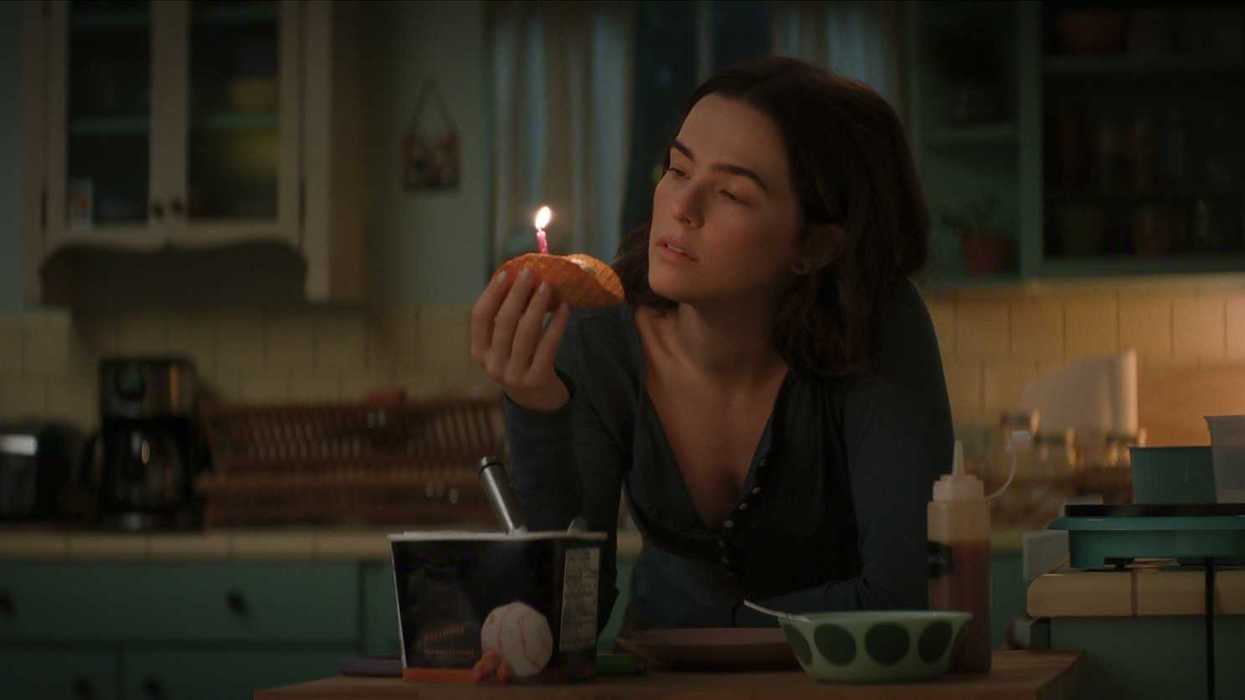
Voicemails for Isabelle follows Jill (Zoey Deutch), an aspiring baker in San Francisco. She's in constant contact with her sister, Isabelle (Ciara Bravo), who's back home in Austin and dealing with cystic fibrosis. After Isabelle's sudden and devastating death, her cell phone number is reassigned to real estate agent Wes (Nick Robinson)... and Jill keeps calling the number to leave her late sister updates about her life.
We hopped on Zoom with Swain to talk through her process for the rom-com, which balances grief and a sibling relationship with romantic tension.
- YouTube youtu.be
Tonal Balance Starts With How You Light It
When Swain first read the script, she understood the assignment immediately. This was a rom-com, but its foundation was a personal story about grief. It was a film asking something more complex than the typical meet-cute, with its own challenges for a DP.
"I think there's a lot of diversity in this script in terms of challenges like locations and lots of characters and lots of big set pieces that we got to tackle, and the emotionality of the script," she said. "I think I cried every time I read a draft, and felt so much. When you feel so much when you read, there are a lot of exciting, creative conversations that you're excited to have going into it."
That emotional specificity shaped everything that came after. Rather than lighting for comedy, Swain built a visual language rooted in the story's tonal balance.
"The comedy and sadness, that line that we tow is very much life. It is what we all experience, this back-and-forth between our great moments and our sadder moments. So I think finding a visual language that is rooted in a more natural—elevated, of course, it's a film—but just being able to have a look that's rooted in sources in the location and windows and something that feels as real as possible. I think the beautiful balance of comedy and drama and romance is all a reflection of our lives."
What they got was not a flat, bright comedy look. Instead, Swain reached for contrast, shape on faces, warmth, and the kind of shadow work that lets images breathe.
"We're not afraid of fall-offs with the shadows, and color separation, and all the things that I think make the images have more depth and more diversity in themselves."
Building Character Through Invisible Camera Work
The film's two leads, Jill and Wes, move through different visual worlds before they meet. Swain and McKendrick built specific language for each character's inner and outer life, a distinction that shapes how we experience them on screen.
"Jill's inner life is her relationship with her sister, her baking for herself as opposed to cutting kumquats for Flâner," Swain said. "Her inner life is leaving voicemails. It's her parents. And then her outer life is on the bus, at Flâner, working, walking down the street. And then, the same with Wes. He's this slick real estate agent. So the camera's really controlled. It's looking up at him to make him feel more powerful at his office. It's Steadicamming with him as he's making all these real estate deals. And then when we get into his inner life, he's listening. And now you're getting a peek into who he is and his vulnerability."
When Jill is in her element, making nachos on her truck, preparing her breakfast burrito, the camera becomes handheld and kinetic.
When Wes is listening to voicemails, the handheld approach brings visceral intimacy.
But the moment they meet, everything changes.
"When Wes and Jill meet, we're very still and observational, and we're letting it play out in front of us, and the camera's quieter. As their relationship blossoms, we're handheld again when they're on Pier 39, and getting to know each other. So we tried to build a language around their relationship."
This is invisible cinematography in the best sense. The viewer absorbs the character work through the camera without registering the technique.
"I wanted to make something that felt visually beautiful, and everybody looks good, but I wanted to also be invisible and just let you get immersed. I didn't want to draw attention to anything specifically. I wanted it to feel really authentic in the photography."
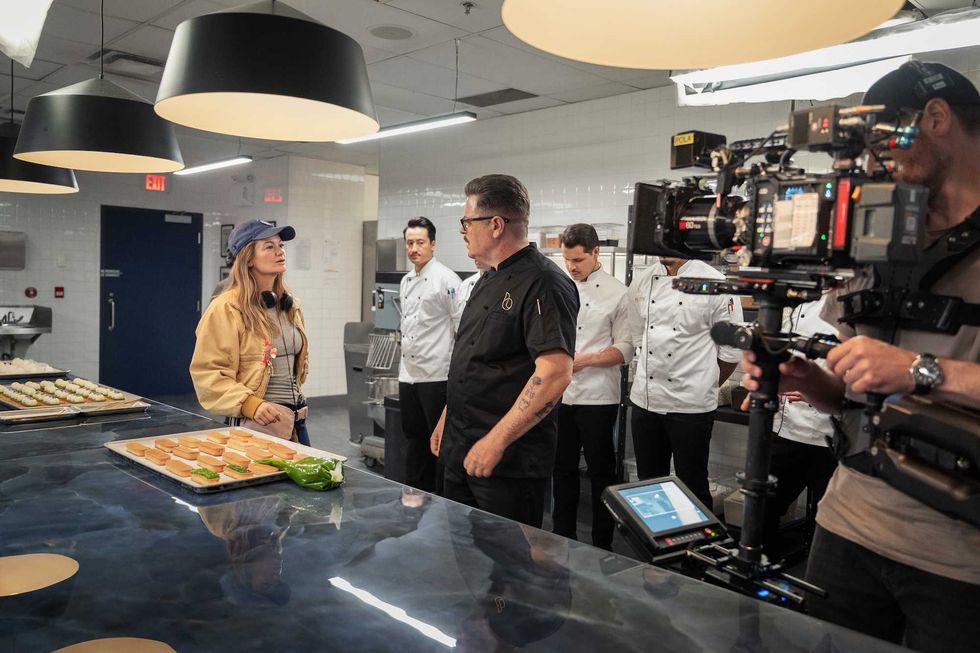 Director Leah McKendrick and Nick Offerman on the set of Voicemails for Isabelle. Credit: Diyah Pera/Netflix © 2026
Indie Superpowers on a Studio Timeline
The jump from Scrambled, where Swain operated the camera while McKendrick wrote, directed, and starred, to a Netflix feature could have been disorienting. But it wasn't.
"Climbing the ladder as a cinematographer can be really daunting and really challenging. And just like with actors and every role in this industry, there's a lot of rejection in climbing the ladder and trying to get on bigger projects and projects that get seen and are good. And so I knew I was ready to do something like this."
What surprised her most was how little actually changed.
"I think there wasn't a lot of adjustment. It was exactly the same as an indie, but it was just more days, more crew. I still had to cut things from my gear list. I still had to be specific about resources and how to accomplish stuff."
The indie skills are so important. Prioritization, speed, ruthless resource allocation, and being willing to move on when you really need another shot—those became superpowers on a bigger shoot. Swain still moved like an indie DP, which meant tackling ambitious location counts without compromising quality.
Take the San Francisco work.
"You only get two days in San Francisco. Okay, what can we do in two days? How fast can we move? How much of beautiful San Francisco can we capture in two days, and where do we maximize our resources and prioritize?"
On the second day alone, she hit 17 locations. Which is incredible. But they did it.
"I'm not going to 17 locations and throwing up 20 lights. You know what I mean? You have to be minimalistic and know where to pick and choose your battles."
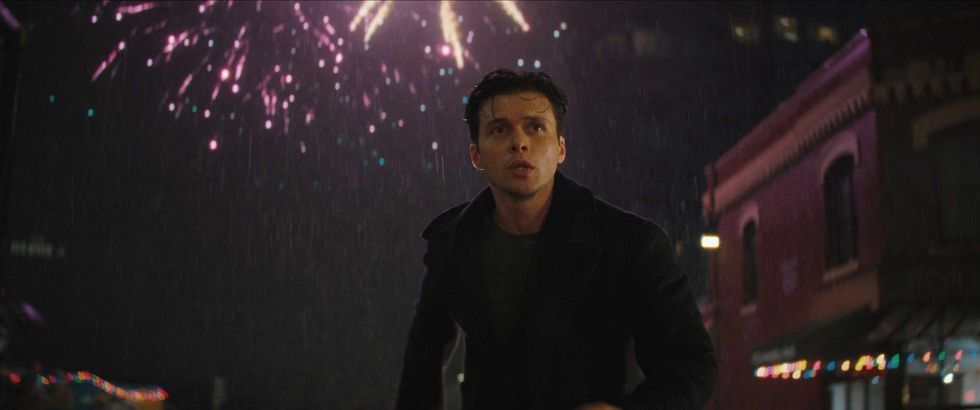 Voicemails for Isabelle Credit: Courtesy of Netflix
Chasing Film Texture on Digital
The choice to shoot anamorphic was deliberate. Swain wanted to recover something modern rom-coms had lost.
"We couldn't shoot on film for this, and obviously, a lot of the rom-coms everybody loves from back in the day are shot on film. And I think one of the obvious big reasons we love film is the texture and the softness that it has. I think modern-day rom-coms, some of them feel overly sharp. So I wanted to bring a dreaminess and softness back to it, just even though we were shooting digital."
The Panavision T Series lenses gave her that texture without sacrifice.
"I've used them on a few movies, and I think they're kind of a perfect tool for something like this, where they're not overly sharp. They're still versatile and give you flexibility, but they have a really beautiful quality to them."
A primary reference point was Jon Favreau's Chef, a film that achieves that soft, beautiful quality.
"We looked at that for a lot of the food work, but that's a movie that feels really filmic and soft and beautiful. And I think it's shot on the C Series, but that's another one where I was like, this is a perfect reference for what I would want to do in terms of aspect ratio and lensing for something like Voicemails."
Seeing Voicemails for Isabelle sitting right next to Chef on Netflix felt like full-circle validation.
"It actually went on Netflix, and Voicemails was right on top of it. You could scroll down, and Chef was right underneath, and I was like, 'This is so crazy.'"
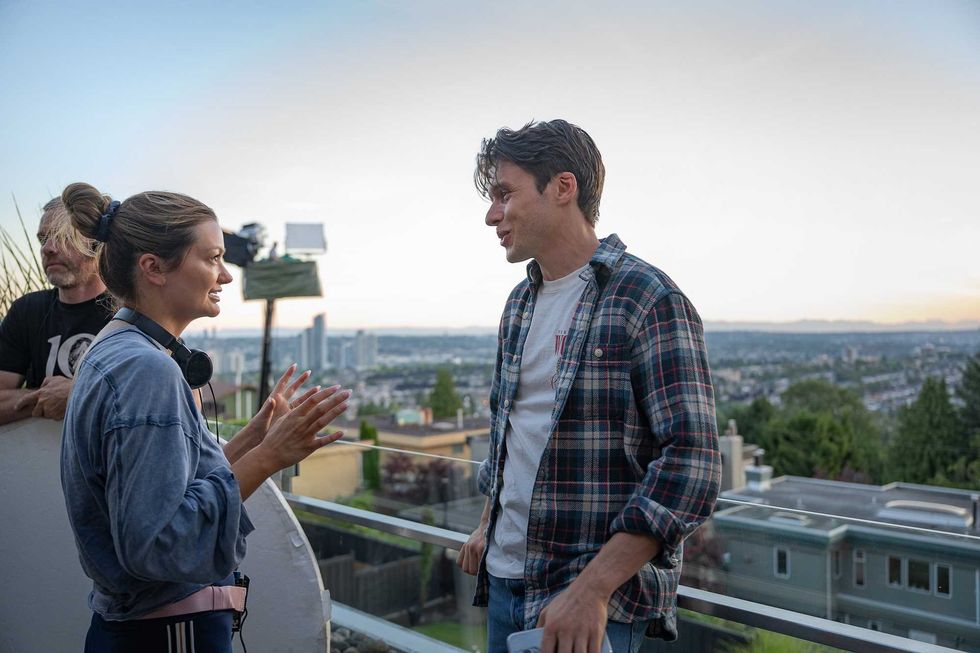 Director Leah McKendrick and Nick Robinson on the set of Voicemails for Isabelle. Credit: Diyah Pera/Netflix ©2026
Protecting Story Is a Team Sport
The most valuable lesson Swain took from Voicemails for Isabelle was about understanding her role within a creative partnership and how that partnership extends to everyone on set.
The film's ambition required constant decisions about where to push and where to compromise. Those conversations happened between Swain and McKendrick, but they rippled through the entire crew.
When asked what she'd take away from the experience, Swain circled back to something she already knew but keeps learning.
"It's not about me. It's never about me. It's about everyone. It's something that you wish you knew earlier on doing indies. The goal is to make the day and tell the story. I think what's great about Leah is that she will protect the story. I learned how crucial my role is in being by her side in protecting what's important to us, and where we can compromise."
That's the whole thing—standing with your director, deciding what the story needs and what you can afford to lose. It means being vocal about priorities without derailing the schedule.
"I think I would say it's important that you protect your voice and you make things you're proud of as the cinematographer, but it's as much about that as it is about the experience of the people around you," she said. "So, making sure your director feels empowered by you just as you are by them, and the producers are happy, and your crew is happy. I think I would say our job is not just to make something that 'looks good' or looks however you want it to look and how you intend it to look, but you have to protect the experience of everyone around you, your actors, your producers, your crew. It's about the experience of making this movie. And if you can make everybody happy and proud, then that's the biggest accomplishment, I would say."
Voicemails for Isabelle is streaming now on Netflix.