‘The Perks of Being a Wallflower’ Line That Changes How You See Love
Mr. Anderson has some wise words for you before you go out on your next date.
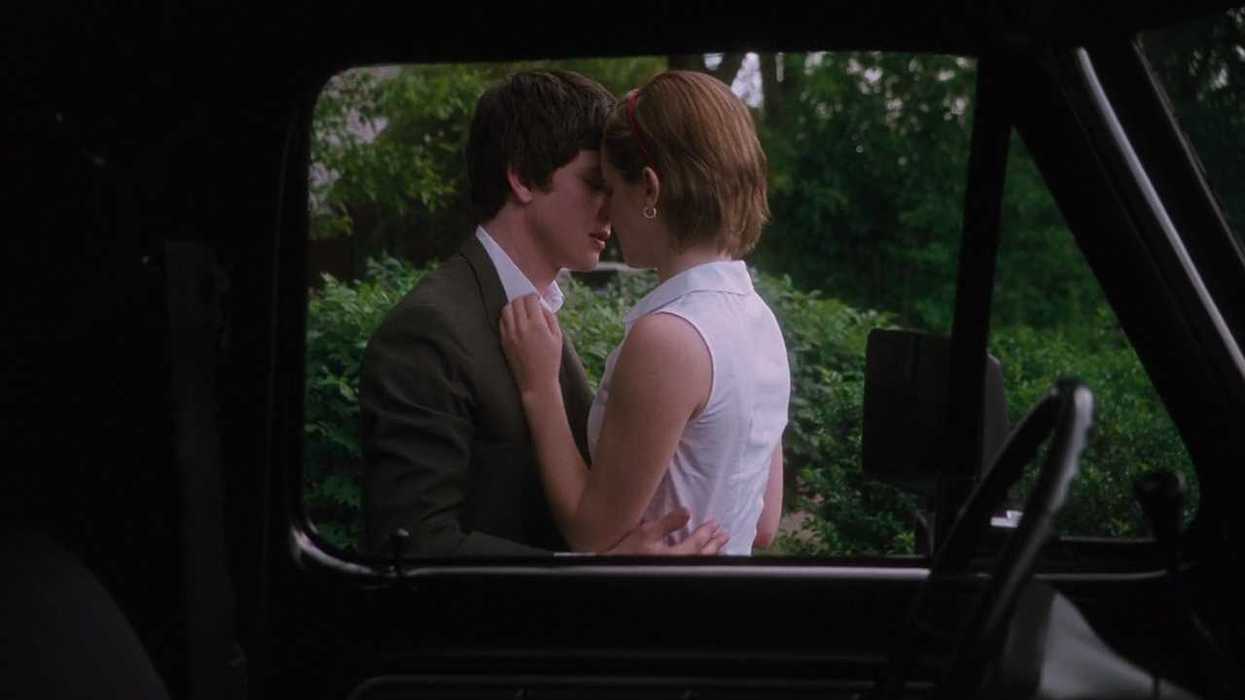
The Perks of Being A Wild Flower (2012)
Love is supposed to make our lives easier—only most of the time, we end up choosing people who do the opposite. Why is it that we forget the love that we have for ourselves while loving someone else?
Stephen Chbosky’s The Perks of Being a Wallflower isn’t just a well-made coming-of-age movie—it’s a story that nudges you to know yourself better while answering some of the most difficult questions in life that so many of us spend our entire lives searching for answers to.
I don’t expect movies to change lives (although I do believe art has that kind of power), but this one line from The Perks of Being a Wallflower changed mine.
In this article, let’s understand what “We accept the love we think we deserve” really means.
To Give You a Little Context
The Perks of Being a Wallflower follows a 15-year-old Charlie, who’s become comfortable with being a nobody—basically a fly on the wall, sidelined at parties. As he starts high school, Charlie (Logan Lerman) befriends two seniors who support him in breaking out of the trauma of his tumultuous past.
Charlie is not your typical toughened young man—instead, he is one of the most sensitive male movie characters ever seen. So, when he sees his sister, Candace (Nina Dobrev), suffering in an abusive romantic relationship, he is shaken.
While it is only natural for him to feel that way, seeing his sister in trouble, we realize much later in the story why the abuse affected him personally, too.
The Scene
Charlie has just learned that his sister is being abused by her boyfriend, but Candace requests that he keep it a secret. He himself isn’t an expert in relationships—another reason he led on Mary Elizabeth (Mae Whitman) in total confusion about his emotions.
For Charlie, Mr. Anderson (Paul Rudd) is the only adult he can really trust. So, one day, when they are alone in the classroom, Charlie asks him, “Why do nice people choose the wrong people to date?”
Such a question isn’t really a surprise from a teenager like Charlie; however, the randomness of it startles the teacher. He asks if Charlie is asking the question in context to someone specific to understand exactly where his pupil is coming from. Charlie doesn’t answer.
Anderson pauses to think and replies, “We accept the love we think we deserve.”
The answer clearly baffles Charlie. He asks, “Can we make them know that they deserve more?”
Anderson explains, “We can try.”
Breaking Down the One Liner
Mr. Anderson’s statement is no less than an epiphany for most of us, prompting us to reflect on what we think of ourselves.
Someone once told me that “falling” in love is rather a regressive way to put it. However, it’s realistic, isn’t it? We do fall a lot when we’re dating the wrong person—fall from our own standards, expectations, wants, and needs. After a point, we stop existing and somehow merge ourselves into the one we love.
But why do some of us always keep falling for the wrong person? Because “we accept the love we think we deserve.” Let’s understand in depth.
Understanding Any Two People in Love
Maintaining a relationship is all about understanding your attachment styles and your partner's. To explain in simple terms, in psychology, there are broadly three kinds of attachment styles: secure, anxious, and avoidant.
Only a handful have a secure attachment style; the rest of the world is divided into the remaining two (in varying ratios that further divide these styles into subsidiaries).
Those with anxious attachment styles live in constant fear of abandonment. Sometimes, they’re so traumatized that they self-sabotage relationships by projecting their abandonment issues on their partners.
The avoidants would likely choose death over connection and communication, out of the fear of being abandoned after they’re genuinely attached. In both cases, we’re prone to being manipulated and abused in love.
That is because people with dysfunctional attachment often judge their own worth through others. Their lives revolve around what others think of them, and most of the time, they choose partners who reflect their worst nightmares, because their insecurities have only taught them to devalue themselves. It’s a vicious cycle that’s a mix of underconfidence, imposter syndrome, and self-sabotage.
The Takeaway
Anderson’s statement reminds us to first understand our own value before we decide whether someone is good for us. In this context, a line from Miley Cyrus’ song “Flowers” perfectly puts it into words: “I can love me better than you can.”
The quote also reminds us that love is universal; it only differs in how you express yourself to the person you love. That’s why it’s so hard to choose between people you love.
So, if that’s true, then why isn’t the love that you have for yourself enough? It’s love, after all, maybe purer than the love from a random person you decided to date one day!
Charlie realizes what Mr. Anderson means by the end of the movie—that’s when he retells the same thing to Sam (Emma Watson), before confessing his feelings for her.
Let us know what you think about the English teacher’s dating insight in The Perks of Being a Wallflower.