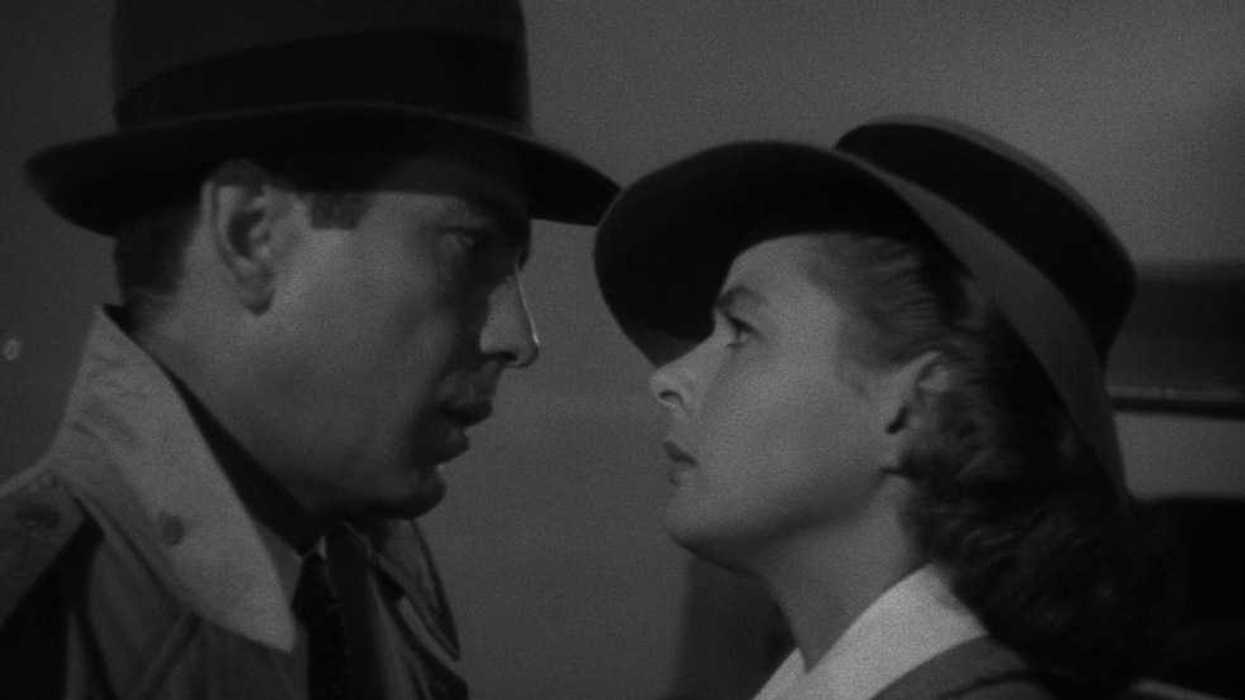
Casablanca (1942) has never been just a movie. It’s a romantic pilgrimage. We undertake this journey to get in touch with our beating heart from time to time—without ever having to leave our couch. And from all those unforgettable moments roaring at us, one line can be heard over all the others:
“We’ll always have Paris.”
What a simple sentence! Neither excessive nor melodramatic, and yet, enriched with the elements of love, sweet nostalgia, and the virtue of choosing what is right. Every time we hear it, it tells us that certain connections transcend time and circumstances.
The good thing is that Casablanca allows this line to stir the heartbeat of the entire film. We all have our own “Paris” and that universality works in conjunction with such little moments, little lines like this to give the movie its intensely romantic core—painful yet desirable.
Through this scene, the movie tells us that love is neither about possession nor is it permanent; it’s about moments that never fade.
The Airport Farewell: Where the Line Ends
The Setup: Lies, Sacrifice, and a Plane in the Fog
The whole setup begins with dramatic tension, goes through irony, and concludes with perhaps cinema’s most iconic goodbye. Let’s see how.
The scene opens with a lingering fear that the German Army could, at any time, arrest Victor Laszlo (Paul Henreid) to prevent him from escaping to America. Laszlo, Ilsa’s (Ingrid Bergman) husband, loves her deeply, while Ilsa’s love for him is more out of respect than passion—the latter is what she feels for Rick (Humphrey Bogart). She believes Rick has arranged a flight only for Laszlo, and she is going to stay back with him. They plan to tell Laszlo about this at the last minute—“The less time to think, the easier for all of us,” according to Rick’s plan. So when Ilsa enters the hangar, she is under a dual strain: the hovering possibility of Laszlo’s arrest and the inevitable heartbreak she is about to cause him.
The irony of the situation is exposed when she realises “the less time to think” was aimed at her, not Laszlo. Rick has no plans to keep Ilsa behind and put her life in jeopardy. He plans to send her off with her loving husband. Ilsa protests. She understands Rick’s logic behind the selfless act, but the lure of love is too strong. “What about us?” she asks. Rick says, “We’ll always have Paris,” reminding her that their love, true but doomed, is beyond the hope and need of proximity; all they have are memories of their time together in Paris, where they fell in love.
Ilsa is obviously devastated, but her protest falters when she realizes Rick was never planning to rekindle their romance; he was planning to secure her future with Laszlo. She has a heavy-hearted reckoning that by anchoring their love in Paris, Rick had ended every prospect of their future, but at the same time, protected their past. As his final goodbye, he comforts her—with yet another iconic line—before sending her off.
Humphrey Bogart’s Measured Resolve
When Ilsa asks, “What about us?” Rick doesn’t offer sentimental reassurances; he makes a hard-nosed decision. Bogart’s layered delivery perfectly portrays Rick’s resolution but also hints at the storm he is masking. His voice carries a tinge of despair along with a quiet content: what they had, however short-lived, was sacred and precious. This resignation without bitterness—a rare emotion—becomes discernible because of his yearning stare at Ilsa.
Ultimately, in no way is this decision easy on Rick, and as viewers, we can see that on Bogart.
 'Casablanca' Warner Bros.
The Line Itself
Paris: A Shared Kingdom of Memory
Paris, for Rick and Ilsa, is more than just a place. It’s an incorruptible idea, like childhood. Before the war. Before pain. Before sorrow. Before impossible choices. Paris, for them, is champagne, rain, and stolen kisses. Paris, for them, is where their love was born. By invoking Paris, Rick elevates their love to a safe, untouchable space.
The Ultimate Sacrifice: Renouncing the Present to Preserve the Past
The paradox of their situation isn’t lost on Rick: he understands keeping Ilsa with him would stain the perfect memory they share. All this for the uncertain, possibly gloomy, future? It’s not worth it. The pragmatic man in him knows their love might not survive the weight of war. What can survive are their memories. Their Paris. So he sacrifices the prospects of the future for the safety of their past.
The Grammar of Eternal, Unchanging Love
The brilliance lies in the line’s phrasing. It’s simple, yet poetic. “We’ll” projects the definitiveness of the future; “always” locks it in for eternity; and “have” implies belonging without ownership. The end result is not only reminiscence but also immortalization. It’s a promise that their Paris will always stay intact even if they separate.
The Beginning of a Beautiful Legacy
“We’ll always have Paris,” from script to screen, is a prime example of how one line can convey the meaning of a whole movie. In this case, it also becomes the film’s emotional anchor. Casablanca uses its arsenal of language, performance, visual craft, and cinematic techniques to metamorphose one simple line into a bold symbol of bittersweet love.
In the end, it points us to a certain fact that we perhaps find too hard to accept: some love stories are not meant to be pursued. They are only meant to be preserved.
- The Classic Film That Was Written While the Cameras Rolled | No ... ›
- What Are the 5 Best Black and White Movies Ever Made? | No Film ... ›
- Beyond the Iconic Line: “Here’s Looking at You, Kid.” – Casablanca ›
- Read and Download The 'Casablanca' Script PDF | No Film School ›
- “As Time Goes By”: The Song That Defines Casablanca’s Timeless Love | No Film School ›
- 8 Legendary Movie Scenes That Survived Studio Interference ›
- Film Quote of the Day: The 'Casablanca' Insult That Captures Rick Blaine's Wit | No Film School ›