8 Legendary Movie Scenes That Survived Studio Interference
Why studios tried to cut these scenes, how directors resisted, and how those decisions shaped film history.
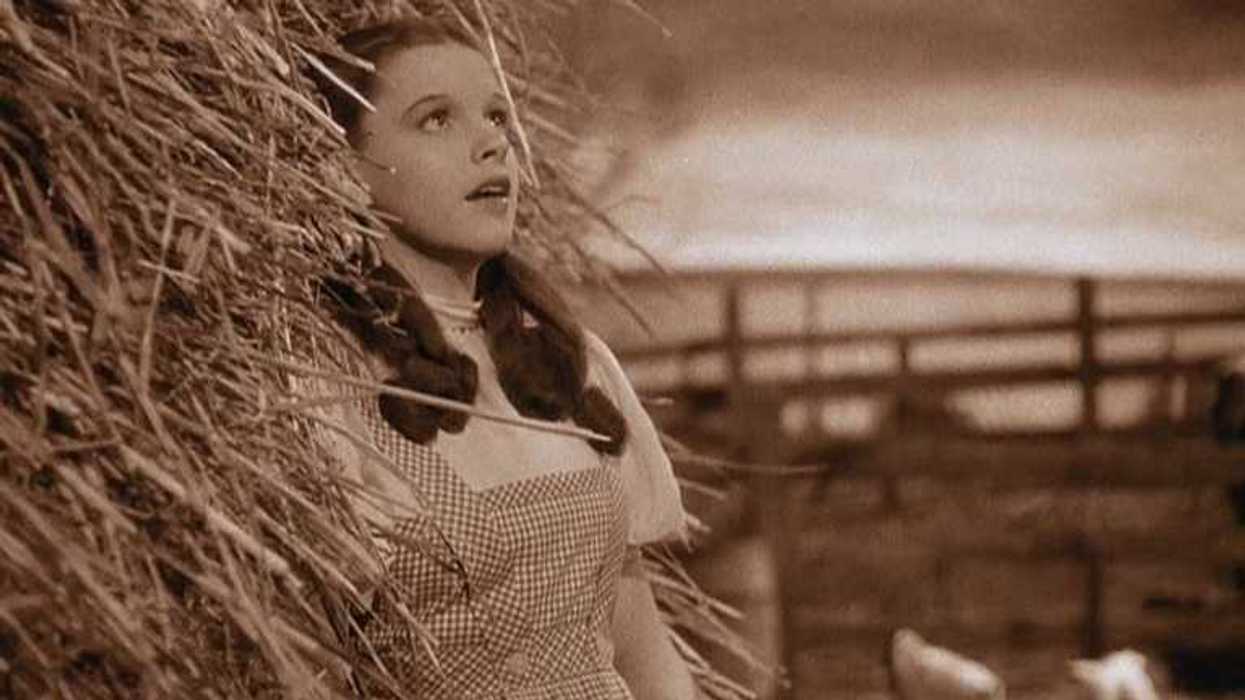
'The Wizard of Oz' (1939)
Have you ever tried giving your two cents on child-rearing to a new mother? Try doing that, and you will regret not keeping your mouth shut.
The relationship between art and the artist is quite like this: defined by the expression of emotion, passion, identity, and prerogative. A very intense and intimate affair. And quite personal. From an artist's point of view, the art is meant to be admired, appreciated, and at best interpreted. Suggestions on “dos and don’ts” are not welcome. You can’t imagine walking up to Picasso and telling him to “cubify” less or more as per your liking, can you?
Sadly, filmmaking is an art form where artists cannot enjoy full autonomy. That is, unless the artist comes from money. (Isn’t it sad, how often in life things stumble at the “money” part? Quite infuriating, actually.) Anyway, the point is that a good film may materialize because of a producer, but it comes to life because of a director. While a producer brings a tangible value, which anybody with money, resources, and infrastructure can bring, vision is something only a director can bring. And that’s why this union becomes the battleground—between profits and vision.
The film industry is a place where business and creativity both have to go hand in hand. But that’s not always easy. Many times, directors have to go to war for the “sanctity” of their artistic vision. We may think they are being difficult, but we wouldn’t if we understood that a film is more than just a sequence of plot points. It is about a specific feeling or a character beat that changes everything for the viewer. And only a passionate director can go against odds to fight for a vision.
Here, we are going to look at eight such instances where a passionate artist had the guts to say “no” and stick to his creative guns.
8 Movie Scenes Directors Had to Fight to Keep
1. “Somewhere Over the Rainbow” (The Wizard of Oz, 1939)
Written by: Noel Langley, Florence Ryerson, Edgar Allan Woolf | Directed by: Victor Fleming
- YouTube www.youtube.com
Now, while it’s virtually impossible to imagine someone wanting to cut this immortal melodic moment from a movie, that’s what happened during its production. MGM thought the song was slow and was dragging the movie down. They felt it was too “sophisticated” for a—wait for it—“children’s movie.” They thought singing in a dull barnyard wasn’t glamorous. But Fleming knew the song was of utmost importance to mirror Dorothy’s (Judy Garland) longing for home. Surprisingly, he wasn’t the only one fighting for the song; he was joined by two unlikely comrades, producer Mervyn LeRoy and associate producer Arthur Freed. Together, they fought the studio and (thankfully) won to keep the movie’s emotional engine attached.
2. “Frankly, My Dear, I Don’t Give a Damn!” (Gone with the Wind, 1939)
Written by: Sidney Howard | Directed by: Victor Fleming
To be fair, let’s not blame the studio in this matter. They had their hands kinda tied. The guilty party here is the sorry state of affairs that we call the “Hays Code.” It’s kind of funny to think of “Damn” as a curse word today, but back then, almost 90 years ago, the line proved to be a massive legal headache for the studio, since the code banned profanity. Those puritan Sunday-School boys! However, Fleming (and Selznick, too) were aware that this was the ultimate emotional mic-drop for Rhett Butler (Clark Gable), and any softer version would have felt like they had betrayed his final exit. So they fought the censors tooth and nail, and perhaps, having Louis B. Mayer’s influence helped. Whatever the case, a precious moment prevailed.
3. “La Marseillaise” sing-along (Casablanca, 1942)
Written by: Julius J. Epstein, Philip G. Epstein, Howard Koch | Directed by: Michael Curtiz
The scene shows the Nazis singing “Die Wacht am Rhein, a German patriotic song rooted in their animosity with the French. So, Laszlo (Paul Henreid) orders the band to play “La Marseillaise,” the French anthem. The movie came out during the heyday of World War II. Producers were concerned that this politically charged scene might alienate international markets. Additionally, they also thought the scene was too long and pointlessly dragged out. However, Curtiz was convinced that the scene was the film’s moral backbone and could transform the movie from a standard romance into a powerful call for global resistance and unity.
4. The shower murder (Psycho, 1960)
Written by: Joseph Stefano | Directed by: Alfred Hitchcock
Today, this shower scene is an iconic cinematic moment, but during production, its violence and nudity deeply unsettled the producers from a censorship and commercial standpoint. In addition, they also hated the idea of their protagonist, Marion Crane (Janet Leigh), being killed off so early in the movie. However, their protest didn’t (couldn’t) come to loggerheads because Hitchcock had funded most of the film himself—exactly for situations like this. However, he used fast-cutting and screeching violins to barely bypass censors. A visionary like him had definitely anticipated that subverting expectations would permanently change how audiences experienced horror movies.
5. The baptism and assassination montage (The Godfather, 1972)
Written by: Mario Puzo, Francis Ford Coppola | Directed by: Francis Ford Coppola
In no uncertain words, the studio was expecting a safe bet: a run-of-the-mill, mass-pleasing crime-action flick that would make money. That’s all. Coppola, however, was on an entirely different plane. These differences of opinion were everywhere—from script, casting, and vision, to tone, pacing, and editing. Naturally, when it came to the baptism montage, Coppola was making a screen parallel to the movie’s moral thesis by capturing Michael’s descent into hypocrisy.
This moment showed Michael becoming the godfather in real time. But what the studio saw was violence that was unusually graphic for a mainstream film, and the crosscut editing that was confusing. The executives at Paramount didn’t want nuance; they wanted a linear climax that any ordinary moviegoer would understand and like. Coppola vehemently defended his vision. I personally think the studio executives might have gotten tired of the film’s troubled production and just let Coppola have his way. Good for us.
6. “Tears in Rain” monologue (Blade Runner, 1982)
Written by: Hampton Fancher, David Peoples | Directed by: Ridley Scott
Again, an example of the studio and the director viewing the film differently. The studio, as always, wanted a sci-fi action movie that would give good market returns, which called for a high-octane climax full of action and drama. What Ridley Scott gave them was the anti-villain, Roy Batty (Rutger Hauer), letting out “philosophical ramblings” in the rain as he dies—the studio’s desire for a sci-fi action vs. Scott’s rendition of arthouse cinema.
Scott stood by his resolve to keep the monologue, also defending Hauer’s additions to it that he made the previous night. He argued that the monologue gives the film a soul, humanizes the replicant, and will encourage the audience to question what it means to be a real, living human. The studio finally consented and let the film’s villain evolve into one of cinema’s most tragic figures.
7. “Funny How?” stand-up moment (Goodfellas, 1990)
Written by: Nicholas Pileggi, Martin Scorsese | Directed by: Martin Scorsese
The now iconic “Funny how?” moment between Henry Hill (Ray Liotta) and Tommy DeVito (Joe Pesci) was initially perceived as a pointless narrative detour that neither moved the plot nor added any other value. But Scorsese knew better. Where the studio failed to spot any creative/narrative value, he saw solid potential to show the terrifying, hair-raising, volatile psychology of the gangsters.
He made his case by highlighting that the moment’s sudden pivot from laughter to deadly tension-filled silence illustrates the constant, underlying fear of living in the mob world. And that’s true. Even a hitman or shooter couldn’t do that. The scene’s longevity proves that.
8. Old Rose dropping the Heart of the Ocean (Titanic, 1997)
Written by: James Cameron | Directed by: James Cameron
The studio executives thought the film’s denouement, where old Rose drops the Heart of the Ocean in the water, was quite anticlimactic, especially after the massive spectacle of the ship sinking. In addition to thinking the moment was dramatically empty, they thought the diamond’s arc ended unceremoniously. They insisted on doing away with the scene, but James Cameron stood his ground. He argued that the movie was about Rose’s emotional growth; it wasn’t about the jewel’s journey.
The diamond was just a symbol (of Rose’s fringed, jewel-encrusted loneliness and misery). When she drops it in the water, she is proving that her memories of Jack (Leonardo DiCaprio) are her true wealth, and this moment completes her arc—not the jewel’s. Cameron was 100% right. This scene is the reason why the movie resonated with millions.
- That One Line From ‘Casablanca’ That Still Breaks Hearts 8 Decades Later ›
- How One Line of Heartbreak Cemented 'Casablanca' as the Ultimate Romance for Generations | No Film School ›
- Beyond the Iconic Line: “Here’s Looking at You, Kid.” – Casablanca ›
- 11 Movie Quotes That Foreshadowed the Ending (You Missed Them the First Time) ›
- The 14 Greatest Movie Endings Ever Filmed ›
- This Goodbye Line Remains One of Cinema’s Greatest Mic Drops ›
- Decoding The Line That Turned Defeat Into Defiance in ‘Gone With The Wind’ | No Film School ›
- How One Quote From ‘The Wizard of Oz’ Unlocks Its Deeper Message | No Film School ›
- “Come Out to Play”: The Story Behind ‘The Warriors’ Most Famous Improvised Line ›
- The Sci-Fi Classic Movie That Flopped, Then Became a Masterpiece ›