What Western Directors Can Teach Today's Filmmakers
Look to this genre to find some of the best directing tips.
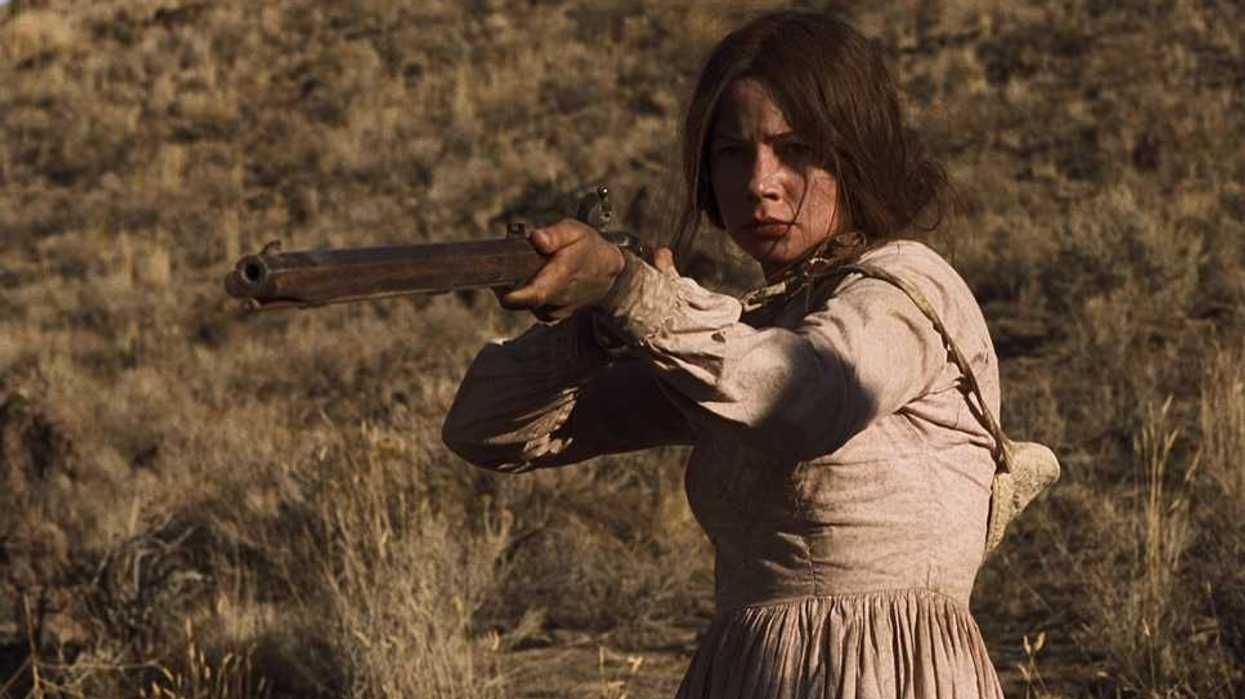
'Meek's Cutoff'
I am of the mind that you can get lessons in directing from any movie you watch. Good or bad, there are things you can latch onto to decide how you want to do things, and visuals that may inspire you.
Yeah, we all know about Hitchcock’s suspense, Kubrick’s symmetry, and Spielberg’s sense of wonder.
But I'm here to tell you to look toward the humble Western film for some of the best lessons in directing you can get. You can understand blocking, visual economy, spatial awareness, and tension just by tuning in to one of these classic stories and the legendary directors that made them part of the American lexicon.
Here is what today’s filmmakers can learn from the masters of the frontier.
Let's dive in.
1. John Ford: The Environment Is a Character
- YouTube www.youtube.com
Look for the horizon!
I really think not enough people in Hollywood watch John Ford movies. The guy was incredible. He just knew how to shoot movies so ahead of his time.
His work in Monument Valley was staggering because he could make the landscape a character in the movie and shoot at angles that echo the characters.
Now, with blue screens and CGI, we don't really use this idea enough. I think we should bring it back.
Key Takeaway for Filmmakers
Worldbuilding is making your location a character. Don't just have monologues telling us how they feel; show us with creative cinematography.
Your shots should tell the story.
2. Sergio Leone: Extreme Focal Lengths Drive Tension
- YouTube www.youtube.com
Sergio Leone flipped Hollywood on its head. He basically was like, hey, you know this American genre you all love? Well, we can do it across the world with different themes and ideas.
There was no boring coverage in Leone movies.
We had sweeping panoramic shots that cut straight to close-ups, and it all worked because he layered them throughout the narrative.
Leone knew that the human face is a landscape, and got us close so we not only loved his heroes, but we hated his villains.
Key Takeaway for Filmmakers
Pace your editing and mix up the shots you take. If every shot in your scene is a medium-close-up, then nothing stands out. Force the audience’s attention by cutting between spatial extremes and edit to fit the mood.
3. Sam Peckinpah: Action Should Have Consequences
- YouTube www.youtube.com
Before Sam Peckinpah’s The Wild Bunch (1969), movie violence was mostly bloodless. We'd hear a bang and see an actor fall. Maybe get a Wilhelm scream.
Then you had Peckinpah rolling in multi-camera, overcranking (slow motion), intercut with rapid edits, squirting blood, and guys all over the place.
His violence hurt, and it showed the real cost of taming the West.
His influence ripples through the filmographies of directors like Martin Scorsese, Quentin Tarantino, and John Woo, who all wanted to make things feel more visceral for audiences.
Key Takeaway for Filmmakers
You can play with varying frame rates much more easily now thanks to digital cameras and all the tricks in the edit bay. Vary your style. Make sure every burst of action carries psychological stakes too. The action always needs consequences.
4. Kelly Reichardt: Genre Is Not a Rulebook
- YouTube www.youtube.com
A twist! This section is about a director who has branded her westerns with tools inspired by the greats, but with the modernity of someone speaking to contemporary feelings.
Kelly Reichardt (First Cow, Meek's Cutoff) is not a classic Western director, but I deeply admire how she's made the genre her own.
She shoots landscapes like no one else working! She knows how to do close-ups and cut far, and she knows the hurt of violence.
Her movies demonstrated that you don't need massive shootouts or traditional hero archetypes to make a compelling Western. You just need ot have something to say and to follow some of the rules above, which she does.
I'm not even that big of a fan of Meek's Cutoff, but when you watch it you totally get the sense of the struggle and the people at its center. And visually, they're so isolated and boxed in with her aspect ratio.
Summing It All Up
If you haven't watched a western in a while, go back to them. Watch the movies from the people on this list and think about what you have to say about storytelling. Experiment with your visuals and find a way to blend these lessons into your voice.