Have you ever noticed that the most memorable moments in a film are the ones not shown or told?
Those gaps leave an imprint on our psyche as they silently bridge the gap to fulfill the scene’s motive. They are deliberate — to create more powerful imagery or storytelling as our minds actively look out for clues to build upon. The silence after a question, a cutaway before a violent act, or an unexplained backstory are a few narrative examples that stay with us for longer.
Let’s learn more about “narrative negative space,” an important cinematic tool you can use to increase the psychological impact of your stories.
Defining Narrative Negative Space
Simply put, it’s the visuals or the narration you don’t see in a film but infer through your imagination.
In cinema, “narrative negative space” refers to the blanks, intentionally placed in the narrative structure. By leaving the gaps for the audience to fill, the writer transforms the passive consumer into an active one. It’s done to connect the viewers deeply with characters and the story itself.
It’s not that the writers are too lazy to write out those parts. But they calculatedly exclude the details. For this to work on-screen and on the page, the writer must know the entire playground of the story so they can choose which information to hold on to.
The Psychology Behind the Negative Gaps
You might have heard that our brains are pattern recognition machines by nature. Connecting the dots is our favorite hobby. So, when presented with a negative space in stories, our brain goes to work. It longs for the full picture and compulsively tries to complete the unfinished patterns.
Moreover, spoon-feeding is boring, corny, and makes up for a lazy movie. Just bombarding the audience with every little detail of what happened, what’s happening, and what’s about to happen on-screen is not going to hook them. However, not revealing certain information is an interactive and engaging way to tell your story. An intellectual investment made by the viewer makes them feel important in the unfolding of events. This is how they emotionally connect to characters and remember the moments that mattered without even saying a line of dialogue on-screen.
Above all, it is also a matter of paying respect to the audience’s intelligence. By leaving the blanks for the audience to fill, you are basically saying, “I trust you,” and it takes a brave heart to do that — it can easily be misunderstood. But giving your viewers freedom to interpret what could have happened in those negative spaces makes them feel like an integral part of your narrative.
Understanding from Hemingway’s Iceberg Theory
Also known as the “Theory of omission,” Hemingway’s Iceberg Theory states that a story should shine through without being expository on the surface.
In one instance at a train station in his short story, “Hills Like White Elephants,” a couple discusses abortion without directly referencing the word “abortion.” It is a matter of an unwanted pregnancy. The man in the relationship states that the operation is a simple one, but his lover is seemingly distressed by the idea. The omission of the word “abortion” never appears but dominates the entire scene, creating a palpable tension between the two.
Although this example relates to the indirect dialogue between the characters, it conveys the idea of negative space. To go a little further, the concept of “show, don’t tell” has evolved in cinema to “don’t show, don’t tell,” which also works like a charm.
Cinematic Application of the Narrative Negative Space
Visual Negative Space
 Punch Drunk Love (2002)Credit: Sony Pictures Releasing
It’s all about designing and framing your shots. Many filmmakers use negative space to show a character's inner conflicts, their mood, and isolation.
In Denis Villeneuve’s Blade Runner 2049, most frames are filled with warm tones, haze, and vast, empty landscapes, depicting the isolation of Officer K (Ryan Gosling).
In the opening shot of Paul Thomas Anderson’s Punch-Drunk Love (2002), Barry Egan (Adam Sandler) seems tiny sitting at his desk in his big office compound. The cinematography uses negative space to show the emptiness in the frame. The emptiness reflects Barry’s emotional state.
Narrative Omission
 No Country for Old Men (2007)Miramax
It is about omitting the key action from the scene (the cutaways), directly leading us to think about the consequences.
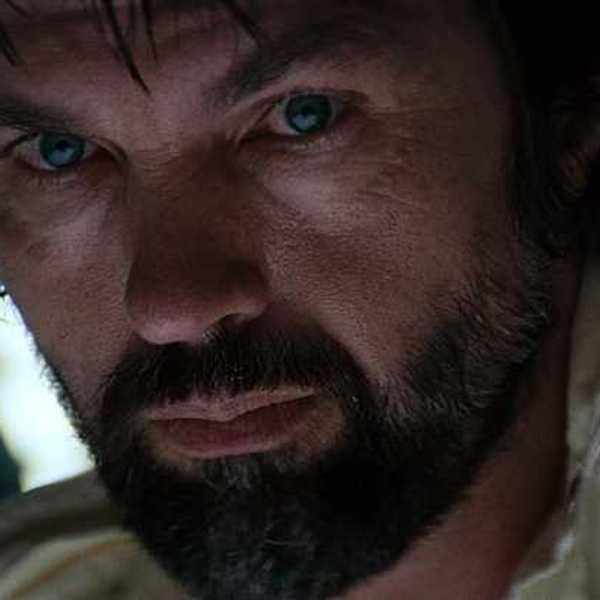
In the Coen Brothers’ No Country for Old Men (2007), several of Anton Chigurh’s (Javier Bardem) gruesome murders happen off-screen. He goes inside a room, and we see him leave. That’s it. Here, the negative gap leaves us imagining the horror, which is often scarier than witnessing it.
Conclusion
Although narrative negative space is an essential cinematic tool for driving the story forward in the most creative way, if not done properly, it can lead to vague results that no creative person wants in their work.
Therefore, it’s very important to know the story throughout, so the writer knows their hidden gaps. It reflects in the action that they choose to show, as those actions carry the weight of what happened off-screen. That way, the writer leaves us with appropriate and precise clues to put our imagination to work.
- What Is a Non-Linear Narrative? ›
- What Is a Narrative? ›
- 5 Essential Tips for Crafting the Narrative in Your Documentary ›
- How Can You Get Narrative Ideas From Watching Non-Narrative Films? ›
- How to Punctuate Narratives With an Extreme Long Shot ›
- Watch: What's Negative Space and How Can You Use It Effectively in Your Own Films? ›