What is the Socratic Dialogue Technique? Definition & Examples
It’s not to win arguments, but to find the heart of an idea.
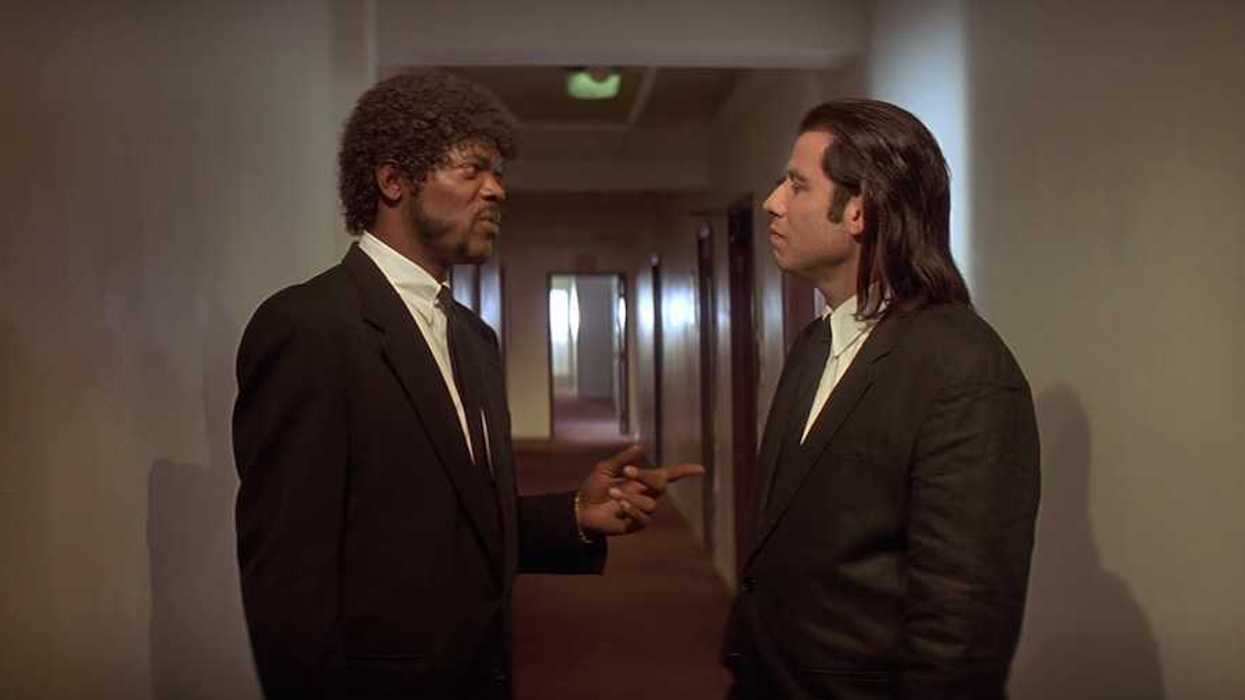
'Pulp Fiction' (1994)
Keeping things vague for a purpose and being unclear about what to say are two different things.
As a writer myself, being stuck on vague ideas sucks. It slows you down and makes your writing dull.
Socratic dialogue helps you clear brain fog in crafting a story with clear thematic goals, or even to enrich the conversation between your characters, as we see in several movies.
To understand its impact on dialogue, let’s clarify first what Socratic dialogue means.
What is the Socratic Dialogue?
A Socratic dialogue is a conversation between two or more people involving a series of questions and answers, followed by further questions and answers, in order to find out the other person’s understanding of moral issues.
It is a type of interrogation whose goal is not to win but to explore the epistemological nature of ideas. The main principles of Socratic dialogue are to promote critical thinking and to draw ideas and underlying presumptions.
What Makes the Socratic Dialogue Truly Work?
The Socratic Method requires cooperation and a mutual commitment to come to a better shared understanding of an issue.
The fact that there is no such thing as a correct or absolute answer often baffles people.
After challenging people’s initial beliefs regarding an idea, they receive and reflect on the new information.
As soon as they think they have reached a conclusive idea, another question is thrown at them with a “why,” or to present evidence, or by simply asking them to define their new understanding. Then, the cycle repeats itself.
The 5 R’s
In a nutshell, there are five R’s: Receive, Reflect, Refine, Reiterate, and Repeat.
- Receive: It’s as simple as it sounds. Really listen to the other person’s argument or views. Shed any judgment that could falter the process and make it biased.
- Reflect: Reflect on their idea; Ask them to clarify their stand and paraphrase their idea to reveal any underlying assumptions.
- Refine: Refining a belief is often done by asking questions like, “Why?” Uncover the facts and beliefs on which their argument is based. Moreover, critically challenge their assumptions with open-ended questions. Next, ask more questions if required to uncover any other fallacies.
- Reiterate: Now that the other person has identified their prior flawed assumption, restate the idea together and ensure you both are on the same page of understanding.
- Repeat: With a new viewpoint in hand, repeat the cycle of questions and answers to get to the core of the issue.
When the process is repeated, what we get is the Socratic dialogue.
Key Elements of Socratic Dialogue
Probing Questions
Questioning is the most important aspect to initiate the dialogue. The nature of questions is usually open-ended so that further inquiry can be carried out by challenging other people’s assumptions, false or biased beliefs, and exploring ideas.
Critical Thinking
After the beliefs are challenged, comes the time to critically examine one’s own fallacies, arguments, and preconceived notions on the issue. Critical thinking is necessary to identify and eliminate the elements of a flawed opinion, thereby strengthening the foundation for the next, refined one.
Discussion
A discussion not to win, but for a healthy exchange of ideas. A collaborative discussion is necessary in Socratic dialogue to get to the bottom of the truth: without it, the whole exercise falls flat. The skill here is to really listen to the other person.
Examples of the Socratic Dialogue Techniques in Movies
1. Matrix (1999) — Morpheus Questions Neo’s reality
The Matrix is filled with Socratic dialogue, which helps Neo (Keanu Reeves) to clear his assumptions about his reality. Through those questions, he eventually discovers his real self.
Early in the movie, when Morpheus (Laurence Fishburne) asks Neo, “Have you ever had a dream, Neo, that you were so sure was real? What if you were unable to wake from that dream?"
This question forces Neo to rethink the world he lives in and believes in. He becomes open to the possibility that he might just be living in an illusion — the very first step towards breaking free from the Matrix.
2. Pulp Fiction (1994) — The Foot Massage Exchange Between Jules and Vincent
Pulp Fiction features some of the most amazing dialogue in film history.
One of the popular scenes from the movie is when Jules (Samuel L. Jackson) narrates to Vincent (John Travolta) the story of how Marsellus Wallace (Ving Rhames) once sent his men to throw a man over the balcony for giving a foot massage to his wife.
Contrary to Vincent, Jules thinks that the action was unnecessary for just a foot massage. Both of them engage in a discussion about whether giving a foot massage to a married woman is morally wrong or not.
Vincent uses Socratic dialogue by asking Jules, “Would you give a guy a foot massage?” and makes a point that the act itself means more than what Jules might really think of it.
It makes Jules instantly realize the flaw in his beliefs about a foot massage. It clicks for him that when it comes to giving foot massages to a man, he’s not okay with it. It’s a special practice that he reserves only for the women in his life.
3. Interstellar (2014) — Is Nature Evil?
There’s a brief philosophical exchange between Brand (Anne Hathaway) and Cooper (Matthew McConaughey) about whether nature is evil or not.
Brand asks Cooper, “Is a lion evil because it rips a gazelle to shreds?” to which Cooper has a momentary pause before he responds with, “Just what we take with us then.”
This exchange definitely showcases the elements of a Socratic dialogue, where Brand challenges Cooper’s belief about nature that forces him to reconsider his argument.
4. 12 Angry Men (1957) — Juror No. 9 and His Question
12 Angry Men is a classic and a well-made film known for its spectacular one-location story, among many other great aspects.
At one point in the film, Juror No. 9 (Joseph Sweeney) asks his fellow jurors, “Do you think you were born with a monopoly on the truth?” Rather than lecturing them on the subject, Joseph Sweeney's character subtly forces them to talk about it through an open-ended question, yet a probing one. The playwright and writer of the film, Reginald Rose, definitely knew about the Socratic dialogue technique.
Conclusion
It’s crucial to note that the goal of Socratic dialogue is not to win an argument but to understand knowledge, talk about ideas, and get to the bottom of the truth (which is never absolute).
I’ll leave here with one of Socrates’ famous philosophies, “The unexamined life is not worth living.”