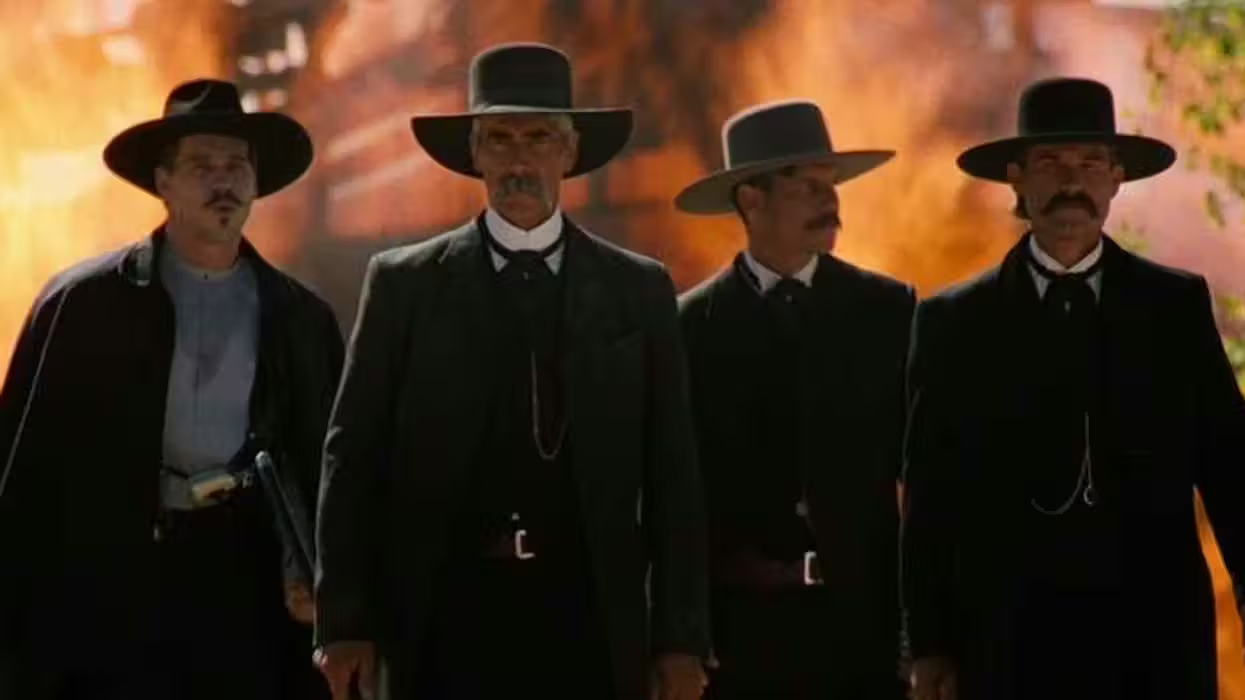
In the winter of 1993, the Western was supposedly dead. Hollywood was in full post-Unforgiven fatigue. People thought the genre had given everything it had to the public and that it was all over.
But those people didn't know that a little movie called Tombstone was about to go into production, a production that was plagued by chaos, and emerge on the other side as one of the most beloved westerns of all time.
To fully understand why Tombstone won't die, I have to tell you, there's no way this movie should even exist! It was a western; it already had that going against it.
There was a rival Kevin Costner project (Wyatt Earp) sucking up all the studio oxygen.
The director got fired during production.
They had an actor take over directing every day to keep production moving!
By every law of cinematic survival, George P. Cosmatos’ (and, let's be honest, Kurt Russell’s) Tombstone should have probably never happened.
But it did, and over thirty years later, Tombstone is a movie we all go back to and study and love and just enjoy.
So how did it survive?
Let's dive in.
- YouTubewww.youtube.com
The Val Kilmer and Kurt Russell Masterclass
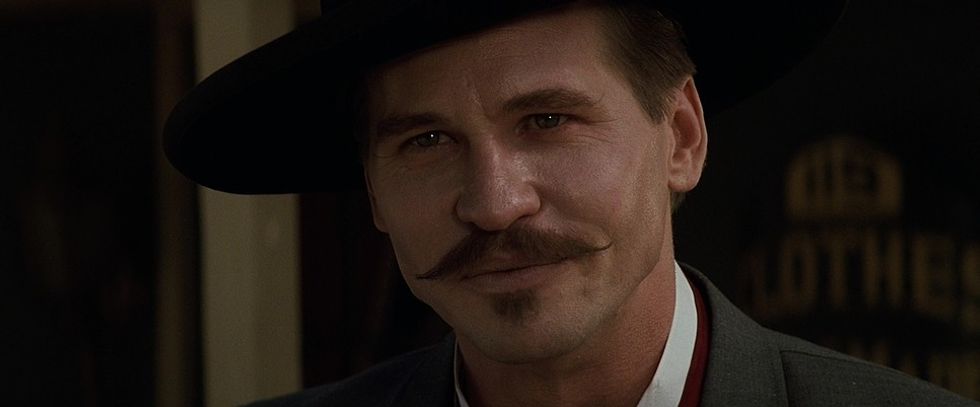
There is no way to talk about this movie without including Val Kilmer’s Doc Holliday. It is routinely cited as one of the greatest supporting performances in cinema history.
This whole movie is about how the men of Tombstone work together, often in tandem, to dispel the rogue cowboys in the town, jockeying for power.
Our heroes have to be on a balanced team to take on these guys, and so much is shown in the way Kilmer carries himself.
Kurt Russell’s Wyatt Earp is anchored and stoic. He's in Tombstone to be a businessman, but these cowboys keep starting trouble.
But Kilmer’s Holliday is theatrical and tragic.
Both actors are succeeding at two different things, and each of them plays off the other wonderfully.
Kilmer has a performance that's totally physical; from dying of TB to flipping a cup, he's always moving, coughing, or just having a bad day. And Russell plays off that by assessing, creeping in the periphery, and even watching over him.
You know when he acts, it matters.
Together, they form the epicenter of a story the whole world revolves around.
Key Takeaway for Filmmakers: When writing or directing an ensemble, build character dynamics that are oposites of each other. That way actors don't step on each other's toes.
Melodrama Meets Modern Rhythm
The classic Westerns of the 1950s and 60s relied on slow-burn tension and long wide shots. By today's standards, they feel like they can drag. And even in the 90s, people wanted their stories to accelerate.
Tombstone, written by Kevin Jarre, unfolds like an action thriller. Sure, the Old West setting helps mask it, but we open on some action after a brief prologue; we know the stakes are life and death immediately.
And the structure stays interesting from there.
The film gives you two climaxes. Act Two ends with the O.K. Corral shootout, which we know is coming.
That probably felt like the natural way to end any movie, but there was more meat on the bone in this legend.
Act Three shifts gears into a full-blown revenge movie. The tension doesn't come from land or gold; it comes from family and brotherhood seeking justice for the attack in the first place.
 'Tombstone' Credit: Disney
Writing for Precision
Tombstone is one of the most quotable scripts ever written. "I'm your huckleberry." "Tell 'em I'm comin', and hell's comin' with me!" "You skin that smoke wagon and see what happens."
I could go on and on, but the real lesson here is that the dialogue matters. And it does because Jarre wrote with an almost Shakespearean cadence disguised as Old West colloquialisms.
It was a precursor to Deadwood; we have these stylized lines that seep out, making the whole thing a little mystical.
Alongside that, they are direct in their intention. When Wyatt tells Ike Clanton, "I newsed it around quiet," or Doc says, "I have two guns, one for each of ya," there isn't a single wasted syllable.
We know exactly what they mean, even when subtext is present.
The Power of "Ghost Directing" and Production Grit
Like I said at the top, this movie should never have even survived production, but it had a crew that believed in it more than anyone else.
They came together and made it happen.
Original director/writer Kevin Jarre was fired a month into shooting for falling behind schedule. Kurt Russell stepped up as the unofficial director and held the production together while George P. Cosmatos was brought in to call "action" and "cut."
Russell found nuance in scenes and stripped back extraneous subplots on the fly to keep the movie under budget and on schedule.
That meant they couldn't pull the plug.
He even supposedly made sure that the emotional spine of Wyatt's desire for a normal life, set against his inescapable nature as a lawman, remained, so the audience had something to identify with in these legendary men.
This movie exists because people loved it and wanted to share it with us, and you can feel that in every frame.
Long Live Tombstone
Tombstone refuses to die because it never apologizes for being a sprawling tragic opera on horseback. It's just a wild movie that won't be tamed by one genre or set of expectations.
It's angry, determined, and it makes you want to ride out into the sunset for a shootout with your closest friends.
Instead, pop in the Blu-ray and live in the interesting world we can revisit anytime we need inspiration or lessons on how to flip a tin cup.
It will always be our huckleberry.
- “You’re a Daisy If You Do”: How a ‘Tombstone’ Line Turned a Taunt Into Legend ›
- 7 Most Iconic Lines From ‘Tombstone’ Ranked ›
- Walking Over Your Grave: Doc Holliday’s Deadliest Line in 'Tombstone' ›
- Decoding Doc Holliday’s “Terminal” Loyalty in ‘Tombstone’ ›
- Film Quote of the Day: The 'Tombstone' Quote That Perfectly Captures Doc Holliday's Wicked Sense of Humor ›