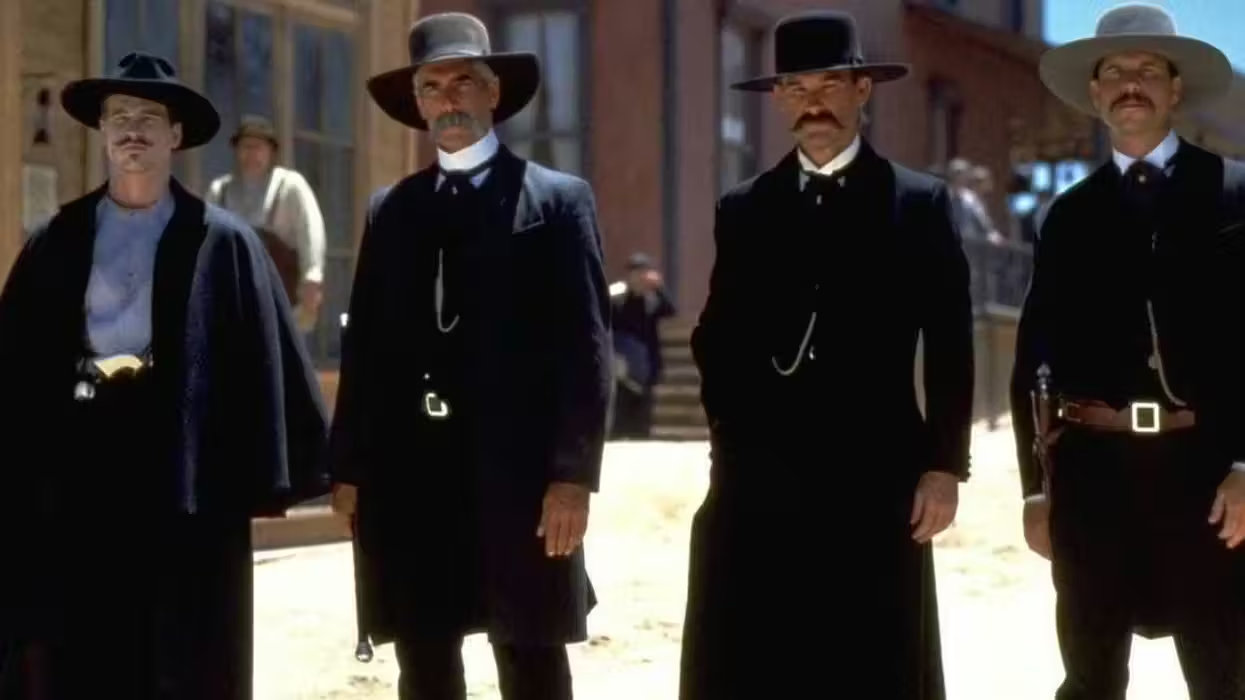
I'm sure as writers we all feel the pressure of The Big Scenes—and we know when we're coming to them. Usually, they approach like a landmark in the writing process, if you visualize writing a script like traveling the Oregon Trail. You have to reach them and make sure they count.
These scenes are usually huge, pivotal character moments or the big confrontations. Sometimes they are dialogue-heavy, which I find is the bigger challenge than writing straight action. What are characters communicating in the silence between words? What are the minuscule differences between their potential word choices? How can you make sure it's both emotional and realistic?
That's why I love looking at scenes like this one from the end of Tombstone, in which Doc Holliday delivers one of the film's biggest gut-punches of dialogue: "There's no normal life, Wyatt. There's just life."
- YouTube www.youtube.com
"There's No Normal Life"
This scene comes near the end of the film. Doc Holliday (Val Kilmer) has been slowly dying throughout the story, and after his climactic shootout with Johnny Ringo, tuberculosis finally manages to best him. He retreats to a sanitarium to spend his final days. Wyatt Earp (Kurt Russell) continues to visit him in an attempt to lift his spirits and keep him distracted, trying to force a game of cards.
Doc turns philosophical. He reflects on a lost love.
"What did you ever want?" Doc asks him.
"Just to live a normal life," Wyatt says.
"There's no normal life, Wyatt, it's just life. Get on with it."
"Don't know how."
"Sure, you do. Say goodbye to me. Go grab that spirited actress and make her your own. Take that beauty from it, don't look back. Live every second. Live right on to the end. Live, Wyatt. Live for me. Wyatt, if you were ever my friend—if you ever had even the slightest of feelin' for me, leave now. Leave now. Please."
Wyatt acquiesces. "Thanks for always being there, Doc."
This is the last scene the two men share. Wyatt walks away, and Doc passes a few moments later.
On Dialogue Authenticity
The whole thing works because we've spent time with these two men who love each other dearly but won't say it outright. The scene gives them a softer moment for reflection while maintaining both of their senses of humor. Wyatt is gruff and bossy, and Doc is calm and sardonic.
It can be tempting to forget voice in these moments. You just want the characters to say what you want them to say, and you might not think it matters how they say it. But it does, enormously.
The dialogue also fits the period and genre settings. Reportedly, Kevin Jarre pulled from historical accounts for many of the film's most iconic lines (including "You're a daisy if you do").
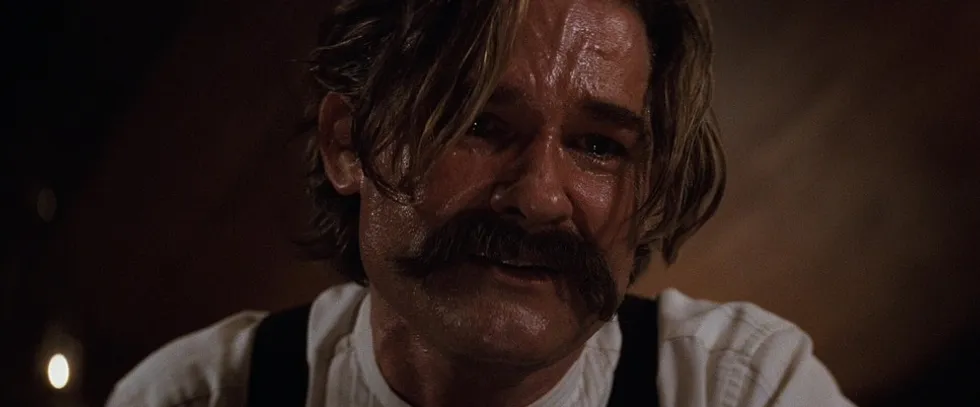 'Tombstone' Credit: Buena Vista Pictures Distribution
Where Insightful Dialogue Comes From
With the line "There's no normal life," Doc tells Wyatt to stop lying to himself. Not because the world is cruel or inescapable, but because Wyatt is pretending to be someone he's not. Doc's spent his whole life running, trying different places, different versions of himself. He's tired now. Dying. And what he sees in Wyatt is the same delusion he finally gave up on.
So he tells him straight. "You keep saying you want a normal life, but that's not what you're built for. Stop wishing for something else and live the life you actually have."
When he says this to Wyatt (who came to Tombstone specifically to settle down and escape his lawman days), it's Doc knowing him well, and the depth of their relationship is revealed. It's what this specific character, dying and at peace with the fact, would actually say to his friend.
Subtext is where that relationship (as well as Doc's beliefs) hides from the audience. Sure, you could have Doc say all this outright. "I know you, Wyatt, and this is what I think."
But that doesn't sound as good, does it? And we don't want to be on-the-nose.
In 2020, Kilmer wrote (via Cowboys & Indians):
"In trying to understand the character of Doc Holliday, it’s important to remember he’s a fallen aristocrat, frustrated by his inability to express his authentic self. His greatest retribution for this loss was his caustic wit. His tongue is more lethal than his pistol. Throughout the drama, he’s dying of both drink and tuberculosis. In playing him, I thought of what my dear friend the great screenplay writer Robert Towne had taught me: all insightful dialogue comes out of situations, not predeveloped thought. In that regard, I saw Doc’s situation as dire. I also saw his action as defiance in the face of death. I loved him."
All insightful dialogue arises from situations. So don't try to force it on your characters.
Dialogue and Theme in Tombstone
As mentioned, Doc's line is essentially the film's theme in miniature. Wyatt Earp wants a dream life and keeps focusing on that dream without understanding that all his resistance is just holding him back. Wyatt has spent the whole film refusing to accept who he is and what his life actually contains.
So Doc's line, delivered as he's dying, having lived that lesson his whole life, is essentially the film's thesis statement. What is "a normal life"? It doesn't exist. There's just life. For men like them, that could be a life with violence in it. Or it could be a life going after the woman he won't let himself have. Letting go of grief and letting go of Doc, too.
Stop wishing things were different, Doc says, and actually live the life in front of you.
The film's theme arises from the action we've already seen and through the choices Wyatt makes throughout. But to have it encapsulated so beautifully and organically from a person Wyatt loves is really deft screenwriting. It gives Wyatt permission to move on from it all and pursue something new.
What do you think of the dialogue in Tombstone?
- Decoding Doc Holliday’s “Terminal” Loyalty in ‘Tombstone’ ›
- “You’re a Daisy If You Do”: How a ‘Tombstone’ Line Turned a Taunt Into Legend ›
- The Psychological Brilliance Behind Doc Holliday’s Iconic “I Have Two Guns” Response ›
- 7 Most Iconic Lines From ‘Tombstone’ Ranked ›
- The Wyatt Earp Line That's One of Cinema's Coldest Comebacks ›
- Hud Quote ›
- Film Quote of the Day: The 'Tombstone' Quote That Perfectly Captures Doc Holliday's Wicked Sense of Humor | No Film School ›
- Film Quote of the Day: The 'Tombstone' Quote That Doc Holliday Delivered in Latin | No Film School ›
- Film Quote of the Day: The 1971 Movie Line That Captures the Bittersweet Reality of Life | No Film School ›