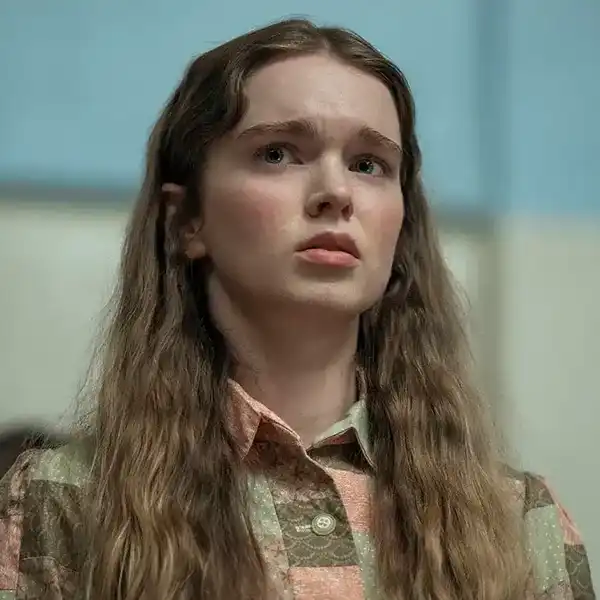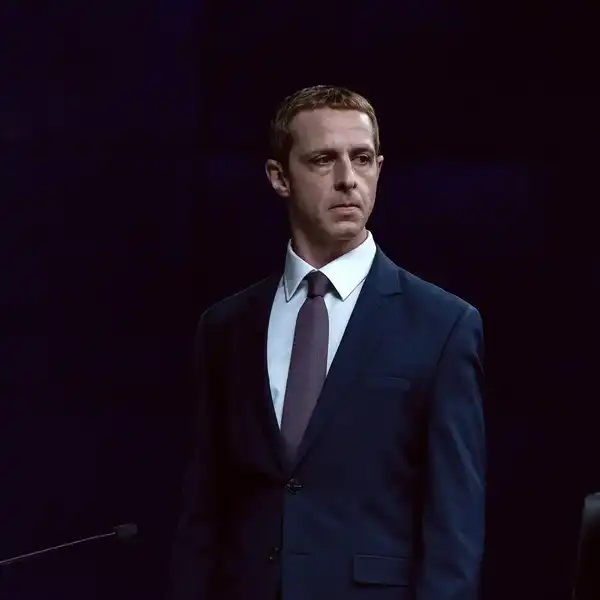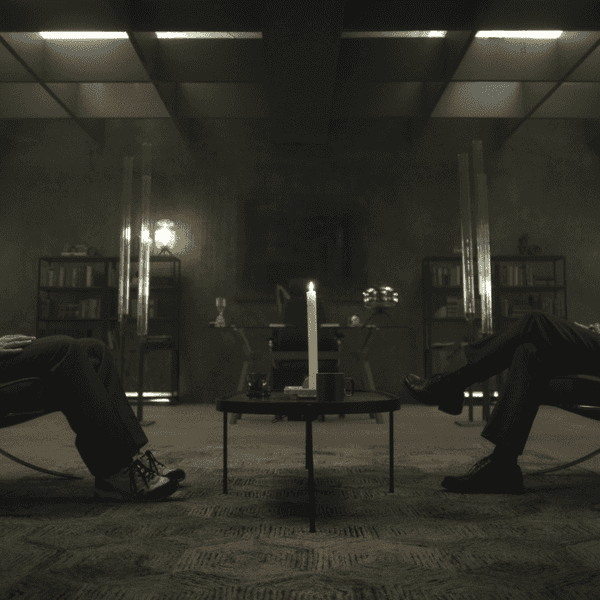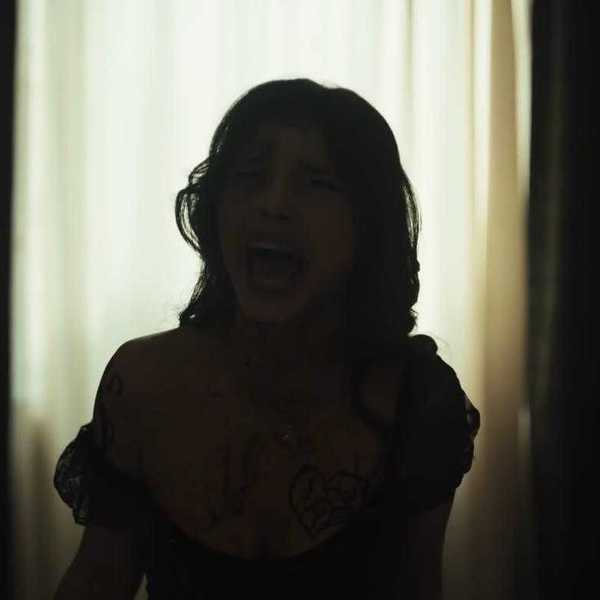
I Love Boosters is already one of the year's most inventive and unique films, due in part to production designer Christopher Glass, who brought director Boots Riley's vision to life alongside a team of innovative creators. He was tasked with creating some truly wild sets, including a tilted (literally tilted) penthouse studio, a chicken-restaurant-turned-squatter's pad, a colorful Chinese factory, and more.
Glass began with more than a decade as a storyboard artist in commercials before moving into feature films, previs supervision, and visual effects art direction, work that eventually led to designing The Jungle Book and a career in movie and TV production design.
I Love Boosters follows a group of women in the Bay Area who steal high-end clothing for resale. Among them is Corvette (Keke Palmer), an aspiring designer who idolizes the creator of their stolen goods, Christie Smith (Demi Moore). Her gang meets, through incredible circumstances, a Chinese factory worker bent on taking down Smith for her company's unfair business practices. The film is funny and anti-capitalist and creative in the most surprising ways.
We got the chance to speak with Glass about his experience on the film.
- YouTube www.youtube.com
Editor's note: The following conversation has been edited for length and clarity.
No Film School: I know that your path is a little bit unique because you came up as a storyboard artist and doing FX and previs. So I would love to hear you just talk about that, and then how you got into production design.
Christopher Glass: For about 11 to 12 years, I was a storyboard artist. Started out in commercials, which is a great ... I'd actually say it's a great place to start a film career in the commercial world. And then that led to movies, and then eventually previs became a big thing in the pre-production of movies. And certain directors like Sam Raimi and Ron Howard that I worked with, they would put their storyboard artists in charge of a previs team. So we would storyboard, and then became a previs supervisor. And then that led to then art directing visual effects for commercials and designing things like robots and stuff like that in the commercial world.
And then that commercial experience led to The Jungle Book. Jon Favreau had been trying to get me to design some commercials with him actually at one point. And then he was like, "Hey, you want to try out for the Jungle Book?" Which was kind of a long shot.
But yeah, so I got that, and then I became a movie production designer, basically. I do TV shows, and I still do commercials. And in the beginning, I didn't really know what I was doing. I production-designed commercials before getting into doing The Jungle Book. So I had done maybe four years of production design commercials before The Jungle Book. So it wasn't like I just didn't know anything. But yeah, I was still pretty new, and I'm one of those people that likes to learn, trial by fire. So that's sort of how I got into it.
NFS: On a film like this one, where the director has such a specific and singular vision, I’m interested in what those early conversations look like, and how Boots talked to you, and how you synthesized his ideas.
CG: So Boots started out with giving me the script, but he gave me a playlist of music since he comes out of the world of music, and he wanted me to listen to certain songs as I read it. And it gave a vibe. And of course, the script is written in a way that is very visual, and a lot of the uniqueness comes across in his writing itself. But yeah, so we start out with references and pass references back and forth. He had a set of references that he found. He talked about Michel Gondry and stop-motion animation, and he liked this movie called White Cat, Black Cat.
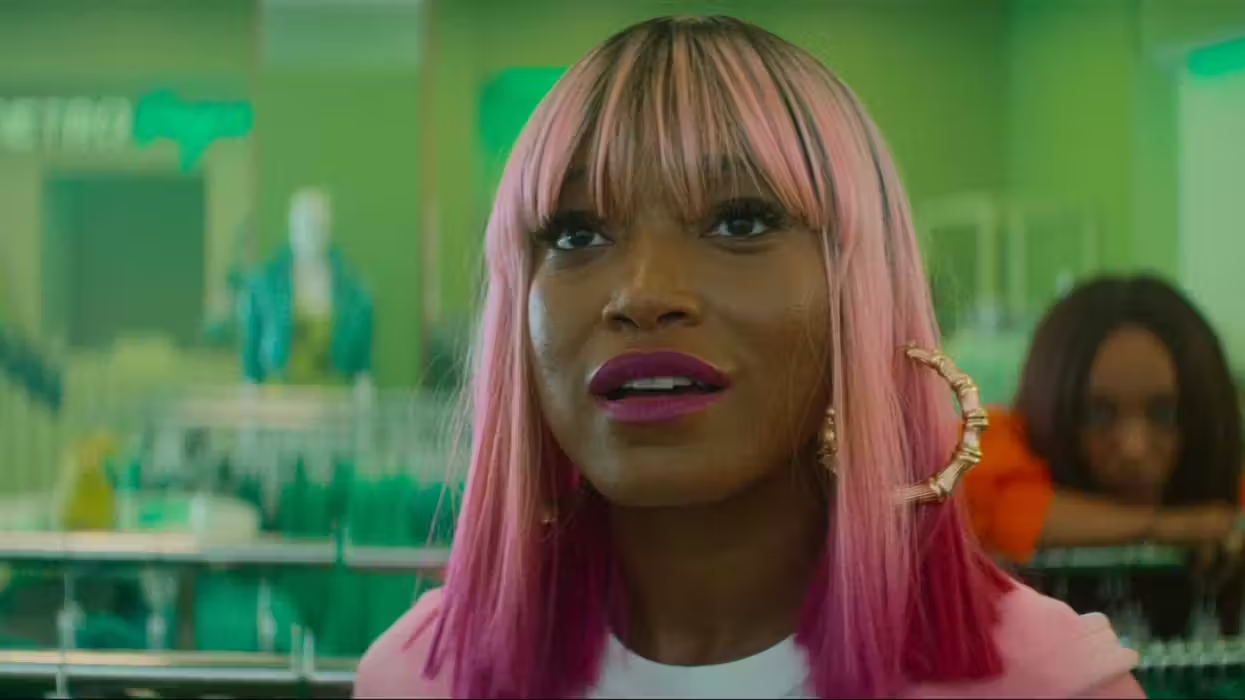
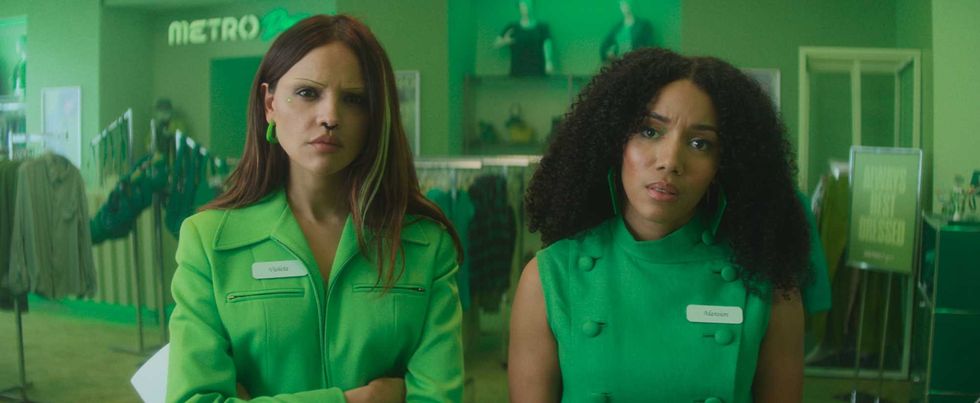
And then I would bounce references off with him, like Time Bandits, Terry Gilliam, stuff like that. So we kind of get in the right world, the right vibe, and then we kind of go from there. But it's a lot of reference gathering. He wanted a heightened reality. He didn't want it to look realistic. It was always intended to be absurdist and hyperreal. And that would include the monochromatic stores.
Boots often would say that he was bored with real stores, or people would get bored with it quickly. So we should make them more interesting-looking. And also, it fits in with the character of Christie Smith controlling her customers in a way. And it becomes a thing where it's almost condescending. "If you want a different color, then deal with it, go to another store. Each store has a different color." So that was the basic beginnings of the conversation, and then we went from there.
 I Love Boosters Credit: Courtesy of NEON
NFS: You have that great montage sequence where you see several of the stores, and they change throughout. How did you approach creating those sets?
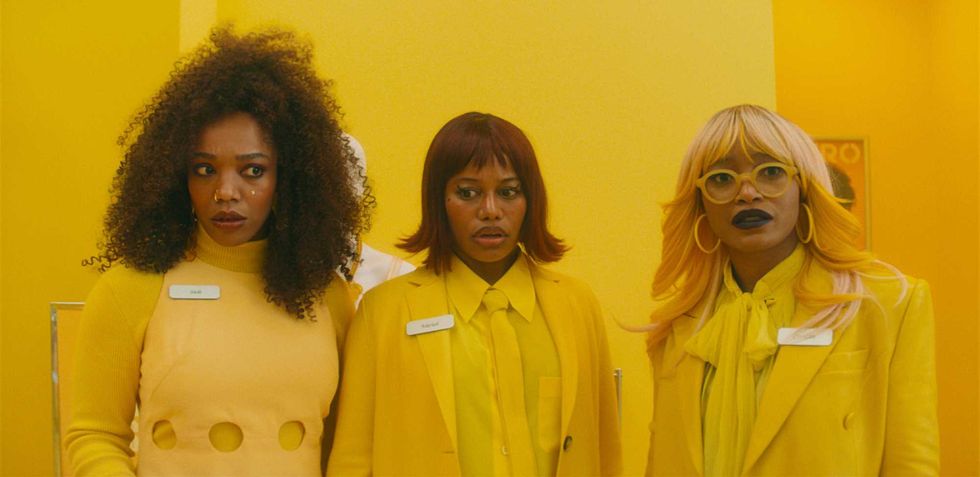
CG: Well, before I get to the montage, the green and the yellow sets, those were full sets, and they were the same set, and we just literally painted them a different color. So we started out, I think green. I wanted to start out yellow, because it's easier to go from yellow to green, but I think we had to start out green for scheduling reasons. And then we would go shoot something else, and then, while they're off shooting something else, we're changing the set completely to yellow.
So we'd paint it yellow, then we had to bring in all the set dressing that's yellow. And we never wanted all the clothing racks and everything to be perfectly matched. We wanted to be in a world of that tone. So it's yellow, but if you watch it, you'll see there's different types of yellow. One, that's for practical reasons, but also I think it looks good.
And then in terms of all the montage, what we did is we built a really long set, and it was little sections that were different colors. So you'd have a red, brown, pink, and blue, and there were very small two-wall sets that were just back to back to back, and they're all shot on the same day. Shirley [Kurata] had to do a lot of costume changes. She always had to do a lot of costume changes, actually, which, by the way, she's amazing. And we just shot it in a row. So you'd have on the next, to the next, the next, the next, and we did it all in half a day for the montage.
NFS: How are you collaborating with the other departments to give everything that fun and quirky energy, but also be unique and varied in the way that you just pointed out?
CG: So obviously, Boots, he's the director, he was the guiding light for us. But having said that, this was definitely a collaborative effort between all the departments, between myself, costumes Shirley Kurata, Natasha Braier, the DP, the miniature makers, the stop-motion artists, everyone. I mean, the ADs, the special effects department we worked very closely with, because there's a lot of moving set pieces and clothes being shot out of cannons and being sucked into cannons and shot in reverse and all these things.
We just had to talk a lot. We had to communicate. I would give color samples to Shirley. I'd say, "Hey, this is what the walls are going to be like in the Metro Designers." And then that would give her an idea of what kinds of costumes would work well. And she did a great job of contrasting that for the non-employees. So if you're not an employee, then she hyper-contrasted the background color, and it's very effective. And if you become an employee, then you're meant to blend in and assimilate. So that was part of the conversation.
And then, of course, Natasha, she lit the sets. They were already painted in a color, but then she would accentuate it with her own color, and she'd decide when to contrast or accentuate, and it was just a rolling conversation.
It's always collaborative on filmmaking, but to get the color right was the most collaborative that I've ever had to do on a feature or any project, other than there was a commercial I did with Spize Jonze with FKA Twigs, where that was another very colorful thing. But I think it just takes good communication, giving samples. Sometimes Shirley would give me samples of fabrics. Natasha would then send me photographs or reference, or she'd explain to me what she wanted to do for a certain scene, and we just had to work together. It was just a collaborative [project]. It was fun. And thankfully, we all got along. It was great.
- YouTube www.youtube.com
NFS: I have to bring up that slanted set because it's just bonkers. How did you arrive at the degree to which it was tilted?
CG: The slanted, Christie Smith's penthouse studio, was written as a 45-degree slant, which is actually a big slant. And if we actually built it at a 45-degree slant, no one would be able to work on the set without being strapped in with safety harnesses, including everyone basically. So that was just impractical, and it's also kind of scary. 45 is actually way more scary. It's like a skate ramp. It's like asking everyone to work for hours on a skate ramp.
So we arrived at 15 degrees, which sounds like a huge compromise, and I think there was a worry that that would be a big compromise, but we made a sample floor piece. I had my art director, Troy Sizemore. He made an incredible foam-core model of the set at different angles. And then he built an actual wedge, like a floor piece, so we could find the right angle, and we could put more wedges underneath it to see, like, okay, and then stunts came. (Oh yeah, it was a huge collaboration with stunts, by the way, with Chelsea Bruland.)
And so we arrived at 15, and Boots saw it, and he was like, "Oh yeah, I guess this is kind of steep actually." So we built the set at 15 degrees. And that presents all kinds of problems. You can't just set up a light; you can't set up things. And what was great is that Boots, it's meant to look like it's slanted. It's meant to look like Christie Smith has adapted to it somehow and only she's comfortable in this weird luxury thing, and no one else is. So he wanted all the furniture strapped down with L-brackets and chains. And if you watch the movie, you'll see there are L-brackets and chains on everything, including everything on the shelves. There are chains holding everything. The paintings are hanging by gravity, so they're actually, they look weird and off-kilter. The curtains are all weird and the light.
But when I first built the set—I didn't tell Boots this—I saw it, I arrived, and I was like, "Oh, 15 degrees. It doesn't look steep enough." So I was like, "Oh no, what can we do? "
So I talked to my construction Ben Nichols and Troy Sizemore, my art director. I was like, "What can we do to make it just a little steeper?" And he's like, "Well, we could raise the back end of it with a forklift and then prop it up, add more supports, and just raise it a little..."
So we tweaked it to 17 degrees. We got it to 17 ... Stunts was cool with it. I had to tell everyone, of course, what we were doing, and I don't think Boots ever realized it until later, but that's where we arrived. At 17 degrees.
- YouTube youtu.be
NFS: Is there a part of the film that you're most proud of, or visually, you like the best?
CG: Good question. I mean, I love everything that we did. I mean, I'm really proud of what we did with the factory. I mean, I like a lot of the sets, like the slanted set and even Corvette's place, where she's squatting at the chicken restaurant, I thought is fun. And what's a nice contrast with her place with the rest of the shoot is that it's not monochromatic. There are colors galore, and it's crazy, and it's not minimalist, but I really liked the factory.
That was a unique opportunity to do something kind of nuts. And my big influences for that visually were Brazil and Who Framed Roger Rabbit. We wanted it to be candy-colored, and we could have gone with the dark, oppressive, bland factory, but the rest of the movie had so much color.
And then I did look at some references of actual factories that do clothing, and there's a lot of lint or a lot of colorful lint that gets thrown around and starts covering everything, and there's a scene where they're outside, and there's lint or fuzzy stuff all over the walls and things. That's actually based on some real references of lint at these factories.
And then a lot of the time, dye just gets spilled into the environment, and it's beautiful, but it's also horrible because it's poison, but it looks like these colors blending together and spilling out everywhere. So I wanted it to feel just a little fantastical, a little heightened because the entire movie is, and I feel like we achieved that, especially with just the color palette. And once again, I was working a lot with Shirley. I knew she was going to do pink costumes for the factory workers, so we played off of that with the greens and stuff like that.
 I Love Boosters Credit: NEON
NFS: Is there one thing that you would say an aspiring production designer should learn to do?
CG: I didn't come out of the traditional route to become a production designer. A lot of production designers, or most of them, I think, go through the art directing route, from sometimes they're set decorators, and they become production designers, but I think a lot of production designers start as an assistant art director, and then they become an art director, and then become supervising art director. I think there is definitely still a huge value in that pathway. I would recommend that. I wouldn't necessarily recommend becoming a storyboard artist first and then production designing. That's sort of a non ... I mean, it's possible there are other production designers that do that, but that's a very different pathway. I mean, I think there's a big anxiety in general about AI and all this stuff.
I would just not ignore it, but I think you sort of have to learn what the tools are that exist, so you know what you're up against in terms of technologies and these kinds of things. But I think traditional production design, like learning set design, learning even architecture, construction, those things are definitely still the key, I believe. And I didn't come out of that background, as I said, and I had to learn it on the job, and I'm not so sure that's the best way either. For some people, it is. For me, it worked, but I think I would try to go down the art directing route. Become an assistant art director, and that kind of thing. I think that's still valuable.
Art directors are not going away anytime soon. There are too many things that have to do with actual objects and building. When you build a set, you have to build a real place that's safe for the crew and for the actors and for everyone. And it's a real thing, so you have to know how to build it and how to make these things.
NFS: Is there anything you want to add about the film or your experience?
CG: I'm super proud of this film. I think it's one of the best things that I've ever done, and I just hope more people see it. I think it was a very close, collaborative, creative, crazy movie. It was not easy to make. I don't want anyone to think this was an easy movie to make. It was not easy. It was very difficult, but it was a good type of difficult. When I say that, it's like a challenge to figure out how to create things.
And I think that's another [piece of] advice for up-and-coming production designers and concept people is just leaving open the ability or to want to challenge yourself to create something and to make something new. And not everything is going to be something like I Love Boosters, where it's all crazy.
Sometimes, some of the best production design is not that crazy-looking. It kind of fades into the background, and you don't notice it as much. I would throw out a movie like Manhunter from Michael Mann. The production design is amazing, but it's not like screaming at you or even Marty Supreme, which is a recent movie that Jack Fisk did. He did an incredible job production-designing it, but he made it look realistic. I think it wasn't hyperreal or anything like that. I think he really researched how things looked back then. And I think that's the fun part of this job, production designing, is researching and almost transporting yourself because you want to transport the audience, and it all comes back to story, and where's the story supposed to be? And I've done a lot of different types of movies. I've done war movies.
I've done superhero stuff. I did this movie, and they're all very different, but I think the common thread is trying to transport the audience, and every story has its own need. I think just trying to figure out how to get to that point, that's the fun of the journey. That's the challenge, I guess, that's enjoyable.