I always approach discussions about The Rise of Skywalker with some sense of unease, knowing the psychological risk I’m taking and the potential mess of discourse that can be opened just at the mention of "Rey Skywalker."
Whatever you feel about the sequel trilogy—and it seems some have swung around to loving Rise, bless them—I think we can still agree that there’s one endlessly memeable line, delivered by Poe Dameron (Oscar Isaac), that is just simply bad writing.
Isaac just appeared on Josh Horowitz's Happy Sad Confused podcast, where he confirmed the worst-kept secret in Star Wars discourse. "Somehow, Palpatine returned" was added during reshoots.
He was wearing a wig. They were scrambling. He "committed to the exasperation" in his performance, as he described it.
It’s become one of the most instructive case studies in what happens when a story doesn't know where it's going.
- YouTube www.youtube.com
Reshoots Can't Fix Story Problems
The sequel trilogy was a bit fraught in its development and execution. J.J. Abrams ushered in the first installment, giving audiences a fairly straightforward A New Hope clone: an Empire, a Rebellion, and a trio of unlikely heroes.
Then Rian Johnson came in for the second film (The Last Jedi) and turned things upside-down, intentionally trying to break the rules of sci-fi adventure storytelling and making several characters jump the shark in the process.
Colin Trevorrow was slated to write and direct the follow-up, which was titled Duel of the Fates. But after Jedi performed so badly with fans, and creative differences led to clashes with Disney, he was let go from the project, and Abrams came back to get the story back on the rails.
As best he could.
There’s clearly a fair bit of fumbling around happening in The Rise of Skywalker as all these storylines rushed to their conclusion. It was, admittedly, a unique situation created by too many cooks in a kitchen and a setup that was almost impossible for them to write their way out of.
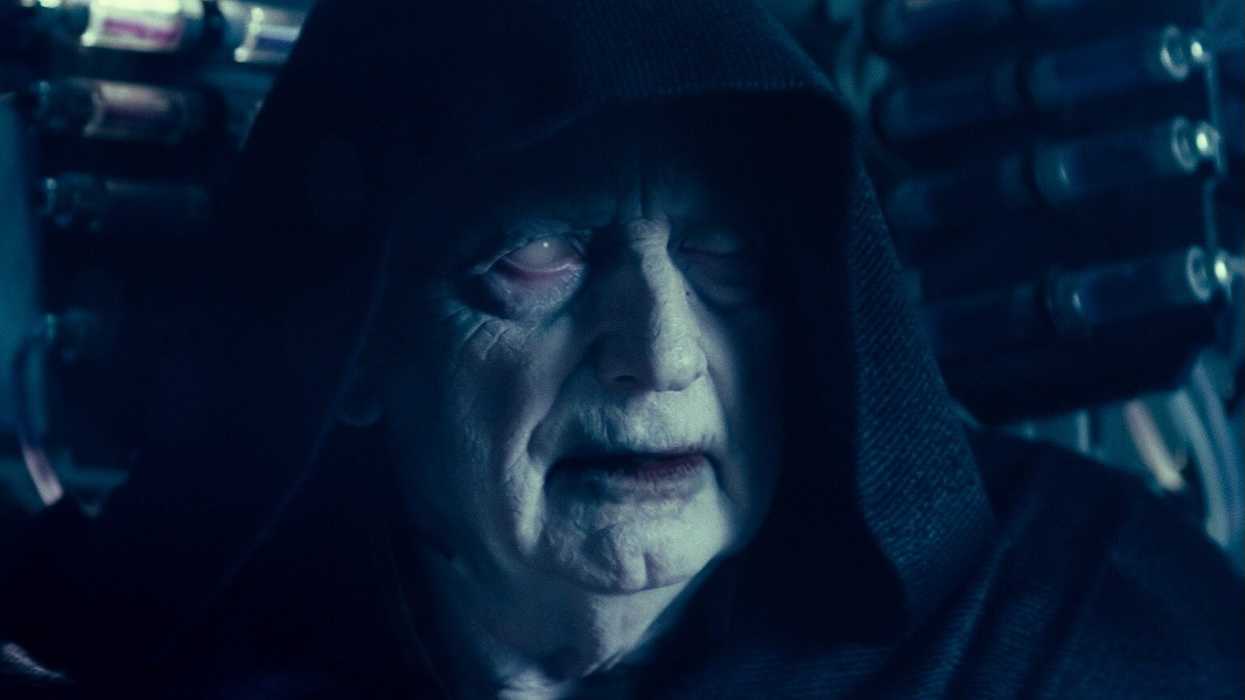
This film needed a new villain. The second film had already killed off the new sequel baddie, Supreme Leader Snoke. So they brought back Emperor Palpatine, who had died in Return of the Jedi.
The Emperor, as written in 1983, is a function of plot and mythology. Later, we get his backstory in the prequels, so we know where he comes from and how he operates, and fans are interested in all that dark conniving. So to have him somehow return from the dead (at the start of your last movie) and think that fans would be okay with that vague explanation is a misstep.
What is the explanation? The consensus is that Palpatine sent his consciousness to a waiting clone on another planet as he was being thrown to his doom on Death Star II. (Then you have the whole mess of how Rey is even related to him. Let’s not get into it.)
Abrams' team must have realized that they never really explained any of this, because Poe had to deliver that choice bit of exposition in a reshoot. “Somehow, Palpatine returned.”
Reshoots are a legitimate solution. Pickups are where you polish and fill gaps. But there's a hard ceiling on what they can fix, which is any problem that originates in the writing.
The biggest mistake in script rewriting is starting at page one and tweaking commas while ignoring whatever’s fundamentally broken. The same logic applies to production fixes. If you're explaining your villain's entire return in a wig during a pickup day, you're not fixing a production problem; you're just wallpapering over a story one.
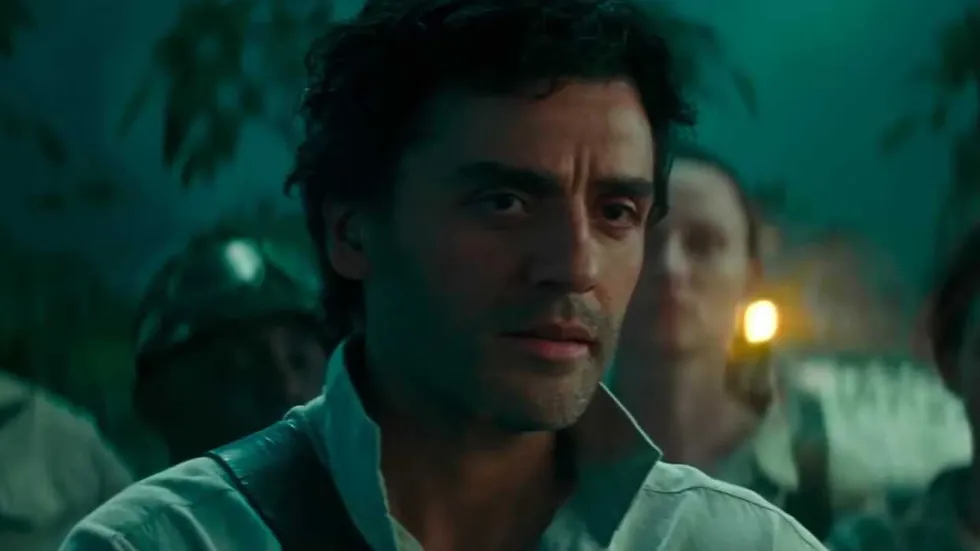 'The Rise of Skywalker' Credit: Lucasfilm
No Plant-and-Payoff
Plant-and-payoff could have made this work. It’s one of the most important screenwriting rules.
If you introduce something, it has to have roots. Palpatine's return in Rise of Skywalker had none. He was entirely absent from Episodes VII and VIII.
A villain's return (especially in a trilogy's finale) needs to be seeded early, not announced via opening crawl and explained by a single exhausted line of dialogue. This is why it feels like there was no planning at all across the sequel trilogy, because the movies feel incoherent.
The best payoffs feel "both shocking and inevitable," per ScreenCraft. This one was just shocking, and not in a good way.
Know Where You're Going Before You Start
If you go into writing with no ending in mind, you will get lost, and the rewriting process will be painful.
Michael Arndt, who loves Star Wars and has a story credit on The Force Awakens, talks a lot about the ending of A New Hope and how thematically and structurally sound it is. He’s kind of fixated on how endings work.
While he admits that writing is often "going down a bunch of blind alleys and bumping your head into the wall and just stumbling around," he still has an idea of what he wants from his endings.
He told WGA:
If you set it up as an A or B choice, the good guys are going to win, or the bad guys are going to win, right now your audiences know that the good guy’s going to win, and the only question is how you’re going to do it, so what I was trying to do with Little Miss Sunshine, for example, is you create a false choice, you go like door number one is that she wins the contest, but you don’t really want that, because it’s cheesy, right?
Door number two is that she loses the contest, but you don’t want that, because it’s awful, you know, and it’s going be horrible.
And so you hopefully are creating a situation which your audience doesn’t see any good outcome possible, and then you open door number three, which nobody saw coming, hopefully, and that’s what I think works about that ending is that you’re opening up this sort of new possibility that your audience didn’t see.
As we’ve already said, the sequel trilogy had no shared roadmap, no clear ending that everyone agreed on. This is what happens at franchise scale when no one commits to a plan.
Know your major turns, especially your villain’s fate, before you lock your first act.
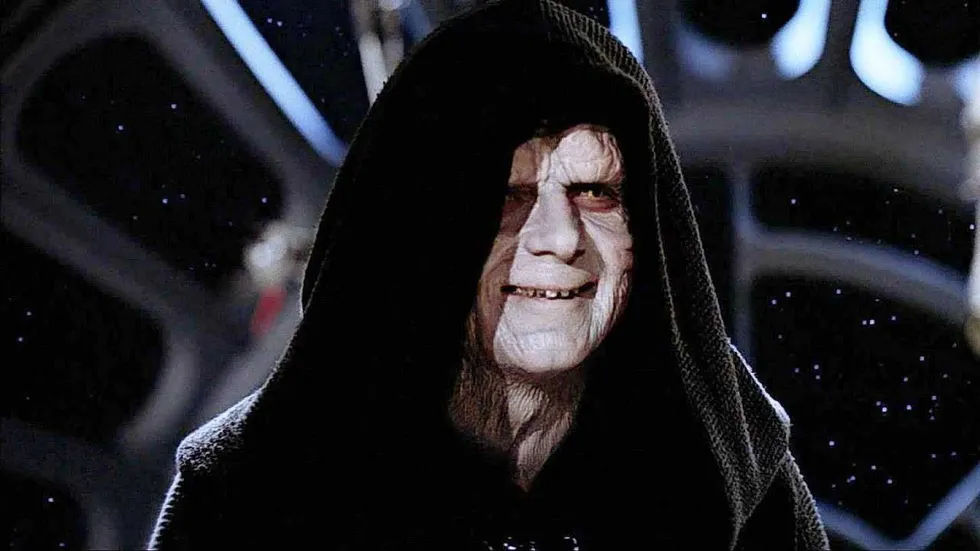 The Return of the Jedi Credit: Lucasfilm
Setup-and-Payoff Can Be Written in Reverse
Screenwriter Drew Yanno argues that setup and payoff are almost always written backward.
“In other words, the writer comes up with the payoff first and then has to go back in the story to find the optimum idea and place to ‘plant,’ the seed for the payoff,” he wrote in Script Magazine.
If Abrams and Chris Terrio had known Palpatine was returning for Episode IX, there were two prior films in which to hide that seed.
Instead, we get retconning.
The tale of a Sith Lord leaving his body and entering a clone is a story big and complex enough that it could have sustained perhaps an entire trilogy. If you know in your final act that you’re going to have a legendary villain return, the mystery of a new dark force in this galaxy can be something hanging over the plot until the big reveal.
Alas, what could have been.
What Earning It Looks Like
Let’s look at a contrasting baddie, brought back for fans and story.
Darth Maul seemingly dies in The Phantom Menace. But he returns slowly via The Clone Wars TV show, which works because the animated series spent seasons building the foundation. There was a whole dark storyline to explain where he'd been and how he'd survived.
Franchise storytelling can absolutely support big swings and villain returns. It can be fun. But as Industrial Scripts writes, the audience has to "feel safe in the writer's hands," like the story is going somewhere, not scrambling to get there and figuring it out along the way.
That safety is built in act one, not in reshoots.
What Should Writers Learn?
Isaac didn't pretend the line was good. He let the character be annoyed, which, honestly, is the only correct response when you're standing on a set in a wig being asked to deliver the worst line in a $490 million movie.
But no amount of performance can rescue a story that didn't do the work and lay a strong foundation. Your ending shapes everything before it.
Know where you're going, plant what you'll need, and don't leave important exposition for a reshoot.
- How Aggressive Schedules Affected the 'Rise of Skywalker' Editing ›
- 'The Rise of Skywalker' Writer Chris Terrio Settles the 'Last Jedi' Debate ›
- 'Star Wars: The Rise of Skywalker' Director J.J. Abrams on Fixing Things In Post ›
- Tax Documents Revealed 'Rise of Skywalker' Cost How Much?! ›
- Screenwriting Lessons From ‘The Last Jedi’ That Every Screenwriter Needs to Hear ›
- little miss sunshine quotes ›