Everyone in Hollywood is always looking for the next big idea that will strike oil and serve as a bellwether for the vague notion of "what people want to watch." Earlier this year, the relatively low-budget horror Obsession shook things up. Writer/director Curry Barker came from YouTube, so to YouTube everyone went in search of "the next one."
You've probably seen a slew of recently greenlit projects trying to capitalize on Internet horror. For instance, a "Jeff the Killer" movie is in development from Savanah Moss, a TikTok creator with 11.4 million followers. Okay!
All that to say that execs and producers are constantly on the search for gaps to fill and trends to follow. And if you're a writer or director, one path for you is to try to fill those orders.
This week, Elaine Low over at The Ankler published an insightful story on one audience that's being left behind in the TV landscape.
Can you fill this particular gap? Let's look closer.
- YouTube www.youtube.com
What the Research Says
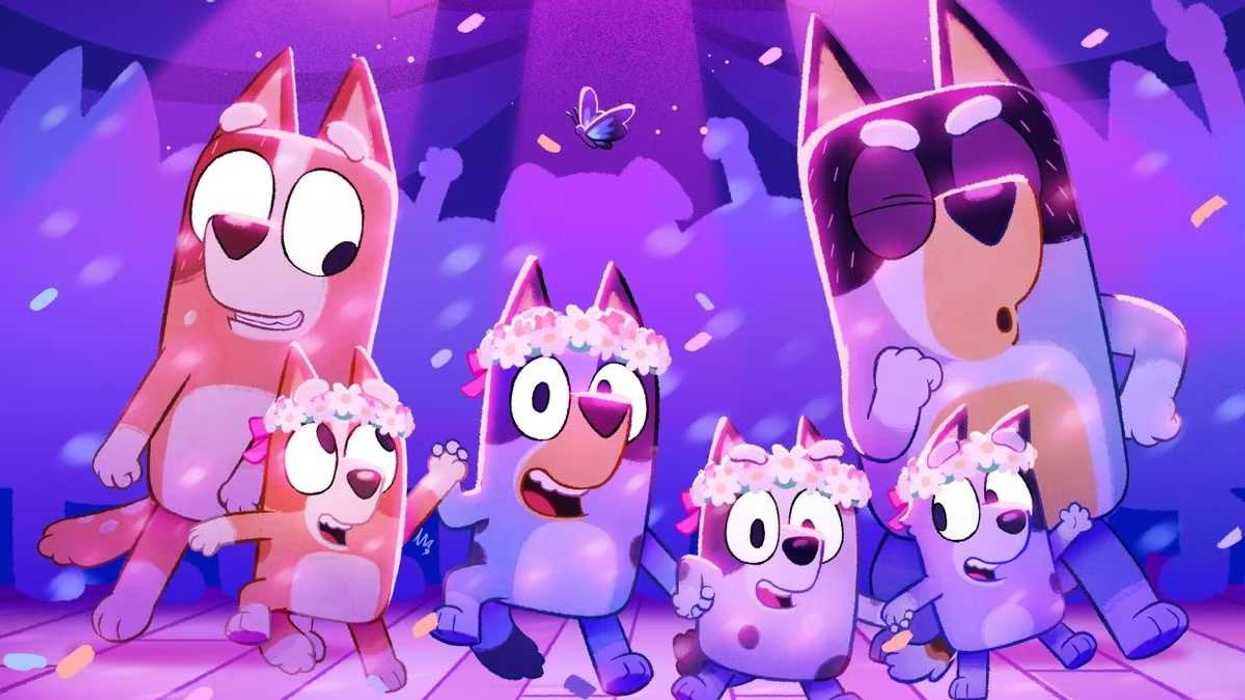
The Ankler posits that young boys, once they age out of kids' shows like Bluey, inherit a media landscape dominated by video games, superhero franchises, and manosphere content creators. Low points to new audience research suggesting this isn't what young viewers are asking for.
The research she's citing is the 2025 Teens & Screens report from UCLA's Center for Scholars & Storytellers, a nationwide survey of 1,500 adolescents ages 10 to 24.
What it shows is a demographic hungry for a kind of story that Hollywood is not providing. Filmmakers and TV writers, if you're looking for an underserved audience, check out these results.
The report was authored by researchers Matt Puretz and Alisha Hines and CSS founder Yalda Uhls. Uhls is a developmental psychologist and former executive at MGM and Sony. Data was collected in August 2025.
The biggest findings include:
- 59.7% of adolescents aged 14 to 24 said they want more content where the central relationships are friendships.
- 60.9% want romantic relationships that are "more about the friendship between the couple than sex."
- 54.9% want cross-gender characters who "prioritize their friendship instead of turning it into a romantic relationship." Among under-18s, that number climbs to 57.7%.
- Friendship ranked third of 19 topics adolescents want to see. Romance ranked third-to-last.
- 48.4% said there's too much sexual content in movies and TV.
Also, 57% of the surveyed adolescents said they watch traditional media more than older generations think, and 53% said they discuss TV and movies with their friends more often than they discuss social media content.
So what's another big takeaway? This isn't a demographic that's checked out of TV. They're just not being served.
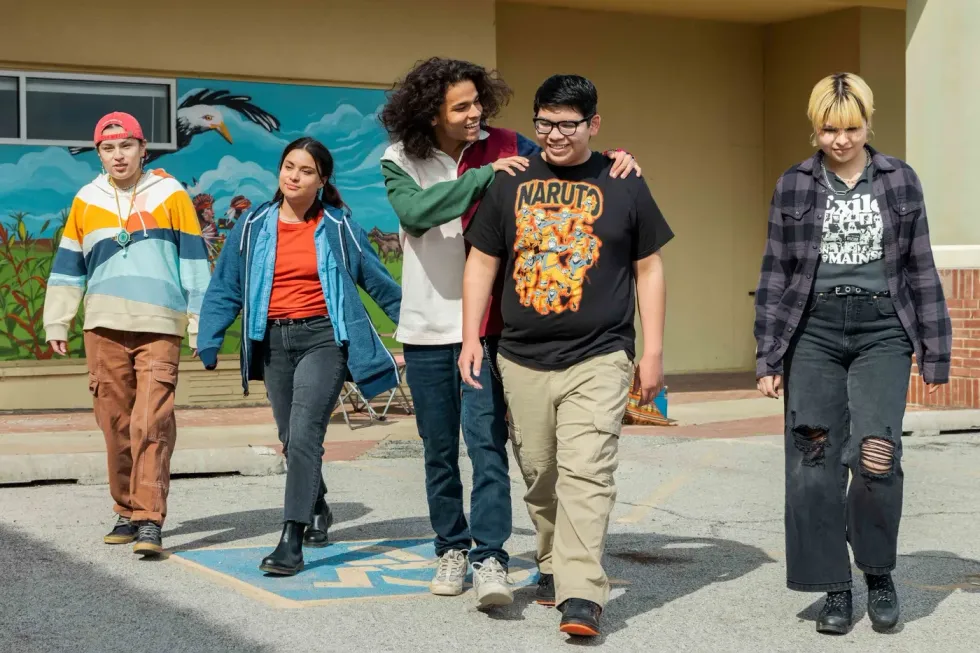 'Reservation Dogs' Credit: Shane Brown/FX
What Young Men Are Asking For
CSS' follow-up, Gen Alpha and Gen Z: Evolving Masculinity, pulled additional questions from the same 2025 survey data.
The study found that young audiences (including men) want to see male characters who are emotionally available, vulnerable, and capable of connection rather than dominance.
Uhls said in UCLA's press release:
"Our findings reveal a profound cultural shift: Youth are craving a version of masculinity defined by emotional availability and joyful connection. By highlighting these narratives of partnership and care, storytellers can offer a vision of masculinity rooted in hope and love. For today’s young audiences, the most compelling hero isn’t the one standing alone, but the one who has the courage to be present."
Co-author Matt Puretz said that the preference holds across the age range.
"It might be easy for someone making a teen or young adult show to say: This really only applies to younger kids. But we see from ages 15 to 24, young people still prefer nurturing, emotionally available men, who serve as positive models of masculinity for them."
What Is the Industry Offering?
Not much, as The Ankler notes, is available to kids graduating from Bluey, effectively forcing them to skip to adult fare. Producers and exec Low spoke to mentioned that rewatches were big for family viewing since there hasn't been anything new in a while. Shows like Stranger Things, Malcolm in the Middle, and Modern Family are in the rotation. (We'd add Reservation Dogs and Ted Lasso to the safe watch list, but both are still years old at this point.)
It might be for this reason that many assume (or hear from their friends with kids) that their sons are just playing video games, scrolling social media, or on YouTube. There's a sense of instant gratification, even if the content isn't TV-caliber. It's what they want, and it's right in front of them at a click.
Pew Research figures cited by Blank Spaces' 2026 YouTube screen-time report show 93% of teen boys use YouTube (vs. 87% of teen girls), and 19% of teen boys use it "almost constantly" (nearly double the rate for girls).
On the gaming side, Pew data (via IconEra) show that video game participation among U.S. teenage boys is 97%, with 61% gaming daily. Compare that to 22% of teenage girls gaming daily.
Meanwhile, traditional TV is losing this audience, even as the 2025 Teens & Screens data shows they still want stories. They're just consuming those stories on platforms Hollywood doesn't produce for.
Add yet another wrinkle. Those platforms are pivoting fast. Netflix now views YouTube (not Disney+ or Paramount) as its main competitor, and AlixPartners' 2026 Media & Entertainment Industry Predictions Report argues the two platforms are converging. YouTube is moving toward Netflix-style long-form, while Netflix is putting everything on its platform, from games to podcasts and creator content.
In July 2026, Netflix started adding licensed publisher videos to its platform, a direct aim at the casual-viewing habits of YouTube fans.
Meta is doing the same thing from the opposite direction. TechCrunch reported in June 2026 that Meta is testing a "Series" feature on Instagram and Facebook, letting creators turn Reels into episodic content. Each Reel becomes an episode.
The feature mirrors TikTok's own Series product, which launched in 2023 and now supports videos up to 20 minutes.
Don't get us started on verticals or we'll be here all day.
The point is, if traditional TV doesn't build for this audience, YouTube and Meta will.
This is not specifically a mandate, because as Low covers, execs want safe bets, so they're mostly going for superheroes. And it's hard to write to an audience. But as you're brainstorming, you might consider—if you're writing for kids, are you going to be able to connect with them? Because they're telling us what they want.