5 Movies From the 1970s That Would Never Be Made Today
These stories simply would not pass modern hurdles.
'A Clockwork Orange' (1971)
Few decades in the history of cinema have seen as many bold, envelope-pushing movies as the 1970s. New Hollywood gave directors seemingly unprecedented freedom to explore the dark aspects of human nature with far fewer narrative restrictions than those we hear today.
Many 1970s movies were raw, provocative, and deeply unsettling. During this time, we saw filmmakers not just push boundaries but openly test what was possible. What makes these movies worth discussing today isn’t their quality per se, but how unlikely they would be to exist in our current world of movies.
This isn’t an argument about right and wrong, what should be allowed and what shouldn’t, but rather a closer look at movies that would be more or less impossible to make today.
Let’s jump right in and explore five fearless 1970s movies.
5 70s Movies That Would Not Be Possible Today, Ranked
Here are five 1970s movies that pushed way too many boundaries and would not be possible today.
5. The Exorcist (1973)
Directed by William Friedkin
William Friedkin’s masterpiece about the demonic possession of a young Regan MacNeil (Linda Blair) shocked audiences with its extreme visual depiction. When we talk about what makes it difficult for a film like this to be made today, the first thing we have to consider is that Friedkin’s film didn’t just push boundaries; it pushed boundaries involving a child.
The movie showed physical transformations and explicit religious imagery in a manner that would most certainly invite backlash in today’s climate. While this is as far as the visual representation of children is concerned, perhaps a more important consideration in today’s climate would be exposing children to extreme and traumatic shooting conditions.
4. The Texas Chainsaw Massacre (1974)
Directed by Tobe Hooper
Tobe Hooper’s classic Texas Chainsaw Massacre is a low-budget, gritty, nightmarish film that features brutal killings depicted with almost documentary-like realism and urgency.
The film’s grainy visuals, relentless pacing, and tense visual style make it terrifyingly good, but also likely to face resistance in today’s cinematic landscape. Hooper’s documentary-like approach to horror is a fascinating technique that fully embraces the film’s lack of a sizeable budget. However, when we talk about studio resistance, it is highly possible that the film could appear a tad bit too “real” for a decision-maker’s liking.
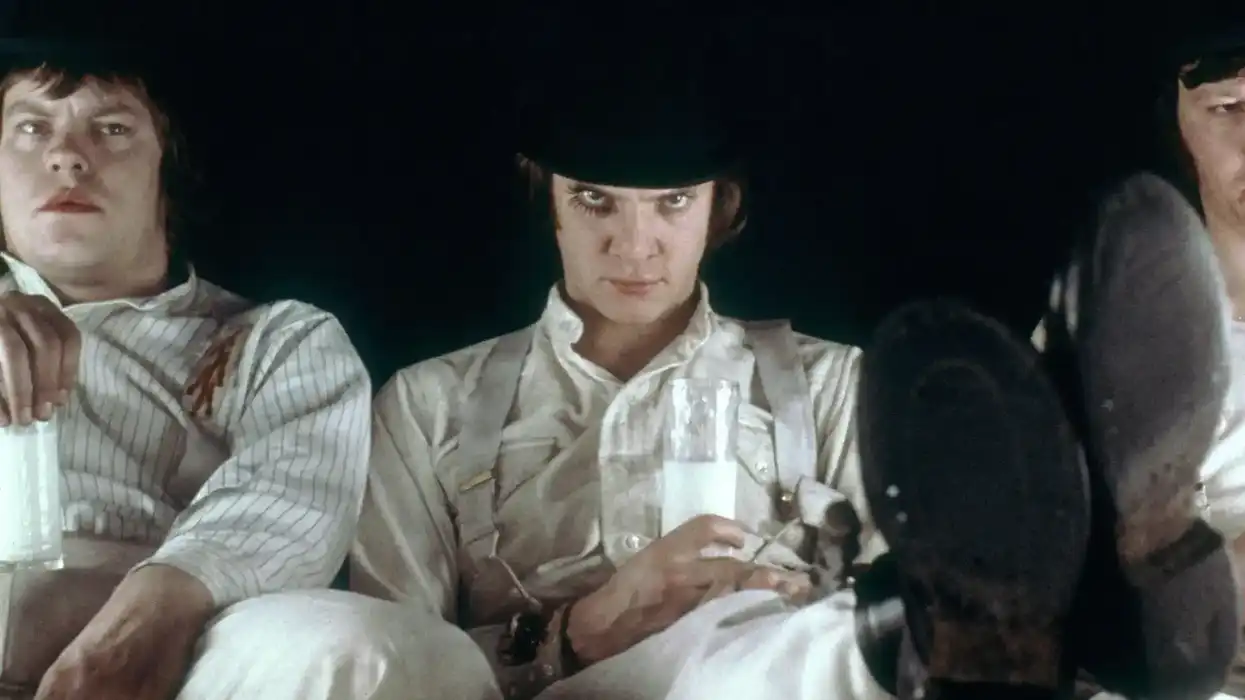
3. A Clockwork Orange (1971)
Directed by Stanley Kubrick
Led by Malcolm McDowell as Alex DeLarge, this Stanley Kubrick movie remains one of the most provocative films in history. Its depiction of violence and sexual assault sparked a serious controversy even in 1971, when the film was released. Today, the movie’s combination of graphic sexual content, often featuring violent moments, dark satire, and a story that is essentially told through the perspective of the criminal, would face major restrictions.
Kubrick’s portrayal of violence in the movie is considered to be perversely aesthetic, which is precisely what would worry studios about facing intense backlash.
2. Last Tango In Paris (1972)
Directed by Bernardo Bertolucci
When it comes to Bertolucci’s Last Tango in Paris, our conversation about modern-day project feasibility takes a drastic turn. Now, we aren’t just talking about a risky subject, but a film considered one of the most controversial movies in cinema history.
While the shooting conditions are constantly brought up, the film’s inherent sexual content itself would make major studios question the project at face value. However, the most critical aspect of this movie that makes it indefensible is the fact that a key assault scene in the movie was allegedly filmed without full consent.
Movies like this are a reason why modern-day content protocols and greater accountability are essential to safe filmmaking.
1. Salò, Or The 120 Days Of Sodom (1975)
Directed by Pier Paolo Pasolini
This Pasolini film is often cited as one of the most extreme films ever made. The movie, which mostly features a cast of unknown actors, is a portrayal of extreme sadism in which four corrupt libertines kidnap and torment young victims. The movie’s portrayal of graphic rape, torture, and mutilation makes it exceptionally unlikely to be greenlit in today’s world. In fact, Pasolini’s film was banned in multiple countries upon its release and is one of cinema’s most censored films.
Modern standards around depicting sexual violence, especially involving youth, child exploitation laws, and platform content policies, might have just prevented the film from even going into production. On the other hand, had the film been made and released worldwide, it's hard to anticipate a softer reaction than the film received back in 1975.
Summing It Up
These five movies, most likely, would not be made today simply because their idea of “risk-taking” would not be acceptable to key decision-makers. While many of them showcased some of the greatest acting performances of all time, and also the power of a director’s craft when left largely unchallenged, it is hard to see them made in the modern movie climate.
Which is your favorite movie from the 1970s? Tell us in the comments.