1978 War Hit Ranked Among ‘Best Movies’ of All Time
Inside The Deer Hunter and its impact on storytelling today.
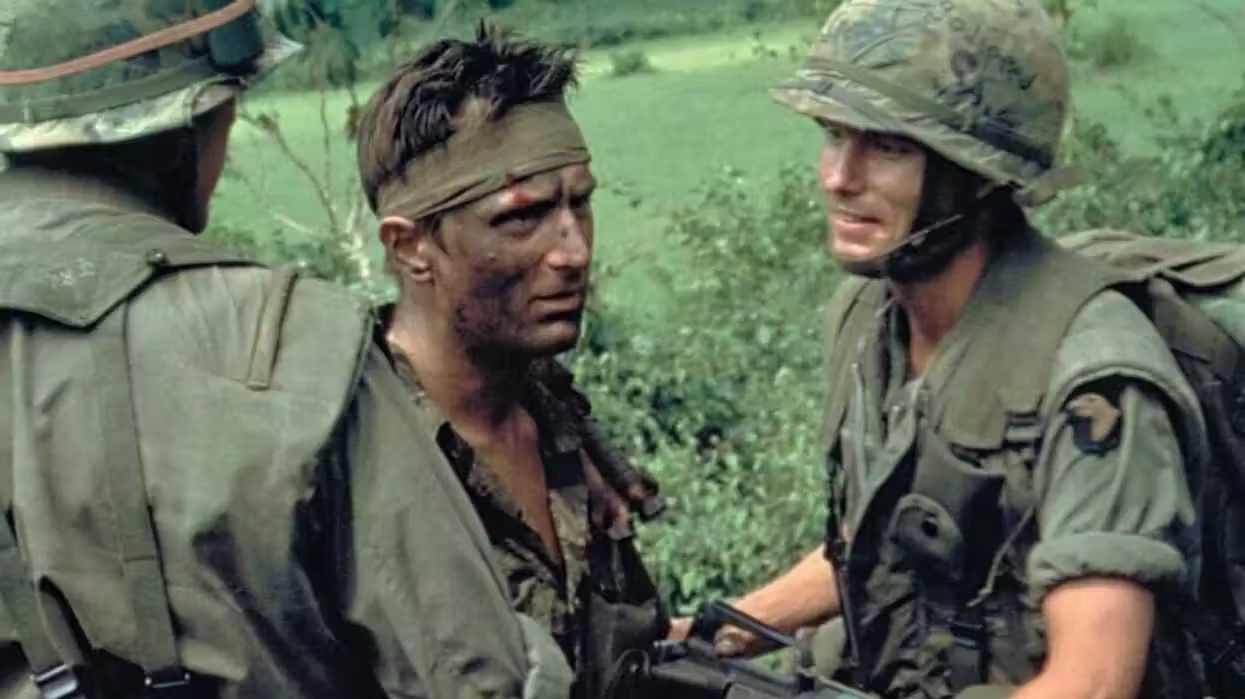
'The Deer Hunter' (1978)
Michael Cimino’s The Deer Hunter (1978) stands tall as one of the most hauntingly brilliant portrayals of friendship, loss, and the wounds of war. The movie follows a group of working-class friends whose lives unravel after they ship off to Vietnam. Its transition from the depiction of blue-collar life to the mayhem of war is, without a doubt, one of the finest we’ve ever seen on screen.
The Deer Hunter centers on Robert De Niro’s Michael, Christopher Walken’s Nick, John Savage’s Steven, Meryl Streep’s Linda, and John Cazale’s Stan. While it is often referred to as a war movie, which it is, the film’s emotional core focuses on deeply human connections and ordinary lives that fracture under pressure.
In many ways, Cimino’s film is a poignant observation of humanity itself. Instead of prioritizing “combat” as a war movie staple, it explores trauma and the emotional cost of survival.
So, how has The Deer Hunter endured over the decades? What can modern films learn from it?
Let’s jump right in and explore.
Why The Deer Hunter Ranks Among The All-Time Greats
The Deer Hunter is brimming with exceptional acting talent, and that is a big reason why the movie feels overwhelmingly impactful, but it isn’t the only one. Michael Cimino’s craft is impeccable, and over its 3-hour runtime, the film’s exploration of humanity is intimate, mature, and undeniably poignant.
If, for a moment, we presume there were two starkly different ways of addressing the same story, we might just understand why Cimino’s film stands out so well. The director presents us with an elaborate, detailed opening act in Pennsylvania, which lets us live inside the world of these friends. It is this very emphasis that allows the audience to “feel” the contrast between two distinctly different ways of living and the kind of pressure that change could bring. If we don’t know what “normal” looks like and feels like, would the movie’s emotional arc feel as complete?
This extended opening doesn’t tell us what bonding would look like; it lets us feel it. None of these scenes comes across as excessive or unnecessary. In fact, they ground the horror that follows, so every fracture feels empathetic and real.
The movie never preaches, but it is layered with powerful metaphors that represent the random cruelty of war and the terror it brings. Perhaps its greatest achievement is the fact that it does not really buy into a single, focused perspective on war. It masterfully blends multiple perspectives, allowing the audience to form their own perceptions and judgments.
How The Film Has Endured Over Decades
Nearly five decades later, The Deer Hunter still endures because it captures something extremely powerful and timeless about friendship and trauma. Audiences keep returning to the movie’s honest portrayal of working-class life and the ripple effects of war. Unlike many other war films, even great ones, that focus on the specifics of war, Cimino’s focus remains on those behind it and what war does to them.
Even though the film openly embraces tragedy, it maintains hope as an underlying theme. When we talk about movies that endure for decades, it’s impossible to pinpoint a precise list of reasons. However, a common factor among movies like these is one or a few powerhouse performances that make it worth revisiting. Christopher Walken’s spectacular portrayal of Nick is spellbinding even today. Robert De Niro, who, in retrospect, was having one of the greatest decades of his entire career, brought effortless charisma to the stoic Michael. John Cazale, often known as one of the finest actors of his generation, tragically gave us his last performance in the movie, but left behind a career brimming with timeless classics.
Aside from acting performances and technical brilliance, The Deer Hunter has the potential to reveal new, deeper layers on rewatches. While some fans debate the historical accuracy or the movie’s political ideas, its emotional core has remained intact and will continue to do so for decades to come.
What Writers Can Learn From The Deer Hunter
We could take plenty of writing lessons from The Deer Hunter, but here are three important takeaways, specifically for writers.
Never Ignore The World Before
While it is understandable that a lot of what you want to say might not involve exploring the mundanity of your character’s life, doing so can create a sharp contrast between the world before and what is to come. “The world before” refers to the moment in your character’s life before everything changed. If this phase feels like an afterthought or an obligation, it can affect the rest of your story.
Silence Is Powerful
The Deer Hunter notoriously uses silence on many occasions when dialogue might have been the easy way out. This allows audiences to bring their own interpretations into their understanding of the movie, which is unparalleled in the larger scheme of things.
Embrace Complexity And Trust Your Audience
By this, I mean, avoid turning your soldiers into simple heroes or simple victims. Make sure they have many shades and deeper layers that audiences can tap into. The word “complexity” in this situation actually refers to realism. Making your characters edgier simply makes them more believable and less like “movie characters”.
Summing It Up
The Deer Hunter is one of the greatest war movies of all time. It is a towering achievement that earns its reputation as one of the all-time greats through unflinching honesty and impeccable storytelling.
Which is your favorite movie of the 1970s? Tell us in the comments below.