The 7 Greatest Robert De Niro Movie Roles
A look back at the roles that made De Niro a screen legend
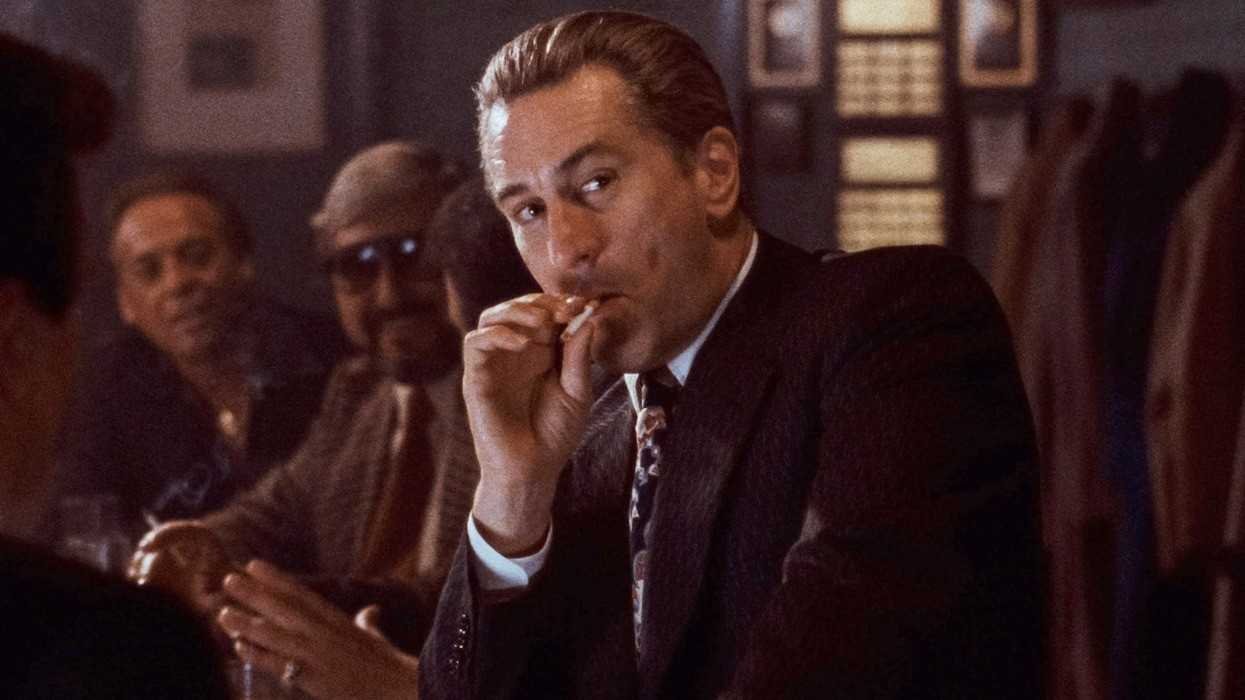
'Goodfellas' (1990)
There is a reason Robert De Niro’s name gets tossed around every time someone mentions the best actors of all time. And we can say that it’s not solely because he can pull off both a mob boss and a stand-up comic without flinching.
De Niro has built his career on sharp instincts, total commitment, and the uncanny ability to vanish into roles that have left a permanent mark on film history. But with so many stand-out performances, picking the top seven isn’t easy.
We rolled up our sleeves, rewatched a few classics, and narrowed it down to the roles that defined his career and changed the game for everyone else.
So, let’s take a look at our top seven picks.
1. Taxi Driver (1976)
Directed by: Martin Scorsese
Taxi Driver is one of those movies that stands the test of time. Scorsese’s gritty direction pulls us into the seedy underbelly of New York City in the 1970s, where we follow Travis Bickle (Robert De Niro), a lonely and mentally unhinged taxi driver, spiraling further into madness.
The movie nails the tension and desperation by capturing his alienation in a way that feels uniquely personal and universally human. From the haunting soundtrack to the visceral cinematography, Scorsese crafts a lonely and dangerous world that feels uncomfortably claustrophobic.
De Niro’s performance as Travis is nothing short of legendary. His muted intensity transforms Bickle from a disillusioned cabbie into a ticking time bomb, making every scene both uncomfortable and riveting. Whether it’s the famous “You talking to me?” moment or the vulnerable solitude he experiences throughout, De Niro completely absorbs the character, never letting us forget that this man is on the edge. His raw, unfiltered approach to Bickle’s instability, blending anger, sadness, and confusion, is a testament to his incredible skill.
This performance cemented De Niro as a force in American cinema.
2. Raging Bull (1980)
Directed by: Martin Scorsese
Raging Bull is a savage and undaunting look at boxer Jake LaMotta's rise and fall. Scorsese’s direction turns the biographical sports drama into a personal tragedy. The film transcends the boxing ring to explore self-destruction, jealousy, and rage.
Its black-and-white cinematography gives it a timeless quality, and Scorsese’s expert pacing lets the audience feel the weight of LaMotta’s every blow, both literal and metaphorical. The movie paints a picture of a man who, despite his victories in the ring, is losing the battle within himself, trapped by his own insecurities and violence. It’s a film that doesn’t shy away from the protagonist's ugliness but still manages to capture the tragic complexity of his existence.
Then there’s De Niro, who completely disappears into LaMotta, embodying the character’s physical and emotional torment. Keeping up with the tradition of method acting, De Niro bulked up for the role, gaining nearly 60 pounds to portray the older, post-boxing LaMotta. However, this dedication to the role is not the only impressive thing; De Niro captures LaMotta’s rage with a ferocity that’s hard to watch at times but impossible to look away from. His ability to show vulnerability under all that anger, to reveal the man behind the monster, is what truly makes this performance unforgettable.
3. The Godfather: Part II (1974)
Directed by: Francis Ford Coppola
Coppola could have just made The Godfather: Part II a continuation of the Corleone family, but instead, he expanded it into a profound commentary on power, loyalty, and betrayal.
The film is a brilliant dual narrative, cutting between Vito Corleone’s rise to power in the late 1910s and early 1920s (played in flashbacks by Robert De Niro) and Michael Corleone’s (Al Pacino) struggles with consolidating his own power in the late 1950s. It’s a saga of ambition and moral decline, but one told with such grace and attention to detail that it elevates it beyond a simple crime drama.
De Niro’s young Vito Corleone is a revelation. He steps into Marlon Brando’s shoes without trying to imitate him, making the character uniquely his own. De Niro shows Vito’s shrewd intelligence and unspoken charisma in his quieter moments. But it’s the more intense scenes, like the iconic moments of revenge, where he truly leaves his mark. The performance elevates the film to another level, showing that De Niro is a force to be reckoned with, even in the shadows of some of Hollywood’s greatest performances.
4. Goodfellas (1990)
- YouTube
Directed by: Martin Scorsese
Goodfellas is Scorsese at his most energetic and raw. The film breaks down the mafia world from the inside, following Henry Hill’s (Ray Liotta) journey through a mobster's rise and inevitable fall. It injects the narrative with a fast-paced, almost chaotic energy.
The film’s editing, narration, and use of music make it not just a crime drama but a celebration of cinematic craft. Scorsese's mix of humor, violence, and tragedy keeps the audience hooked even when they know things will go south for its characters. It’s a film that explores loyalty and betrayal while giving us a striking look at a subculture that has become a part of America’s cinematic DNA.
The character James “Jimmy the Gent” Conway (Robert De Niro) is an understated yet essential element of the film’s success. He’s cold, calculated, and occasionally playful, but underneath it all, there’s a palpable sense of danger in every word he speaks. In the small moments—his patience, his careful handling of situations—De Niro makes Jimmy feel like a real person and an almost mythical figure in the mob world.
5. The Deer Hunter (1978)
Directed by: Michael Cimino
The Deer Hunter is an epic tale about the brutal effects of the Vietnam War on a group of working-class friends from Pennsylvania. The film captures the camaraderie and the trauma of war. Cimino’s direction contrasts the peaceful, idyllic life before the war and the ravaged existence that follows.
The film’s power lies in its intimate portrayal of characters, especially their internal struggles, which are amplified by the horrors they witness. The film hits harder because it keeps jerking you between casual, almost warm moments and sudden bursts of violence.
De Niro’s performance as Michael Vronsky is complex, layered with quiet strength and profound grief. His powerful, subtle moments—like the subdued anguish he expresses after returning from Vietnam—are a masterclass in restraint. His ability to show the humanity underneath the hardened exterior of a war vet makes this performance so moving.
6. Heat (1995)
Directed by: Michael Mann
The iconic face-off between Robert De Niro and Al Pacino is not the only thing that makes Heat an excellent film. It’s a criminal masterpiece because Michael Mann’s direction brings the world of heist and crime to life with sleek precision.
The film’s strength lies in its layered characters, each struggling with their own moral codes, and the tension between them as they navigate their respective worlds. The movie definitely captures the thrill of crime, but more importantly, it highlights the emotional cost of the lives lived on the edge of the law.
De Niro’s portrayal of Neil McCauley, a professional thief on the edge of a final job, is a study in controlled intensity. In his interactions with Pacino’s Lt. Hanna, De Niro’s performance shifts from cold professionalism to a more human, almost philosophical dialogue. It’s a performance full of composed power, where every look and every pause speaks volumes about the character’s complexity.
7. The King of Comedy (1982)
Directed by: Martin Scorsese
The King of Comedy is Scorsese’s dark and daring look at the obsession with fame and the desperate lengths people will go to achieve it. The film follows Rupert Pupkin (Robert De Niro), an aspiring comedian so fixated on stardom that he kidnaps a TV host to force his way onto a show.
Scorsese’s off-kilter direction and the film’s eccentric tone give it a sense of surrealism that makes it feel ahead of its time. The movie is darkly humorous and unsettling.
De Niro’s take on Rupert Pupkin is a revelation. He plays a character that could easily be dismissed as pathetic or over-the-top, but De Niro injects so much humanity into him that we can’t help but feel for the guy, despite his delusions. His portrayal of an insecure man chasing an impossible dream has become one of his most underappreciated performances.
Conclusion
Across these seven films, De Niro chased the truth in wildly different, often uncomfortable characters. That’s what makes his work so gripping—it never feels manufactured.
Whether he is playing a mobster, a loner, or a fame-hungry oddball, there’s always something unpredictable simmering under the surface. He made silence louder than dialogue, stillness more telling than outbursts. And somehow, through all that shapeshifting, he built a body of work that feels weirdly personal.
Which is your favorite?
- The 'Taxi Driver' Ending Explained ›
- Scorsese & De Niro: True Partners in Crime ›
- Watch Robert De Niro's Method Acting Get Slammed on 'Casino' Set ›
- 5 Times Jason Momoa Completely Transformed for a Role | No Film School ›
- Heists Aren’t the Point — This Line Says What Heat Is Really About ›
- Forgotten Classics From the 90s: Robert DeNiro’s Most Underrated Film ›
- Film Quote of the Day: The Robert De Niro Line From 1987 That May Be His Most Underrated | No Film School ›