Film Quote of the Day: The Line from Clint Eastwood’s 1993 Classic That Still Feels True Today
"Never underestimate the kindness of the common man, Phillip.” - Butch Haynes, A Perfect World
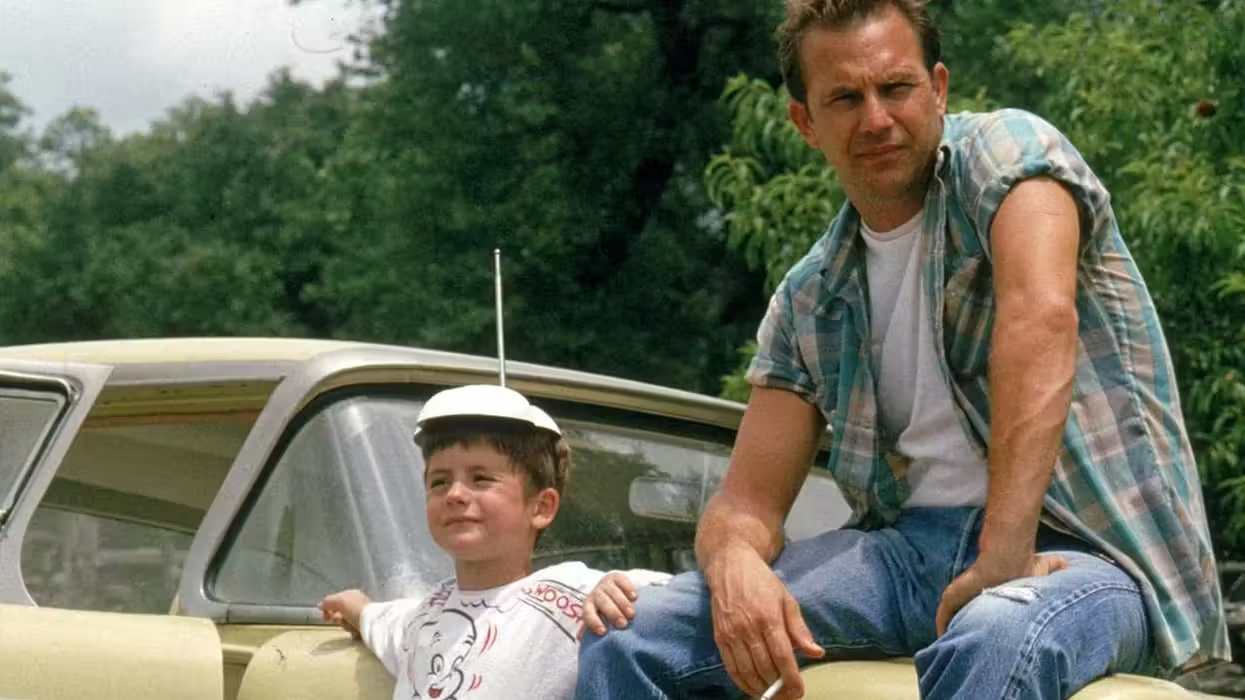
'A Perfect World'
I fI could pick one actor to deliver something I wrote, it'd be hard to pick against prime Clint Eastwood. The guy has spoken some all-time lines, from Dirty Harry’s "Do you feel lucky, punk?" to Unforgiven’s "Deserves got nothing to do with it." His characters and their voices stand the pantheon of time.
And here's another sneaky thing: he makes sure that in the movies he directs, even the characters he doesn't play get their moment to shine, too.
One of those hidden gem movies that not enough of us talk about is his 1993 movie A Perfect World, which sticks out like a beacon of light in a genre usually defined by darkness.
Even its tragic ending has this hopeful twinge that sucks us in.
More than thirty years after its release, this film has Eastwood’s most complex thematic statements all contained in a line that punctuates a fun part of the movie.
Let's dive into the quote.
- YouTubewww.youtube.com
The Scene in Question
This is one of my favorite movies to recommend to people because I feel like it has all these moral lessons and quandaries within it that people really enjoy, and also has this poignant end that gets them talking afterward.
A Perfect World follows escaped convict Butch Haynes (Kevin Costner) as he evades a massive statewide manhunt led by Texas Ranger Red Garnett (Clint Eastwood). Along the way, Butch takes an eight-year-old Jehovah’s Witness boy named Phillip (T.J. Lowther) hostage and shows him the world.
The movie takes place across the sun-drenched backroads of 1963 Texas. It's those sunny vistas and long stretches of highway that allow our hero and his kidnapper to form a bond around the broken world.
Philip's life was sheltered, and he's never gotten to do anything he's wanted to do, or anything like a normal kid. Case in point, he's never been trick-or-treating.
So when they stop at a convenience store, Philip wants to grab a costume on the way out, and when they head back on the road, Butch stops at a home to fulfill the kid's wish. But when the elderly farm wife hesitates and says she has no treats left, Butch quietly lifts his shirt to flash his revolver.
This scene is played in such an endearing fashion that it makes us feel okay about the kidnapping but reminds us who's the boss all in one fell swoop.
The woman frantically dumps bread, jams, mustard, and all the cash in her purse into the boy's bag. It's a haul Philip will remember forever.
As they walk back across the yard, Butch turns to young Phillip and delivers the core of the movie.
"Never underestimate the kindness of the common man, Phillip."
- YouTubewww.youtube.com
What The Quote Means
Eastwood was one of the most famous Hollywood stars by the 90s. He could have made any movie he wanted, especially after captivating the world with Unforgiven.
Well, then he came across a script written by John Lee Hancock and subverted the crime thriller tropes to make a touching coming-of-age story.
We have this quote that feels like it's a Capra-esque sentiment from a B-movie, but underneath it, there's this brooding pain.
Butch is teaching Philip about a world that Butch is not sure exists. He's searching for this while also seeking a justification for the world he's been given.
His tragic backstory is that Butch was brutalized by institutions, bad parenting, and prison systems, which led to him rebelling against it all as an outlaw.
But inside, Butch is the same kid Philip is, looking for love and to be embraced by a world he feels totally alienated from. So, he's giving Philip the world he never had, like a good father would, a father that Butch never had.
Summing It All Up
A Perfect World remains one of Eastwood’s most human and understated films because it refuses to give the audience easy moral answers to why things are the way they are.
For screenwriters and directors, Butch's advice gives us backstory and subtext in one fell swoop and shows how a great performance can add a double meaning to a line, depending on how it is said and who is internalizing it.
Have you seen this movie?
Let me know what you think in the comments.