You'd think after, you know, an Oscar, The West Wing, and decades of fast-talking dialogue, writing would get easier for Aaron Sorkin.
But it hasn't, according to what he admits in a recent conversation with Esquire editor-in-chief Michael Sebastian.
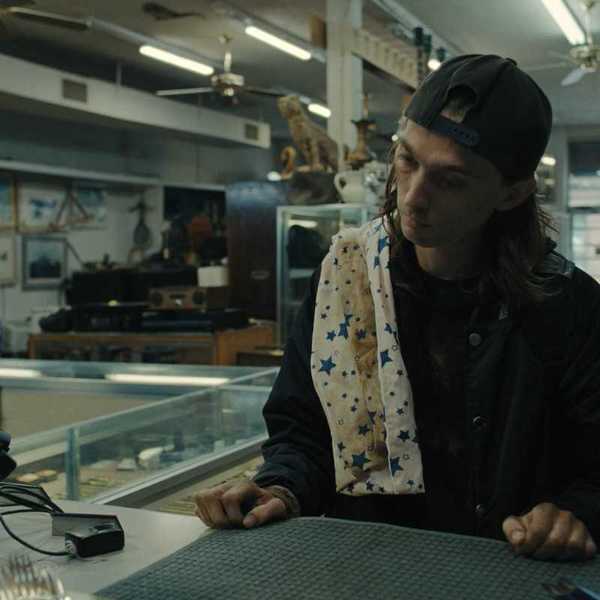
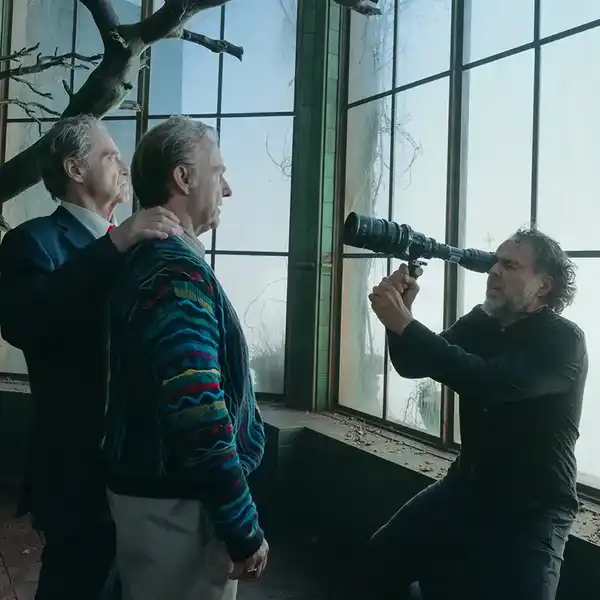
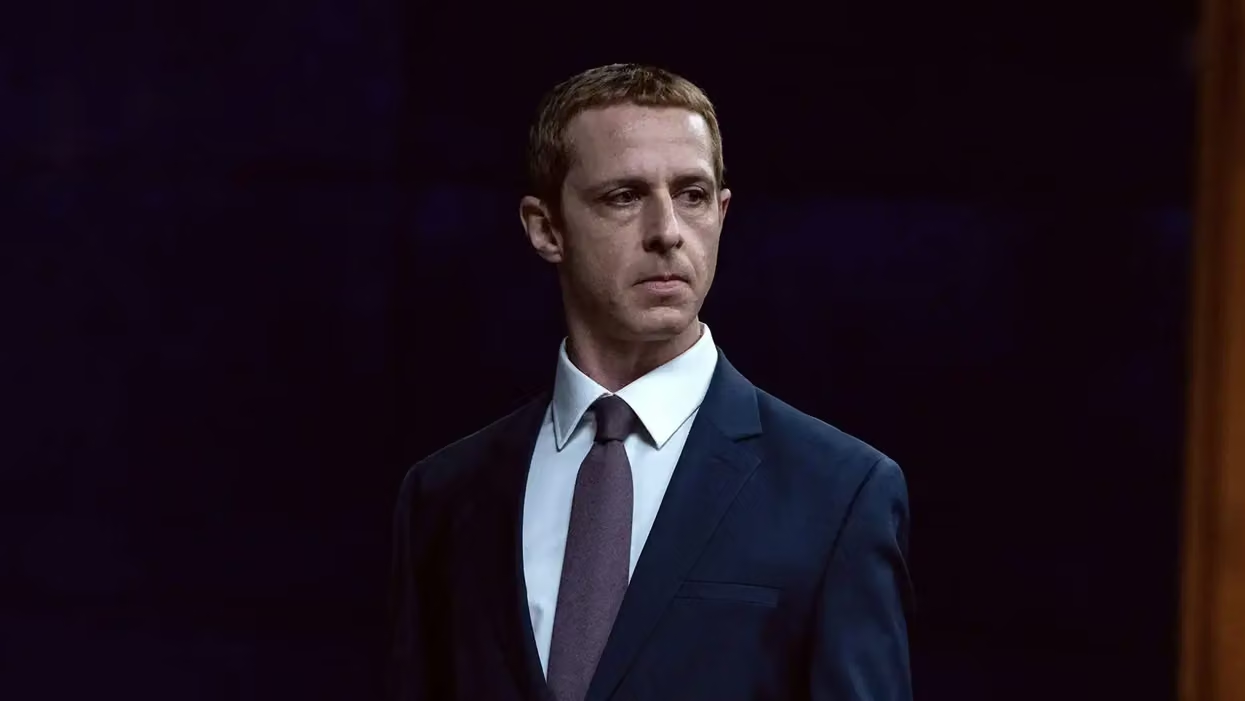
He famously wrote the taut 2010 drama The Social Network. Now he's back with a follow-up. The Social Reckoning hits theaters today, Oct. 9, with Sorkin writing and directing. It tells the true story of Facebook engineer Frances Haugen (Mikey Madison) and Wall Street Journal reporter Jeff Horwitz (Jeremy Allen White), who take on the social network's founder, Mark Zuckerberg (played this time by Jeremy Strong).
You can watch the whole interview here, but we've also pulled our favorite bits of advice.
- YouTube www.youtube.com
Even Sorkin Thinks Every Script Is His Last
If you've ever finished a draft and felt completely tapped out, or even like it's maybe the worst thing you've ever done, you're in good company. Sorkin says the struggle never ends.
"Writing isn't easy for me. I love it. When I'm done with something, whether it's a movie, a play, or an episode of television, I can't imagine ever being able to write something else. I wrote 88 episodes of The West Wing and 87 times, I said, 'Guys, I'm out. I've used all the words that I know in every order I can put them in. I can't do this.'"
He kept going, and his foundation stayed the same. Sorkin has long described his approach in terms of intention and obstacle. Somebody wants something, and something formidable stands in the way. You can keep writing about that until the end of time, in infinite iterations.
Burnout is real, and mental health breaks matter. Feeling empty after a project isn't a sign you're done. You just need to step away for a bit, most likely.
He Starts with Three Index Cards, Not an Outline
As someone who needs to know the end of whatever I'm doing, I personally find this next admission scary.
"I've never outlined anything," Sorkin says. "Most of the time when I start writing something, I don't know how it's going to end. For me, the difference between being on page two and page nothing is life and death."
He says that getting started takes him months of pacing, driving around, playing the music he loved in high school. Then he reaches a threshold.
"But if I can come up with an interesting first scene, I'll put an index card up on a bulletin board, and if I can get three index cards up there, then I'll start writing. And it's kind of like walking through the woods at night with a flashlight. You can only see as far ahead as that beam will go, but the further you get into the woods, the further you can see."
Everyone has their process, and some people like the process of exploration in writing, which is close to how he describes it. In his mind, you don't need the whole map before you start. The index cards and the mulling lead to momentum to take the first steps.
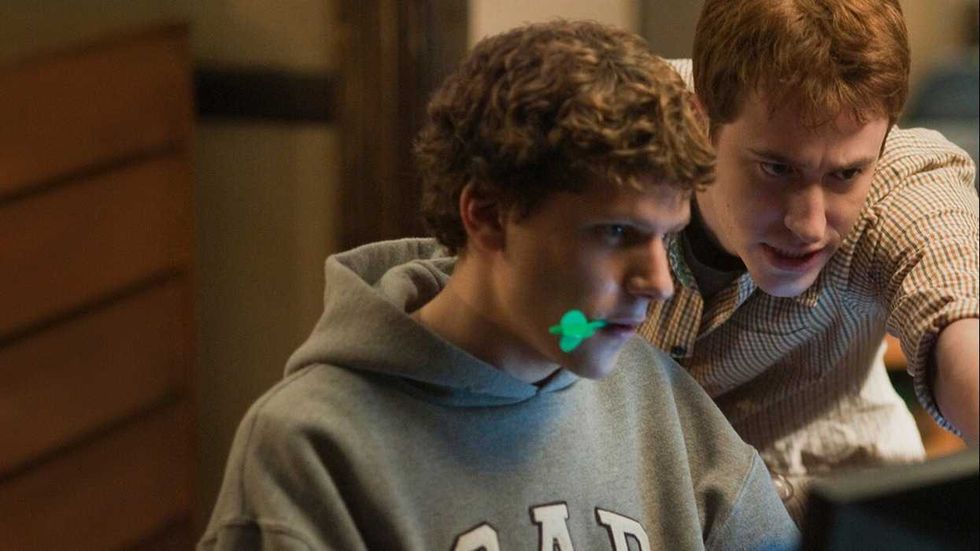 'The Social Network' Credit: Sony Pictures Releasing
Be Faithful to the Story, Not Every Fact
When The Social Network came out, Sorkin told New York Magazine, "I don't want my fidelity to be to the truth; I want it to be to storytelling." He added, "I feel like, had I met Mark, I would have felt a certain obligation to make the character sound like Mark, walk like Mark, all of those things. And frankly, I probably would have had an affection for him that I wouldn't have wanted to betray."
Here, Sorkin explains what he meant by that, using The Social Network's first act as an example.
He had Zuckerberg's real live blog from the night he started his first iteration of the site, which showed he was drinking. Sorkin wrote him mixing vodka and orange juice. Shortly before shooting, the team learned Zuckerberg had been drinking beer, and Sorkin argued to keep the cocktail anyway.
"Not only is it just more interesting visually than opening a beer, but a college kid drinking a beer doesn't necessarily read as drinking to get drunk. And that's the important thing, that he was drunk."
He lost that argument, and the beer made it into the movie.
But all this doesn't mean he wants to lie just for fun.
"I wouldn't defame someone, and I wouldn't pervert truth. That's important. A different way of putting it is that it's a painting and not a photograph."
Find the essential truth of a moment and protect it. Change only what serves it, and never what distorts it.
Write for the Ear
Sorkin is also famous for writing musically, including asides and vocal tics—much like he speaks. Sorkin's dialogue has a sound you can recognize easily. He traces it back to childhood, when his parents took him to plays he was too young to follow.
"I wouldn't necessarily understand what was going on on stage, but I loved the sound of dialogue. It sounded like music to me, and I wanted to imitate that sound. What a line of dialogue sounds like is as important to me as what it means."
The late Rob Reiner, who died in December 2025, shared that obsession. He brought Sorkin to LA to adapt A Few Good Men, Sorkin's first screenplay. Sorkin compares those daily sessions, going beat by beat through the script, to being paid to attend grad school.
When Sorkin had a fix, he'd ask to write it instead of pitching it, and Reiner nicknamed those "trust me, I'm Aaron" scenes. Reiner also didn't let actors ad-lib.
"You have to have a facility with language. There are two things that an actor can't fake. An actor can't fake being smart, and an actor can't fake being funny," he says.
But it matters that an actor is human. He brought up AI briefly.
"I think that what we're going to discover is that you can go into a movie theater not knowing the name of the person who directed it, the person who wrote it, the people who are in it, but we're going to find out that it matters that they were people."