“Are You Not Entertained?” — The Question That Turned Gladiator Into Tragedy
The line that exposed a form of hypocrisy.
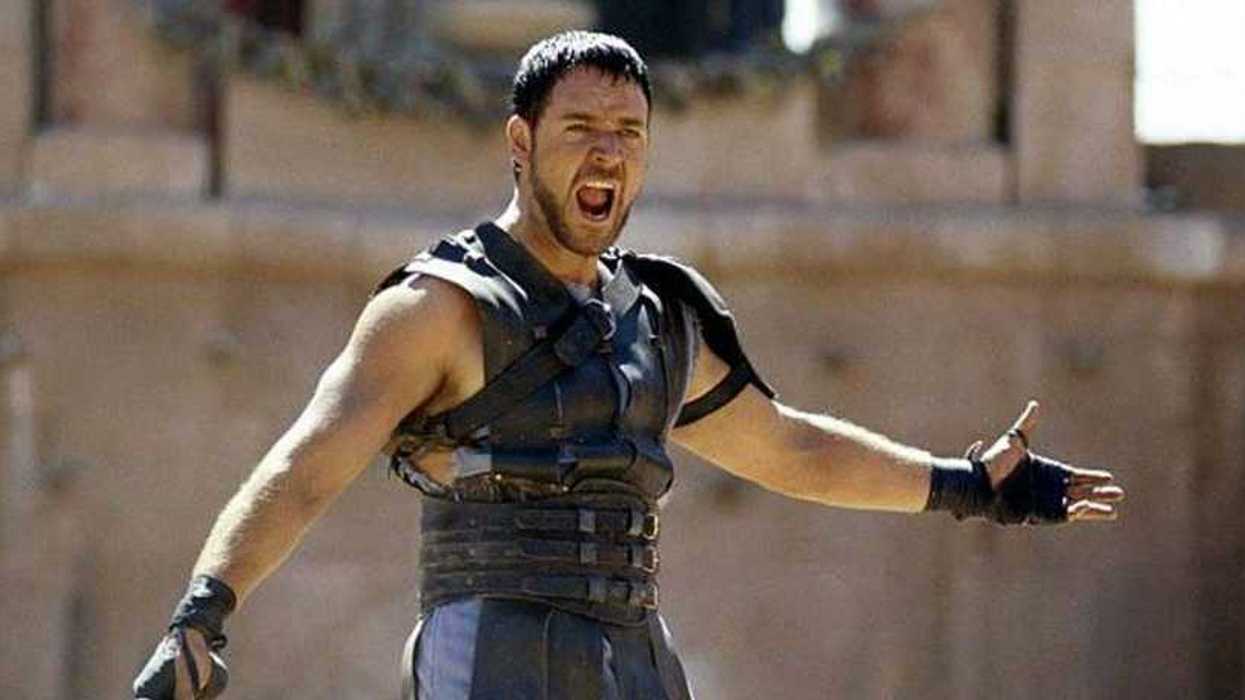
Gladiator (2000)
While films like Ridley Scott’s Gladiator recreate glorious civilizations from our past, they also portray some of the most brutal practices of empires.
Set during the reign of the Roman Empire, Gladiator follows a former general in his quest for revenge against the corrupt emperor who obliterated his entire family and indirectly turned him into a slave.
The movie is one of the most magnificent period dramas ever made. It is also known for its spectacular exploration of gladiator games, from fast-paced action sequences to emotional one-on-one battles.
One quote in the movie that emotionally blisters me is, “Are you not entertained?” Maximus delivers it after he defeats his opponents in the arena.
In this article, we examine why Maximus’ rhetorical question to the crowd is an introspection about what it means to be human.
A Little About the Gladiator Games in Ancient Rome
In reality, gladiators were enslaved people forced to fight in the arena to entertain the Roman elite.
It began as a ritual at Etruscan funerals, where gladiators would fight each other to the death, believing that the dead gladiator would accompany the deceased man as his guard into the next world. With the increasing popularity of the death matches, they soon turned into entertainment for the Roman nobility.
Not many know that this barbaric sport was systematic. The men were divided into categories based on their strengths and fighting styles, and they also received years of official gladiator training before they were made to fight.
In the beginning, the fights were usually to the death, but, as training new gladiators was expensive, the rules were eventually revised to spare their lives.
The Scene: Maximus and the Games
After Commodus orders the execution of Maximus' family, slave traders find Maximus and sell him to Proximo, who runs a gladiator school in the North African province of Mauretania. Although Maximus refuses to fight at first, his exceptional combat skills soon make him a crowd favorite.
Maximus enters the arena for his first gladiatorial fight in the provincial city of Zucchabar. He walks past other gladiators waiting their turn, tense with anticipation. Inside the arena, several armed opponents await him. The crowd roars its approval.
The fight begins. Maximus attacks his opponents, defeating them one by one. Within moments, Maximus stands alone. The crowd falls silent, stunned by his swift victory.
Maximus hurls his sword toward the governor's viewing box and shouts at the crowd, "Are you not entertained?"
The arena remains silent.
Maximus’ Quote as an Allegory
1. Humans Enjoy Violence
Maximus' rhetorical question forces us to examine human nature. Throughout history, humans have sought entertainment in violence and bloodshed, a behavior that distinguishes us from other species that kill only for survival or defense.
The gladiatorial games represent this darker aspect of humanity—the capacity to find pleasure in watching others suffer and die. Maximus' question challenges the crowd to recognize their complicity in this brutality.
2. Maximus’ Defiance Against the System
Hurling his sword at the governor's box represents Maximus' contempt for the entire system. Despite being Roman himself, Maximus despises the gladiatorial games and what they represent.
His question drips with sarcasm and anger as he confronts the crowd for treating life-and-death combat as mere entertainment.
3. A Reminder of Maximus’ Loss
Having lost his wife and son to Commodus' cruelty, Maximus understands the actual cost of death. Yet fate forces him into the arena, where he must kill for the amusement of spectators.
Maximus defeats his opponents quickly and efficiently to spare them prolonged suffering, each death reminding him of his own loss.
"Are you not entertained? Are you not entertained? Is this not why you're here?" he demands of the crowd that has gathered to watch men die.
Instead of reflection or shame, the crowd erupts in cheers, chanting his name. Their response demonstrates how those in power reduce human life to spectacle. Maximus realizes that his superior fighting skills have only deepened the crowd's bloodlust.
The quote "Are you not entertained?" remains one of cinema's most powerful challenges to audiences. Maximus questions us, too, viewers who have also gathered to watch violence unfold on screen.
The scene forces us to confront an uncomfortable truth. Humanity has always been drawn to spectacles of violence. Whether in ancient Rome's arenas or modern movie theaters, we continue to seek entertainment in stories of combat and death.