How Arnold Schwarzenegger Turned A $0 ‘Twins’ Salary Into A $40 Million Payday
Trusting a project led to Schwarzenegger's largest paycheck.
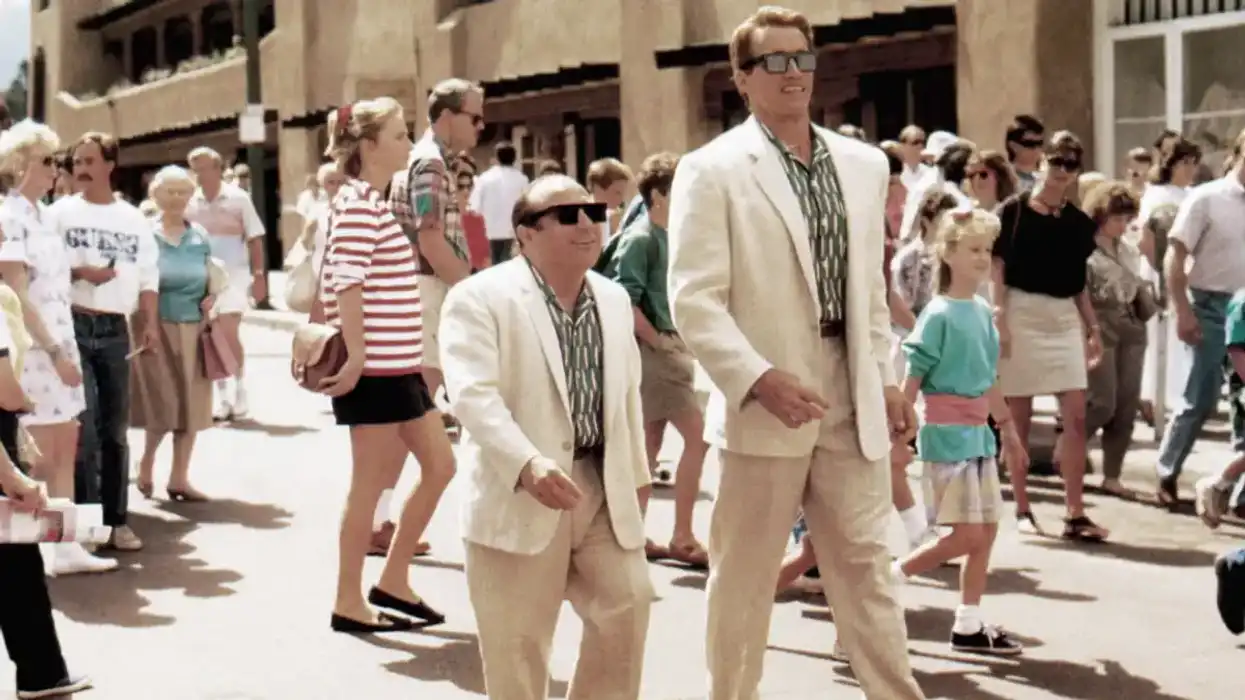
'Twins' (1998)
In an era of bafflingly enormous Hollywood paychecks, it might be outlandish to fathom, but back in 1988, Arnold Schwarzenegger turned a $0 salary into a $40 million fortune through sheer belief.
What sounds unthinkable today, believe me, was just as unthinkable even then, especially considering how popular Schwarzenegger was as an action hero during this period. This popularity, in fact, worked against the actor because the film business did not see him playing a key role in Twins, which was essentially a buddy comedy.
To Schwarzenegger, this wasn’t a gamble. It was an embodiment of his conviction in the story, its director Ivan Reitman, and the fact that an image-breaking crossover film was a smart way forward for him as an actor.
How did Schwarzenegger pull off this clever career move? What can we learn from his foresight and decision-making?
Let’s jump right in and explore.
Why Did Arnold Schwarzenegger Say No To A Salary?
As you can imagine, Schwarzenegger’s decision to forgo a normal salary on Twins could not have been an easy one. Considering the context of just how popular Schwarzenegger was as an action hero at the time, the fact that the studio wasn’t willing to take a bet on him entering a different genre can be considered quintessential studio myopia.
Frustrated by being labeled as an action hero and not much beyond that, Schwarzenegger saw Twins as a film that could demonstrate his acting range in a lighthearted, family-friendly way. A change of pace that he presumed would also help break his image and prevent him from being typecast.
The studio heads, who were hesitant to see him lead a buddy comedy, perhaps never imagined what Schwarzenegger was about to propose. Not only did Arnold propose to forgo his salary, but his co-actor, Danny DeVito, and director Ivan Reitman also offered to work without pay.
What would they get instead? A major chunk of the backend.
Clearly, a deal like this was far from common. However, given the situation they found themselves in, it worked well for both parties. Presumably, for any given project, the fees of the lead cast members and the director take up a large portion of the film’s total budget. Forgoing these fees obviously has a direct impact on the amount a studio spends upfront.
What nobody knew at this time was that this backend deal (often reported to be around 40%) would be Arnold Schwarzenegger's largest-ever payday.
What Was The Studio’s Perspective?
Universal Studios approached the project with a considerable amount of caution. Not only was Schwarzenegger primarily known for his action films, but Twins was also considered a high-concept story that would be a major leap from the kind of work he was known for.
“Untested” is a keyword in a scenario like this. Universal had no real-life example of Schwarzenegger working in a PG-rated buddy comedy, so for them, Twins was a massive departure from a “proven formula”.
Schwarzenegger recalled, “They were like, No, we know we are going to make money with you if you do action movies.” This tells us that the studio had no problem betting on Schwarzenegger (who would?). They just didn’t see him in a film like Twins. And that was the only problem.
Schwarzenegger, DeVito, and Reitman came up with a solution that was honestly hard to turn down. How do you say no to three key figures from your movie basically working for free? Eventually, Twins was made for an estimated budget of $15 million, a significantly lower budget than what would have been on the cards had the trio taken a typical salary.
The result – Twins opened at $11 million but somehow kept hanging around. Audiences rejoiced in watching Schwarzenegger play an outlandishly different character. The whole approach was refreshing, fun, and successfully image-breaking. Eventually, the movie earned roughly $216.6 million worldwide, and the backend deal rewarded Schwarzenegger significantly for his patience, belief, and conviction.
Lessons For Actors About Betting On Yourself
“It was more than any movie I ever made.” Arnold Schwarzenegger said this about the ownership deal on his successful comedy, Twins.
This actor's experience stands as a powerful example of the rewards that can come from having belief in one’s abilities. While it is easier said than done, attaching compensation to results is perhaps the strongest and most potent way of revealing one’s conviction in a project.
Think about it. If the Twins lost money, Schwarzenegger would have walked away with nothing. As an established actor, putting so many hours into a project (away from other work that would have earned him money) would have been so disheartening. But the thought of failure never bothered Schwarzenegger. He was confident that the audience would buy into this refreshing new persona and actually be entertained by it. He believed in the story, his co-actors, and his director, Ivan Reitman, who obviously had a history of success.
This case illustrates that when actors identify opportunities others overlook and negotiate their way into owning them, they can stand to gain a lot more than a regular payday. In other words, Schwarzenegger knew that failure would cost him time and some money, but he also knew that success would reward him far more than failure would affect him.
Summing It Up
Arnold Schwarzenegger’s Twins deal remains one of Hollywood’s smartest financial plays by an actor. It serves as a powerful reminder that sometimes the biggest paychecks may never live up to the amount of money talent can earn through ownership deals. Not only are contracts like these financially rewarding, but they also allow actors not to burden projects with their fees, but instead own them with the power of their work.
Which is your favorite quote from Twins? Tell us in the comments.