‘As Good As It Gets’: Melvin Udall’s Redeeming Line
How one awkward dinner scene turned Jack Nicholson’s cruel curmudgeon into one of cinema’s most unexpectedly human characters.
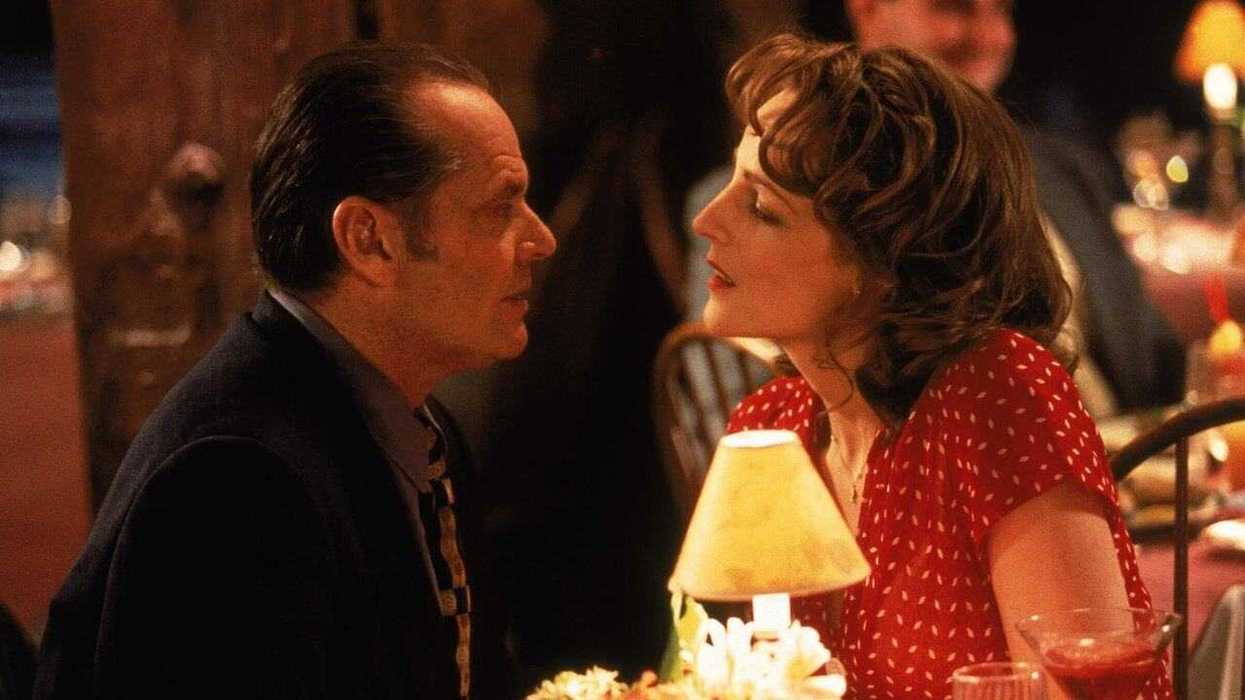
Jack Nicholson and Helen Hunt in a still from As Good As It Gets (1997)
Melvin Udall (Jack Nicholson) is not someone who will charm you over dinner. On the contrary, he is someone you would see on the street and change your direction. He is a misogynist and a misanthrope; throw in the mix a couple of phobias, and there you have Melvin Udall.
And yet, there comes a turn in As Good As It Gets (1997), when this cantankerous prick somehow manages to have a genuine loving moment—after being “tasked” to pay a compliment to balance out the insensitive remark he had hurled earlier. It happens over dinner with Carol (Helen Hunt), the woman (actually the only person in his life) with whom he can interact on a human level. Also, the only person who can make him want to be a better man.
This diner scene is where the movie’s emotional equilibrium shifts, transforming Udall into someone affable instead of someone hateful. This is where Udall’s character stops being a caricature and becomes painfully relatable.
Why does this line work even today? Is it the writing? Delivery? Or timing? Let’s explore.
The Unlikely Redemption of Melvin Udall
A Portrait of Misanthropy
Melvin appears to be beyond redemption from the opening scene—you know, where he dumps a little puppy down a garbage chute. His daily routines are dictated by his OCD, which he combines with racism, homophobia, and unrelenting cruelty. He treats Carol more like a servant than a human, berates strangers without hesitation, and unabashedly taunts his gay neighbor, Simon (Greg Kinnear). We have very little reason to expect kindness from him.
The Catalyst for Change
However, his armor starts to show cracks. Unexpectedly, even to himself, he becomes softer after being forced to look after Simon’s dog, the same one he once shoved down the chute. Although reluctant at first, Udall warms up to the dog’s cute charm. The dog also encourages him to take responsibility and teaches him the value of friendship. Then there is his bizarre dependence on Carol, the only waitress who will put up with his eccentric rituals. There is no romance between them, not yet, but their relationship builds on the foundation of need and then develops into something (not meaningful yet), but something different. Something he cannot identify. The dog and Carol, these two, push him toward the better version of himself.
The Arc of Progress
By the time this dinner happens, Udall has already started to come around. He makes an effort to spend time with Carol, tries to express gratitude, and even tries small acts of consideration. But he is still rough around the edges, and one of his “Melvin” moments makes him say something mean to Carol. To placate her, he launches into an awkward, hesitant, and kind of rambling theory-cum-compliment. Thankfully, it turns out to be honest and quite beautiful.
Scene Analysis
The Setup
From the beginning, the setup of the dinner date is tense. Carol is more than aware of Melvin's impaired capacity to be thoughtful and sensitive. So she has come to this dinner, and the trip as a whole, with half a mind. Melvin, being Melvin, doesn’t disappoint and blurts out something mean. Just because you know a scorpion will sting, it doesn’t hurt any less when it actually stings. Carol demands a compliment. She assumes that, for a person like Udall, paying someone a compliment should be nothing less than punishment. The mood is soured, and the air is heavy with tension. This is not an ideal breeding ground for romance. And that’s precisely why the subsequent compliment is so heartwarming.
The Nicholson Magic
There is no doubt that without Nicholson’s delivery, the words would mean nothing. Nicholson is known for larger-than-life performances, such as in One Flew Over the Cuckoo’s Nest (1975) and The Shining (1980). But he strips all that grandeur away in this scene.
His Udall lacks confidence and charm when delivering the line. His body language is awkward, his pauses drag into a weird silence, and his voice is gravelly and hesitant. He avoids her eyes, fumbles through half-formed thoughts, and then, as if it surprises even him, he utters the magical words.
The delivery is memorable because it sounds like an unguarded moment that you were not supposed to hear. And that’s the beauty of Nicholson’s performance, the unadulterated vulnerability. It pretty much challenges the audience’s preconceived notions of his abilities.
Conclusion
The line is nothing without its truth. And the truth it conveys is that change doesn’t happen with fireworks but rather with cautious, quiet steps. Not many movie scenes have this kind of gentle, transformative moment. Perhaps that’s why this confession, tucked away in a fancy restaurant dinner date, has earned its reputation as one of the most relatable lines in movie history.
- Who Are the Best Screenwriters of All Time? | No Film School ›
- Five Writing Lessons from 'The Simpsons' | No Film School ›
- What Does the Line “Forget it, Jake. It’s Chinatown." Actually Mean? ›
- Iconic One Liner: “You Can’t Handle the Truth!” ›
- Why the Advice Jack Nicholson Gave Michael Keaton on 'Batman' Is ... ›
- Just How Twisted Was the Unused Scene Jack Nicholson Wrote for ... ›
- Watch: How to Make Your Actors Angry, Like Jack Nicholson | No ... ›
- 10 Best Jack Nicholson Movies ›
- 1975 Classic Ranked Among ‘Best Movies’ Of All Time ›