The 10 Best Dysfunctional Family Scenes Ever Filmed
Get your anxiety pills and emotions in check; these will throw you for a loop.
'Hereditary'
As we head into the holiday season, you're likely to spend a lot of time with your family. That can be stressful! But it can also be a great inspiration for your next screenplay or movie.
I actually love an ensemble movie where a bunch of characters play a family. There's always high stakes and lots going on.
But what movies have those scenes with dysfunctional families that burn into your brain? The ones where you can see everyone's having fun filming them, and that you know the audience will be talking about after?
Today, I made a list of my favorites that I wanted to share with you.
Let's dive in.
10. "Bastard in a Basket" – There Will Be Blood (2007)
- Director: Paul Thomas Anderson
- Writer: Paul Thomas Anderson (based on the novel "Oil!" by Upton Sinclair)
- Cast: Daniel Day-Lewis, Dillon Freasier
The Scene: Oilman Daniel Plainview (Day-Lewis) sent his adopted son, H.W., away on a train alone after the boy became deaf in an accident. Later, Daniel is reunited with H.W. The scene is a stiff, formal attempt at reconciliation, in which Daniel tries to explain his actions to a son, communicating through an interpreter.
Why It’s Masterful: This is a movie about ego and usury. Any idea that Plainview actually liked and cared about his kid is tossed out the window. We see he was a pure financial "Bastard in a basket," and that Plainview only ever wanted the business, not a son.
9. The "Asparagus" Dinner – American Beauty (1999)
- Director: Sam Mendes
- Writer: Alan Ball
- Cast: Kevin Spacey, Annette Bening, Thora Birch
The Scene: At a suburban dinner table, Carolyn (Bening) has prepared a perfect meal complete with "dinner music," Lester (Spacey) is undergoing a midlife crisis, and their daughter Jane (Birch) hates them both. When Lester criticizes Carolyn's rigid control, she explodes and throws the asparagus against the wall.
Why It’s Masterful: The scene is all about the contrast between surface perfection and underlying angst, which is basically his theme for the whole movie. You immediately understand that this family has a lot of issues, but no one is talking about them openly. When they do, you also see what changes they need to overcome.
8. The Pizza Boxes – Parasite (2019)
- Director: Bong Joon-ho
- Writer: Bong Joon-ho & Han Jin-won
- Cast: Song Kang-ho, Choi Woo-shik, Park So-dam, Jang Hye-jin
The Scene: The destitute Kim family tries to make money by folding pizza boxes in their semi-basement apartment, and they are terrible at it.
Why It’s Masterful: The Kims are actually a very loving, tight-knit unit, but their abject poverty forces them into bizarre, humiliating situations that test them on every level. But here's the thing, the audience falls in love with them in this scene, so when they have to do more dire, we're completely on their side. And we believe they'll do those things, because the foundation of the pizza boxes is there, too.
7. The Royal Review – The Royal Tenenbaums (2001)
- Director: Wes Anderson
- Writer: Wes Anderson & Owen Wilson
- Cast: Gene Hackman, Anjelica Huston, Ben Stiller, Gwyneth Paltrow, Luke Wilson
The Scene: Estranged patriarch Royal Tenenbaum (Hackman), broke and kicked out of his hotel, gathers his genius-but-broken adult children to break the news that he's dying and has to move in with them.
Why It’s Masterful: Wes Anderson serves up a masterclass in character introduction through Royal's narcissistic monologue that takes us through all of the kids and what's wrong with them. These cliff notes establish the film's central thesis: these people are exhibits in their father’s museum, unable to escape the roles he assigned them decades ago.
6. The "Scotch" Scene – Ordinary People (1980)
- Director: Robert Redford
- Writer: Alvin Sargent (based on the novel by Judith Guest)
- Cast: Donald Sutherland, Mary Tyler Moore, Timothy Hutton
The Scene: The Jarrett family is attempting a normal Christmas photo after the death of their eldest son and the suicide attempt of their youngest, Conrad (Hutton). Beth (Moore), the icy matriarch obsessed with appearances, fusses over everything as the photo and their family falls apart.
Why It’s Masterful: This is the gold standard for repressed suburban dysfunction and family angst. Mary Tyler Moore created a character so brittle that any display of real emotion might shatter her, and then this scene just breaks her in real time as she again doesn't get what she wants.
5. The Intervention – Little Miss Sunshine (2006)
- Directors: Jonathan Dayton & Valerie Faris
- Writer: Michael Arndt
- Cast: Greg Kinnear, Steve Carell, Toni Collette, Paul Dano, Abigail Breslin, Alan Arkin
The Scene: During their disastrous road trip, the family hits a breaking point. Grandpa (Arkin) has died, Dwayne (Dano) finds out he’s colorblind and breaks his vow of silence in an epic meltdown, and Richard (Kinnear) is trying to force his "winner" ideology on everyone. Everyone loses it on each other.
Why It’s Masterful: This film understands that dysfunctional families also love each other desperately and want each other to be happy. But you can't control the world. You need a breaking point to bond a family together, and this is it; everyone realizes their dreams are probably not going to come true. And yet, they still have to do the visual metaphor of pushing the bus to get going.
4. The Truth Bomb Speech – The Celebration (Festen) (1998)
- Director: Thomas Vinterberg
- Writer: Thomas Vinterberg & Mogens Rukov
- Cast: Ulrich Thomsen, Henning Moritzen, Thomas Bo Larsen, Paprika Steen
The Scene: At the 60th birthday party for the wealthy patriarch Helge, his eldest son, Christian (Thomsen), stands to give a toast. Instead of platitudes, he calmly and methodically reveals that his father sexually abused him and his twin sister (who recently committed suicide) as children.
Why It’s Masterful: As the inaugural Dogme 95 film, the raw, handheld aesthetic makes this feel like a documentary of a real nightmare. And you can't look away, as people have no idea how to react to the cold and awful truth. It’s a devastating portrayal of how dysfunction protects itself through collective gaslighting.
3. The Bunk Beds – Step Brothers (2008)
- Director: Adam McKay
- Writer: Will Ferrell & Adam McKay (story by Ferrell, McKay, and John C. Reilly)
- Cast: Will Ferrell, John C. Reilly, Richard Jenkins, Mary Steenburgen
The Scene: Forty-year-old stepbrothers Brennan (Ferrell) and Dale (Reilly) realize that if they combine their beds, they will have so much extra space for activities.
Why It’s Masterful: This tends to be a tragic list, but I had to get some laughs in here, too. This scene is a perfect distillation of arrested development. McKay shoots it with deadpan realism, allowing the absurdity of two middle-aged men acting like toddlers to make us laugh and oddly draw us in. I love how it extrapolates the sibling rivalry at the center.
2. "Eat the Fish, Bitch" – August: Osage County (2013)
- Director: John Wells
- Writer: Tracy Letts (based on his play)
- Cast: Meryl Streep, Julia Roberts, Ewan McGregor, Benedict Cumberbatch, Juliette Lewis, Margo Martindale, Chris Cooper, Julianne Nicholson
The Scene: The Weston family gathers for a post-funeral dinner that descends into absolute chaos, spearheaded by matriarch Violet (Streep).
Why It’s Masterful: Adapted from Letts’ Pulitzer-winning play, this is theatrical dysfunction at its best. The scene escalates from passive-aggressive jabs to full-blown physical altercation when Barbara (Roberts) finally snaps. And when she does, we descend into chaos, which summarizes the whole movie.
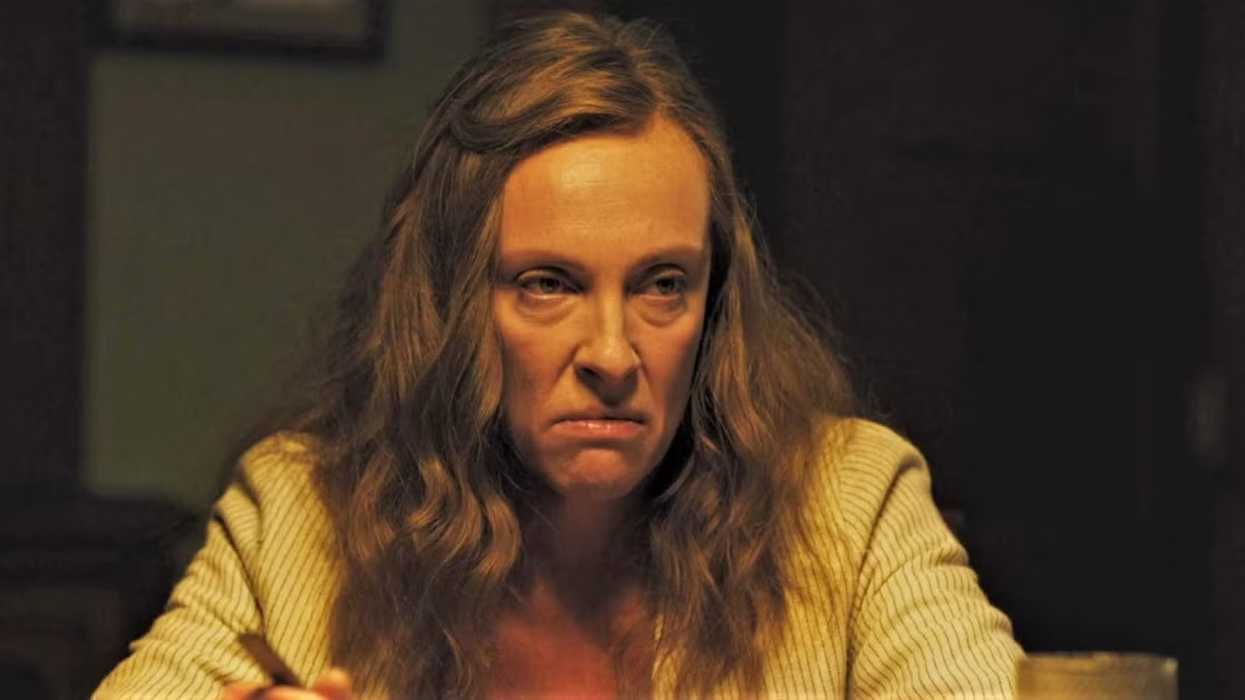
1. The Dinner Table Silence – Hereditary (2018)
- Director: Ari Aster
- Writer: Ari Aster
- Cast: Toni Collette, Alex Wolff, Gabriel Byrne, Milly Shapiro
The Scene: Following the horrific, accidental decapitation of young Charlie (Shapiro) by her brother Peter (Wolff), the remaining family sits down for dinner.
Why It’s Masterful: Have you ever heard the term "weaponized silence"? Well, this is basically the definition. Aster stretches the tension until it is physically unbearable and then lets it snap back in our face to upset us as every member of the family breaks the silence and lets out the agony they've bottled up.
Summing It All Up
These are the scenes I picked that display the most dysfunction, but I bet you gave ones that traumatized you and you think belong on this list.
Let me know what you think in the comments.