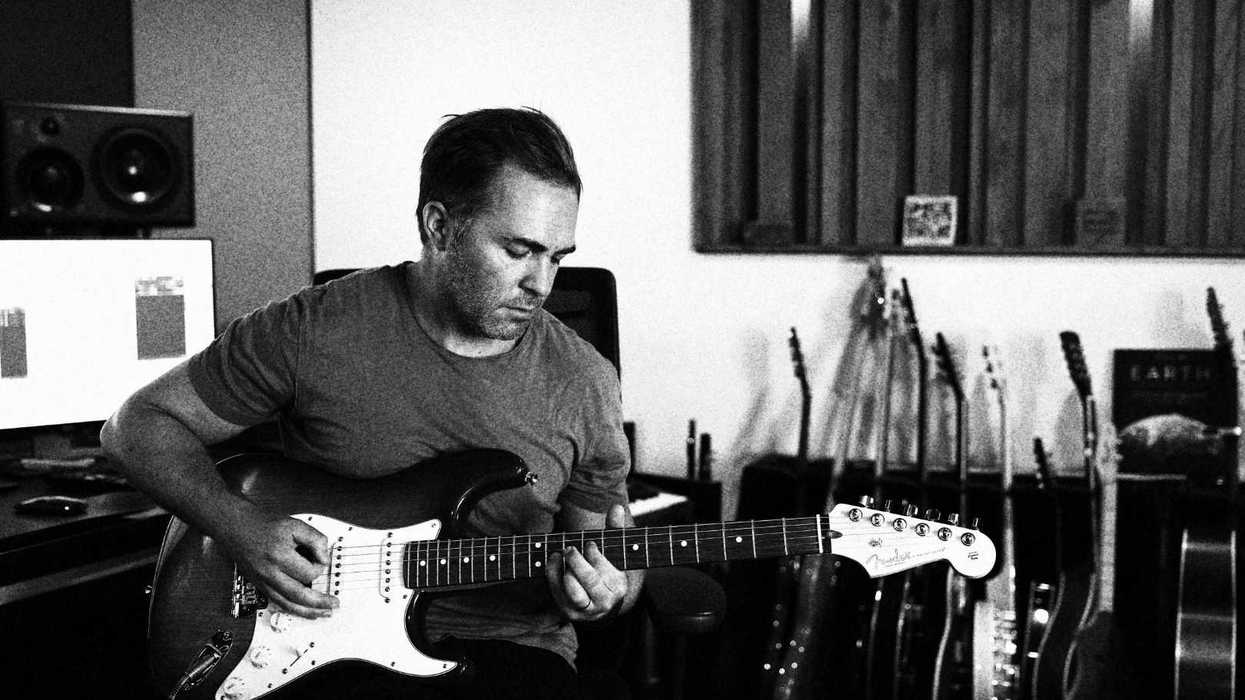
Composer Paul Saunderson takes pride in crafting "cinematic grime" for London crime sagas, building prehistoric sounds out of jawbones, and finding synergy in every note.
His latest score is for the STARZ series Fightland, an intense revenge drama executive-produced by 50 Cent.
We sat down with Saunderson to discuss the mechanics of scoring action, stepping into ancient history for the BBC, and how he builds distinct musical identities from scratch.
Let's dive in.
- YouTubewww.youtube.com
NFS: Hi Paul! With credits on both Fight or Flight and the upcoming STARZ series Fightland, you clearly love a good brawl. What are your key creative considerations when scoring action sequences?
Paul Saunderson: I really love scoring action and chase sequences because they give you so much creative freedom. There are countless ways to approach an action score, but I always try to create something that feels fresh and characterful rather than relying on familiar tropes.
Production is a huge part of that process. I like combining unique sounds, organic percussion, found objects, and heavily manipulated synths and guitars to build a distinctive sonic palette. I'm also a big fan of using unusual time signatures and polyrhythms to keep the music exciting and unpredictable, because that unpredictability helps sustain the tension.
As soon as the audience becomes too comfortable with the music during an action sequence, the tension starts to disappear. The same applies to repeating riffs or rhythmic ideas too often. I like action music to feel jagged, aggressive, and constantly evolving, so the score continues to surprise the audience while driving the energy forward.
NFS: The action in Fightland is notably grounded, following a champion boxer's quest for vengeance after his release from prison. How would you describe the sonic palette of your work on the crime drama series?
PS: In our early conversations with the showrunners, one word kept coming up: propulsive. We knew the score always needed to keep the audience moving forward, constantly driving the story and maintaining momentum.
Fightland is set in the heart of London and follows an emotionally charged revenge story centered around family, power, and betrayal. Musically, it felt important to acknowledge the influence of UK hip-hop and grime, which are deeply connected to that world. I was fortunate to collaborate with my good friend, the UK grime producer SWINDLE, and together we wanted to merge our musical identities into a single sonic palette.
We combined elements associated with grime—synth basses, electronic drums, live drum kit, guitars, and hard-hitting kicks—with a more traditional string orchestra, driving synth pulses, and layered percussion. The result was what we began calling a kind of "cinematic grime." Much of the live string orchestra was then manipulated, chopped into loops, and reimagined as part of the electronic texture, blurring the line between orchestral and contemporary production.
For the Marshall family, we wanted to create a sense of grandeur, legacy, and power. Leaning into classical harmonic progressions with the orchestra, while combining them with modern production techniques, helped to achieve that. It also created a strong contrast with the darker, grittier material we wrote for the drug cartel and Duke's revenge story, which relied more heavily on bowed metals, organic textured sounds, manipulated acoustic guitar, aggressive synths, and pulsating string ostinatos to create an atmosphere of tension and unease.
 Paul SaundersonPaul Saunderson
NFS: Fight or Flight has a much more comedic tone. How did you use score to navigate the film's blend of violence and humor?
PS: The score for Fight or Flight is pretty wild—it never takes itself too seriously, and that gave me freedom to have a lot of fun with it. The instrumentation is incredibly eclectic and colorful, constantly shifting to match the film's energy and sense of humour.
For some of the fight sequences, I leaned into more of a rock-band approach. The first toilet fight, for example, is driven by music that feels like a rock track, which really amplifies the fun and chaos of the scene. Later on, the score becomes even more over-the-top, with huge metal-style drumming, gnarly synths, and distorted textures that are all designed to heighten the absurdity and ridiculousness of the action.
Comedy is often about timing, and that was just as important to acknowledge as the music itself. Carefully choosing when a cue enters, drops out, or pauses can completely change how a joke or action beat lands. Finding that balance between supporting the violence while winking at the audience was one of the most enjoyable parts of scoring the film.
NFS: You have also received immense acclaim for your work across BBC nature documentaries such as Earth, Human, and Evolution. How did you first establish the tone of the score for that trilogy, and how did you aim to continually up the ante across each new iteration?
PS: These series have been an absolute joy to score because each one has its own distinct musical identity and sonic palette. From the outset, my goal was always to transport the viewer back in time to these extraordinary, almost alien worlds. Earth and Evolution span around 4.5 billion years of history, while Human takes us back roughly 300,000 years to explore our own origins.
For both Earth and Evolution, I wanted the music to feel simultaneously otherworldly and contemporary. The landscapes and creatures we encounter can often seem completely alien, so the score needed to evoke a sense of mystery, discovery, and wonder. To create that palette, I combined synthesisers, found sounds, orchestra, guitars, vocals, and a wide variety of percussion, blending organic and modern elements to reflect the scale and ambition of the series.
Although Earth and Evolution share a similar musical DNA, they each have their own personality. Earth is generally darker, heavier, and more bombastic as it explores the dramatic events that shaped our planet. Evolution, on the other hand, tells its story through the lives of countless species, which gave me the opportunity to bring much more character and humour into the score. Alongside the epic, sweeping moments, there are also many lighter, more playful, and intimate cues.
With Human, the emotional focus shifted completely because, for the first time, we were telling our story. I wanted the score to feel primal and earthy while still carrying the cinematic scale and emotional sweep expected of a major BBC landmark series. To achieve that, I built the score around organic, woody percussion—including log drums, rattles, sticks, leaves, jawbones, bullroarers, and buffalo drums played with friction mallets—alongside flutes, voices, solo cello, and ancient bowed instruments such as the rebec and tagelharpa. These were then supported by a 24-piece string orchestra to give the music scale and emotional weight.
One of the most important creative decisions was ensuring the music existed outside any specific culture or geography. We wanted it to feel as though it belonged to a time before musical traditions had formed, creating a sound world that was universal, timeless, and connected to our shared beginnings.
NFS: Another excellent credit of yours is the hit documentary Three Identical Strangers. Can you walk us through your initial reactions to learning that crazy true story?
PS: What an intriguing and bizarre story. Before I became involved, the filmmakers had created a short sizzle reel that captured what the film could become. I was one of several composers they reached out to, but as soon as I watched the sizzle and discovered the story, I immediately felt compelled to be part of the project.
It was one of the most challenging films I’ve had the opportunity to score. The story carries such a wide range of complex emotions—joy, fascination, disbelief, confusion, and ultimately much deeper and more difficult themes—so the score needed to carefully navigate those emotional shifts.
It was also my first documentary feature, but I approached it in much the same way I would a scripted film. The story itself was so extraordinary and larger than life that it naturally allowed for a more cinematic approach. My aim was to create a score that supported the emotional journey of the film while respecting the incredible reality at the heart of the story.
NFS: When first introduced to a premise for any project – be it a documentary or a scripted work – what are the first steps you take in developing its musical identity?
PS: When starting any project, I like to take the first week to focus purely on developing the core musical concept—the main thematic ideas, sonic identity, and instrumentation of the film or series. I often begin by writing suites or creating a toolkit of musical ideas away from picture, which I can then share with the filmmakers. From there, it becomes much easier to develop those ideas into specific cues because there is already a strong musical foundation rather than starting from scratch every time I sit down to write.
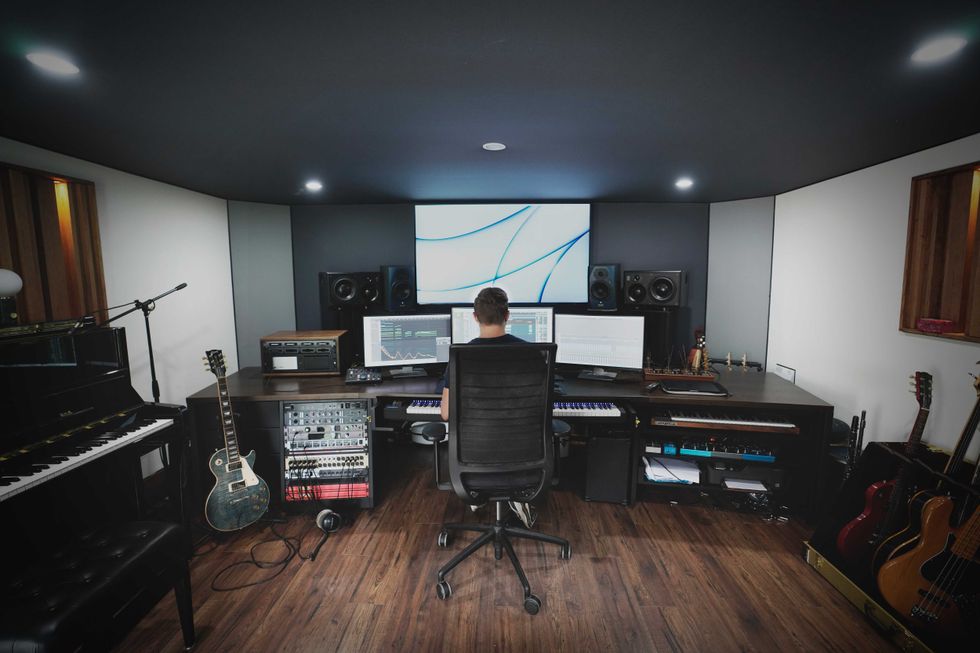
For each project, I like to approach it as a completely new world and avoid too much crossover between scores. That said, there are certain sounds and textures I’ve created myself over the years that I naturally return to, along with instruments from my own studio—my piano, voice, and guitars—which regularly become part of my creative process.
I think those personal elements help give my work a subtle signature. Even when each project has its own unique musical identity, there are often familiar textures or colours that connect back to me as a composer.
NFS: Fightland is also executive produced by 50 Cent. What can you tell us about his creative involvement with the series, or any conversations you might have had with him about the show's score?
PS: With the success of G-Unit's Power series, it was a real honour to be involved in a project backed by 50 Cent. Given his stature in both the music and television worlds, there was definitely a sense that the bar had already been set incredibly high. From the outset, we felt a responsibility to create a score that was worthy of the world he was helping to build.
While most of the creative feedback came through his team, his influence was felt throughout the process. It wasn't about trying to imitate his musical style, but about capturing the same confidence, energy, and authenticity that he brings to everything he does. That mindset challenged us to push every cue further, be bolder with our ideas, and constantly ask whether we were creating something distinctive rather than taking the obvious route. I think that ultimately helped shape a score that feels unique to Fightland while matching the ambition of the series.
NFS: Is there anything else you would like to add about Fightland or any other upcoming projects?
PS: I'm incredibly excited for audiences in both the UK and the US to experience Fightland and hear the score. It's been a hugely rewarding project to be part of, and I can't wait for people to see the series.
I'm also really proud to have recently worked on Evolution and Trying Season 5. What I love is that all three projects are so different from one another. Whether it's a grounded crime drama, a landmark natural history series, or a heartfelt comedy, each one has demanded its own unique musical identity. That variety is one of the things I enjoy most about being a composer—it constantly challenges me to explore new sounds, new ideas, and new ways of telling stories through music.