8 Iconic Movie Sets That Shaped Cinema
When visions were brought to life by production designers.
'La La Land' (2016)
A large part of production design involves creating lifelike sets that replicate real-life locations. A built set makes the shooting process easier by allowing complete control. You can move the walls around, adjust the lighting, maintain continuity—the possibilities are endless, lending freedom that a real-life location will never allow.
Then there are genres like sci-fi and fantasy that would die without set design and construction.
Sometimes, building a movie set may take months and cost you most of your budget. However, when done with intention, investing in production builds will pay back tenfold.
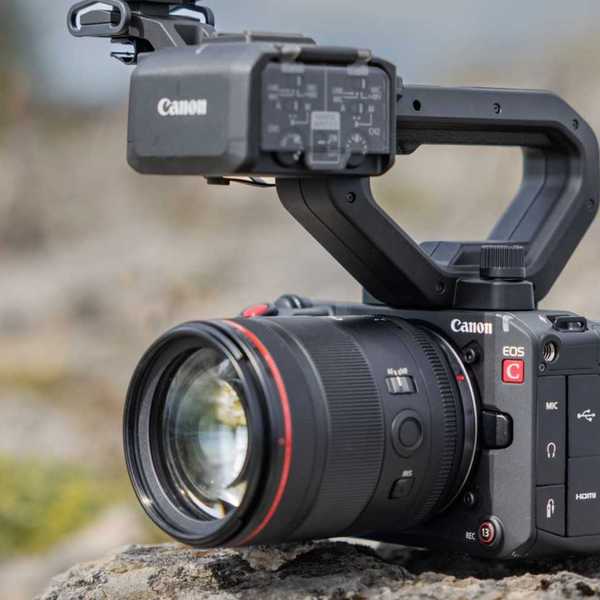
So, while newbie filmmakers dedicate the majority of their budget to equipment, thinking that a high-end camera or cutting-edge VFX are the distinguishing factors in filmmaking, an experienced filmmaker knows better to invest both attention and money in production design.
Over the years, films have featured some of the greatest movie sets, inspiring generations of filmmakers.
In this article, we’re analyzing movie sets that shaped cinema.
8 Movie Sets That Deserve the Hall of Fame
1. Cleopatra
Cleopatra is quite a controversial film in Twentieth Century Fox’s filmography, as its production nearly led the studio to the verge of bankruptcy.
While the film became the highest-grossing movie at the box office that year, it couldn’t break even financially because of its enormous budget. However, it won four Academy Awards, including Best Art Direction, so the cloud did have a silver lining after all.
If we ignore the tremendous production failures and mismanagement during filming that almost brought Twentieth to its knees, Cleopatra is undeniably a cinematic wonder.
More than 70 movie sets, designed by production designer John DeCuir, were built to create a massive Roman Forum, which required thousands of artisans, artists, and laborers and months of hard work. Most of the props were hand-crafted, which only added to the budget, and DeCuir had to build the sets three times the size of their historical equivalents at the makers' instruction. They literally recreated the Sphinx in all its glory! Finally, real gold was used to decorate costumes, props, and setups.
Clearly, the makers of Cleopatra were as glamorous and extra as the historic Egyptian queen herself.
2. 2001: A Space Odyssey
Stanley Kubrick’s 2001: A Space Odyssey wasn’t about accurately envisioning the future. Rather, it was about the 1960s vision of the future, which may or may not come true.
However, a lot of it did. HAL 9000, video calls, and spaceships are just a few of the many set pieces and concepts that accurately foreshadowed the future. Kubrick brought in NASA consultants to ensure scientific accuracy.
Scientist and aerospace consultant Frederick Ordway and technical illustrator and designer Harry Lange worked alongside Kubrick and production designer Anthony Masters to realize Kubrick’s vision, from scientific theories to futuristic technological advancements.
Masters not only perfected the science behind every set piece but also brought a certain cold aesthetic to the visuals, much needed for a film like 2001: A Space Odyssey.
The production design also required many mechanical structures, such as a real spinning set for the centrifuge jogging sequence and the accented red-orange interior of HAL’s mainframe.
2001: A Space Odyssey redefined sci-fi aesthetics as engineering-driven rather than fantasy-driven.
3. Rear Window
The movie set of Alfred Hitchcock’s Rear Window, built on Paramount Stage 18, consisted of 31 fully furnished apartments, out of which 12 had functional electricity and running water.
The set’s actual brilliance lies in its geometry. Art directors Joseph MacMillan Johnson and Hal Pereira (supervising art director here) worked closely with Hitchcock and cinematographer Robert Burks to position each apartment window so it could be seen perfectly from Jeff’s fixed vantage point, reinforcing the central moral paradox of the narrative: that looking is both irresistible and violating.
Hitchcock is known to be quite a control freak when it comes to filming. Naturally, the set was an instrument of control, and nothing was left to chance.
Constructing such a meticulously detailed set took over six weeks and cost about $72,000 (about $900,000 in today’s currency).
The apartment complex in Rear Window is inspired by a real-life building in Greenwich Village in Manhattan.
4. Metropolis
Fritz Lang’s Metropolis was the most expensive movie back in its time. To create a dystopian world, a 60,000-square-foot city set, designed by Otto Hunte, Erich Kettelhut, and Karl Vollbrecht, was constructed using miniatures at the Babelsberg studio.
The vertical stratification in architecture, with workers stacked underground beneath elite penthouses, represents the social diagram of the dystopian society.
Metropolis established the template for all subsequent dystopian urbanism, while cementing the use of miniatures for grand-scale set construction, to compensate for the lack of digital effects.
5. Crouching Tiger, Hidden Dragon
Ang Lee’s masterpiece, Crouching Tiger, Hidden Dragon, recreates the Qing dynasty with period-accurate costumes and elaborate sets.
Unlike Hollywood, where costume and production design are separate departments that collaborate, on this film, there was a single department that oversaw both. Production designer Tim Yip doesn’t stop at recreating the past but also interweaves an almost poetic aesthetic to each setup with architecture and colors.
All in all, it was a well-deserved Academy Award for Best Art Direction for Crouching Tiger, Hidden Dragon.
6. Pan’s Labyrinth
Guillermo del Toro’s Pan’s Labyrinth is no less than a magnum opus, and to date, one of the most ambitious works by the filmmaker.
Production designer Eugenio Caballero and set decorator Pilar Revuelta collaborated closely alongside del Toro to bring his fantastical labyrinth to life with creatures and elaborate sets that instantly make a statement.
The imaginative playfulness in each structure, the rich colors and tones, and the props that double as set pieces really distinguish del Toro’s labyrinthine world.
As del Toro said in an interview with Cinepelia Beyond, “Pan’s Labyrinth has all the trappings of a classic fairy tale, but in a way, it deconstructs the fairy tale.” Every element of production design in this del Toro classic screams fairytale-like beauty, deconstructed by goth.
Pan’s Labyrinth’s set design is a masterclass in the creation of a work that emits dark fantasy.
7. The Grand Budapest Hotel
Wes Anderson’s The Grand Budapest Hotel makes it to this list because it did things slightly differently than the rest of the films, but nailed it anyway.
They didn’t build life-sized movie sets from scratch; rather, they found real locations that matched the core idea of their design and then completely revamped them in the quintessential Anderson aesthetic.
For the exterior establishing shots, the makers took the miniature route as finding anything close to the Grand Budapest Hotel in real life was next to impossible — ”a hillside hotel, reached by a funicular train, with the pastel-colored town below.”
So, production designer Adam Stockhausen created a 14-foot-by-7-foot model of the hotel.
8. La La Land
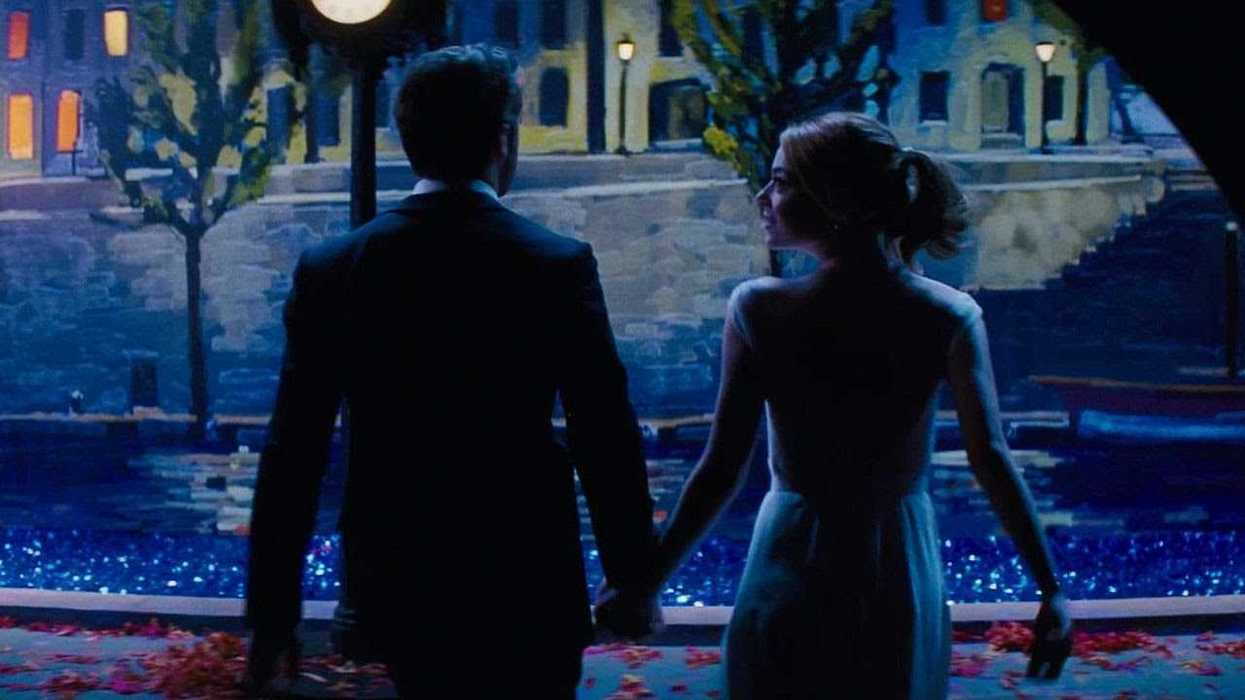
Damien Chazelle wrote La La Land before Whiplash, but waited patiently to secure a budget that wouldn’t force him to compromise his fantastical vision of L.A. It cost him about $300,000 for set decoration and construction alone.
La La Land was shot both on live locations and on elaborate sets (which accounted for about one-third of the locations). Even the live locations were altered and controlled, including an entire city block that was painted blue.
The main inspirations for La La Land’s aesthetics are Mary Poppins, Van Gogh's paintings, and Art Deco, which transport us to vintage Hollywood.
Architectural inspiration for each set was drawn from real-life buildings, such as Ronald Reagan’s first apartment in Los Angeles, where he lived as a budding actor, which partially influenced Mia’s room. The other inspiration was the Rose Garden apartments in Long Beach.
Which is your favorite movie in the list?