I've been recently working through all the old James Bond movies again. There are a few I hadn't seen in years, and others I have only seen once and forgot a lot about.
But one of the things I never forgot about is the Bond girls. These sexy femme fatales have been a staple of the James Bond movies since their inception.
And they used to have hilarious names.
Yet as the franchise has evolved from the Technicolor escapades of Sean Connery to the realism of Daniel Craig, these suggestive monikers have largely vanished.
And I kind of miss them...even if they don't fit the exact tone of the modern stories.
Look, I know these sexy names were probably part of fourth-wave feminism, but they were pretty funny. So I want to be clear, this is all in good fun.
Let's dive in.
- YouTubewww.youtube.com
The Golden Age of Innuendo
For those who may not know, James Bond was actually a literary icon before he made it ot the big screen. The books were written by Ian Fleming. And he seemed to have a lot of fun writing them.
Fleming filled his novels with names that were salacious for ht time and gave readers a feeling of a world they knew they'd never touch.
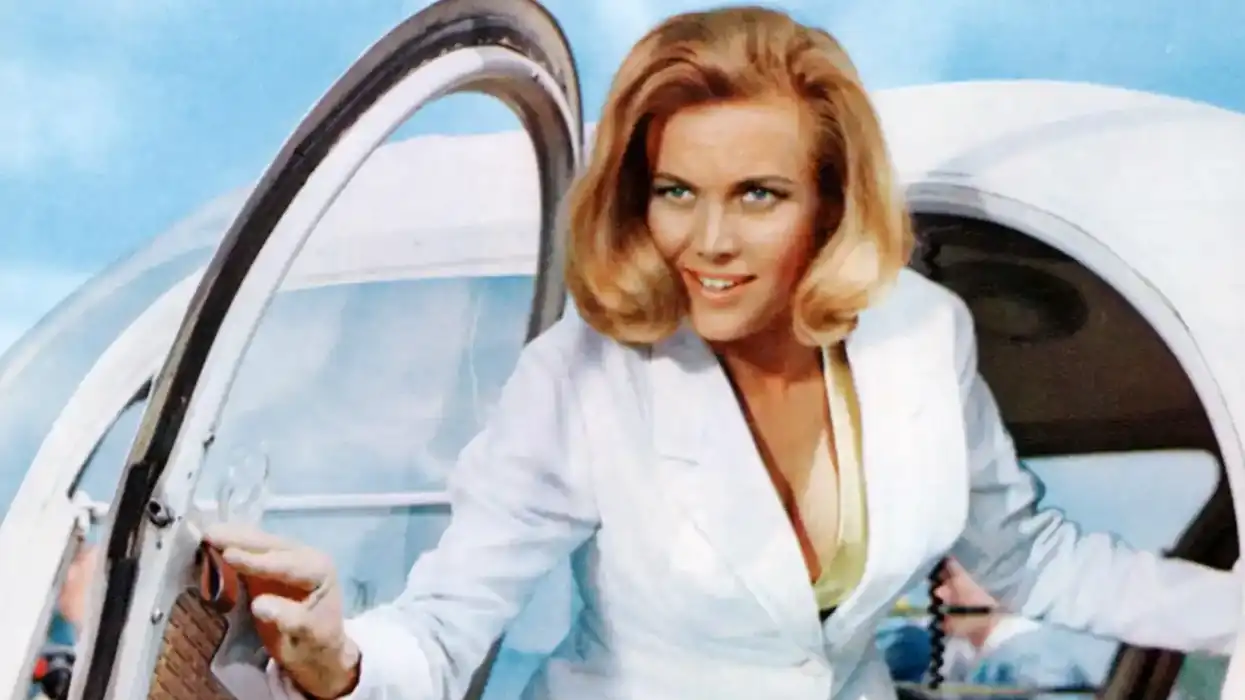
So, by the time Goldfinger hit the screen in 1964, Honor Blackman’s Pussy Galore set the gold standard for the franchise's cheekiness.
The movies brought that same salacious and saucy attitude to audiences to get them interested in a fun spy world.
Bond Girl Names
When it came to these fun names, there were a few ways for them to achieve their monikers...
- The Anatomical Pun: Names like Plenty O’Toole (Diamonds Are Forever) or Chew Mee (The Man with the Golden Gun).
- The Action/Verb Pun: Most famously, Xenia Onatopp (GoldenEye), whose name described her preferred—and lethal—method of assassination.
- The Purely Suggestive: Holly Goodhead (Moonraker) or Kissy Suzuki (You Only Live Twice).
Why It Worked (Then)
Again, these are throwbacks, but at the time, they really worked. They became part of the word of mouth of the films and a joke that really sold each movie's world.
There was a legitimate yearning for this stuff.
In the 60s and 70s, Bond was a fantasy of post-war liberation. These people had lived through hell and wanted a better world and life.
The names signaled to the audience that these movies weren't meant to be taken entirely seriously. They were pop-art capers.
They were pure escapism.
The double entendre acted as a "wink" to the adults in the room, keeping the tone light even when Bond was diffusing a nuclear bomb or feeding a villain to a shark. It was a stylistic choice that matched the era's obsession with "The Swinging Sixties."
There's actually a lot of heart and beauty in that.
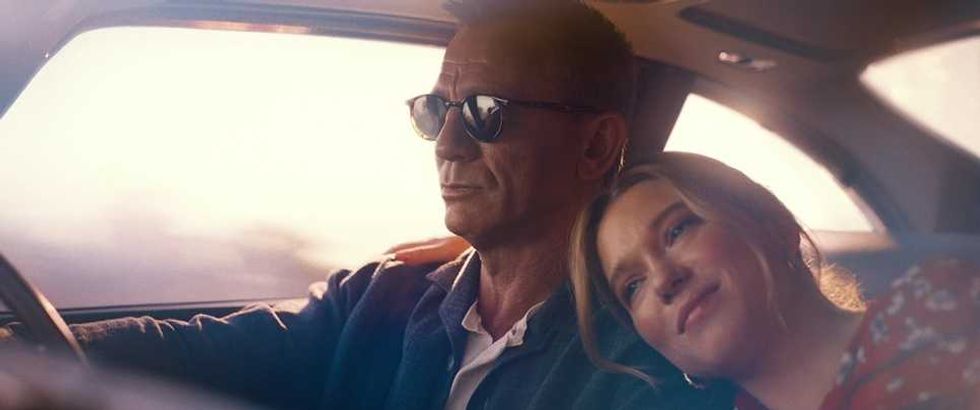 'No Time to Die'Credit: Amazon MGM
Why the Bond Girl Names Disappeared
Can you imagine the online discourse if you had movie character names like Twat McButt in a major motion picture?
As the world changed, Bond had to change with it to survive.
The shift away from names like "Bibi Dahl" toward "Natalya Simonova" or "Vesper Lynd" wasn't just about political correctness; it was still about worldbuilding.
The new James Bond wasn't for postwar people who needed a break anymore. It became wrapped up in a revolution of people who wanted to see something gritty and real again.
So we went the opposite way.
The Need for Gravitas
Starting with the Timothy Dalton era and cementing during the Daniel Craig run, the franchise moved toward "prestige action."
It’s hard to sell a scene of genuine emotional heartbreak or high-stakes espionage if Bond is mourning a woman named "Strawberry Fields" (though Quantum of Solace did give us that exact name as a brief, self-aware throwback).
Also...James Bond mourning a woman in general was kind of nuts.
Evolving Women on Screen
In the simplest terms, the "Bond Girl" evolved into the Bond Woman. These were now real characters with their own agency and stakes.
We've talked about fridging these characters, and now, we've moved past that.
Characters like Vesper Lynd or Dr. Madeleine Swann are presented as intellectual equals or even superiors to Bond. And giving a character a punny name fundamentally reduces them to a joke, which undermines the emotional weight of their partnership with 007.
So that had to go.
Global Sensibilities
Another thing that probably had a small thing to do with it is that these movies make a ton of money in the international market, where English is a second language.
In a globalized market, 1960s British locker-room humor doesn't always translate.
To keep Bond a global icon, the franchise opted for names that felt grounded in reality rather than rooted in English slang.
All The Bond Girls in Order
Before we tap out, I just wanted to go over all the Bond girls in order.
The Sean Connery Era (1962–1967, 1971)
The era that defined the archetype.
| Film | Primary Bond Girl(s) | Actress |
| Dr. No (1962) | Honey Ryder | Ursula Andress |
| From Russia with Love (1963) | Tatiana Romanova | Daniela Bianchi |
| Goldfinger (1964) | Pussy Galore | Honor Blackman |
| Thunderball (1965) | Domino Derval | Claudine Auger |
| You Only Live Twice (1967) | Aki / Kissy Suzuki | Akiko Wakabayashi / Mie Hama |
| Diamonds Are Forever (1971) | Tiffany Case | Jill St. John |
The George Lazenby Era (1969)
Lazenby’s single movie provided the most significant emotional development for the character until the modern films.
| Film | Primary Bond Girl | Actress |
| On Her Majesty's Secret Service | Tracy Bond (Teresa di Vicenzo) | Diana Rigg |
The Roger Moore Era (1973–1985)
This era leaned heavily into the name phenomenon.
| Film | Primary Bond Girl(s) | Actress |
| Live and Let Die (1973) | Solitaire | Jane Seymour |
| The Man with the Golden Gun (1974) | Mary Goodnight | Britt Ekland |
| The Spy Who Loved Me (1977) | Anya Amasova (Agent XXX) | Barbara Bach |
| Moonraker (1979) | Holly Goodhead | Lois Chiles |
| For Your Eyes Only (1981) | Melina Havelock | Carole Bouquet |
| Octopussy (1983) | Octopussy | Maud Adams |
| A View to a Kill (1985) | Stacey Sutton / May Day | Tanya Roberts / Grace Jones |
The Timothy Dalton Era (1987–1989)
Bond became more serious, and so did the women.
| Film | Primary Bond Girl | Actress |
| The Living Daylights (1987) | Kara Milovy | Maryam d'Abo |
| Licence to Kill (1989) | Pam Bouvier | Carey Lowell |
The Pierce Brosnan Era (1995–2002)
A transition period where the franchise began questioning Bond’s "sexist, misogynist dinosaur" status (as M put it).
| Film | Primary Bond Girl(s) | Actress |
| GoldenEye (1995) | Natalya Simonova | Izabella Scorupco |
| Tomorrow Never Dies (1997) | Wai Lin | Michelle Yeoh |
| The World Is Not Enough (1999) | Christmas Jones / Elektra King | Denise Richards / Sophie Marceau |
| Die Another Day (2002) | Jinx Johnson / Miranda Frost | Halle Berry / Rosamund Pike |
The Daniel Craig Era (2006–2021)
The era of deep serialization, where the women (especially Vesper and Madeleine) became central to Bond’s overarching psychological journey.
| Film | Primary Bond Girl(s) | Actress |
| Casino Royale (2006) | Vesper Lynd | Eva Green |
| Quantum of Solace (2008) | Camille Montes | Olga Kurylenko |
| Skyfall (2012) | Sévérine / Eve Moneypenny | Bérénice Marlohe / Naomie Harris |
| Spectre (2015) | Madeleine Swann / Lucia Sciarra | Léa Seydoux / Monica Bellucci |
| No Time to Die (2021) | Madeleine Swann / Paloma / Nomi | Léa Seydoux / Ana de Armas / Lashana Lynch |
Summing It All Up
While we’re probably not to see a "Honey Moore" or "Ivana Humpalot" (leave that to Austin Powers) in the next Bond reboot, the history of these names remains a fascinating time capsule.
It's fun to go back to these movies to see what they got away with, and to see the multifaceted way we've used a character like James Bond to get over different eras of our existence.
Today, the franchise treats its female leads with more respect, which is a good thing, but the names of the past remain an indelible part of cinema’s most famous DNA.
Let me know what you think in the comments.