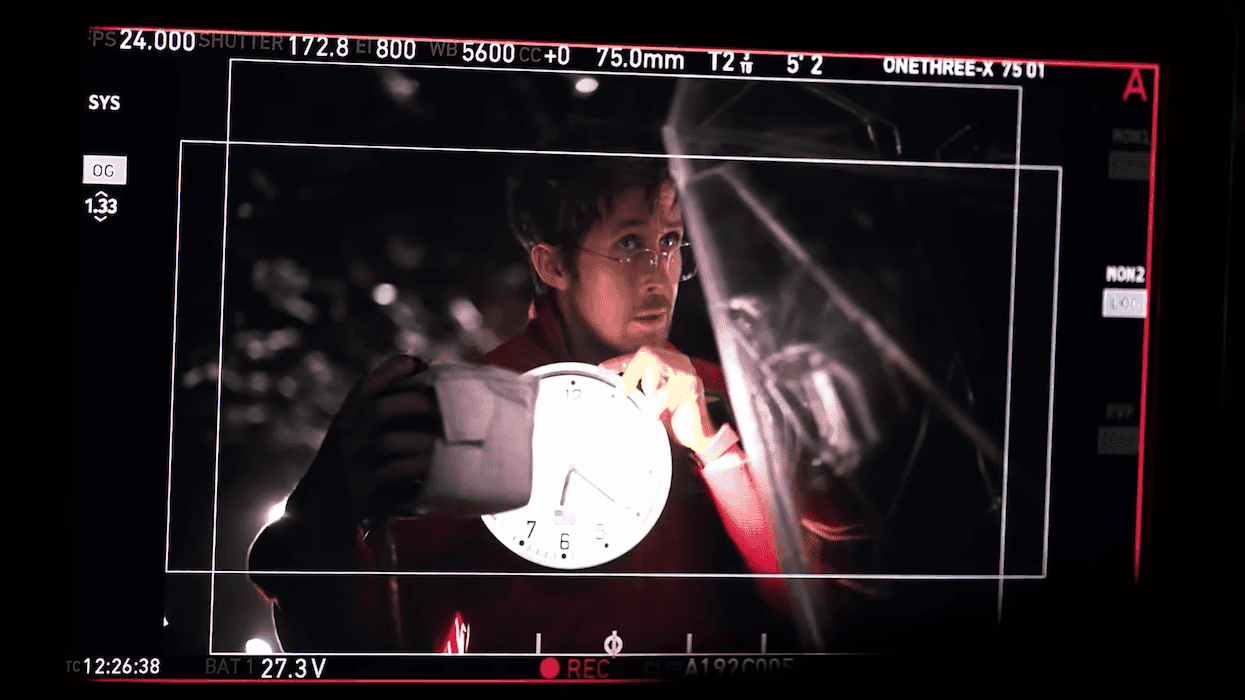
I was so excited when I heard Andy Weir's science fiction epic, Project Hail Mary, was coming to the big screen. It was a book that got me back into reading, and it was coming from a crew of Lord and Miller, who I think just lace their films with an immense amount of heart and soul.
Well, a new behind-the-scenes look offers a deep dive into how the filmmakers are tackling the immense challenges of adapting a story that spans galaxies, features a faceless alien co-star, and maintains a sense of "heightened realism."
It's one of those deep dives that is full of facts and a lot of fun. Plus, cutting-edge technology with traditional practical effects.
Let's dive in.
- YouTubewww.youtube.com
Creating a Relatable Hero
At the center of the story is Ryland Grace, a scientist thrust into a high-stakes mission to save humanity.
You need someone who can play both a loveable school teacher and someone with the knowledge to help save the world. The yalsp have to be charming enough to make an alien love them.
Enter Ryan Gosling, an actor who can do it all, including opening a number one movie.
A few things Gosling does here make him perfect for the role. The first is that he understands that Grace isn't brave in any traditional sense, which makes him a more compelling character to follow on such an extraordinary journey.his
The second is that he also understands Grace is really, really smart. And he plays it effortlessly, so it just feels like this guy gets it. He reacts to situations the way any regular person might, making his resourcefulness feel earned.
The Challenge of "Rocky"
It's kind of crazy that this is a movie about alien first contact, and it's all played so very nicely. It's one of those trope flips I really loved about the book that felt great on the big screen, too.
But how do you bring an alien rock lifeform to the big screen?
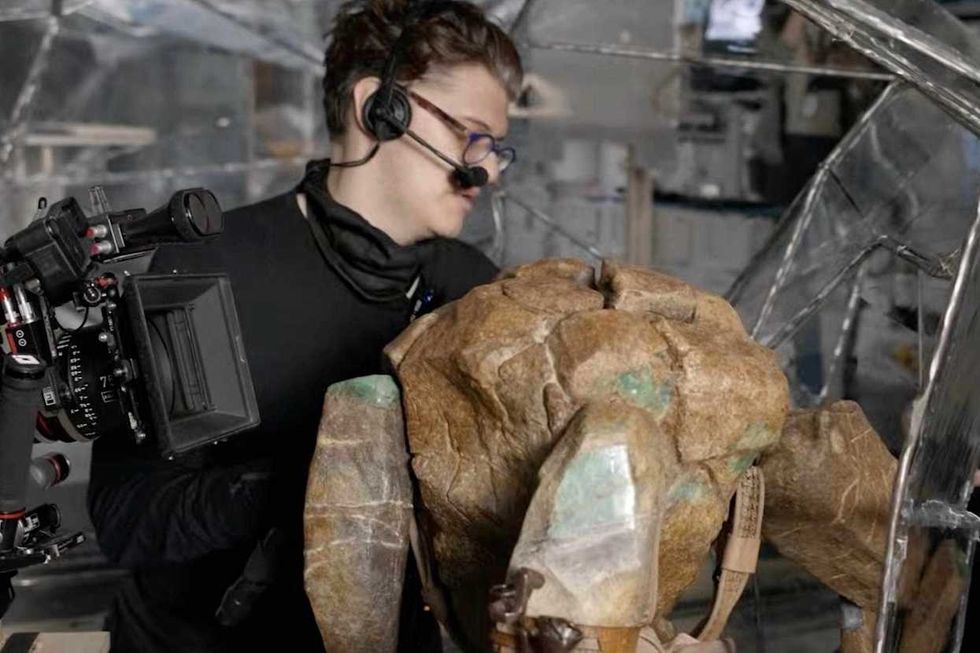
Rocky has five legs, no face, and communicates via echolocation. It's a design that would typically lead a production toward 100% CGI, but the team opted for a sophisticated hybrid approach.
Here's how it was done:
- Practical Puppetry: The production used a team of puppeteers (dubbed "The Rocketeers") led by James Ortiz. The filmmakers cited Pixar’s ability to make audiences care for a desk lamp as inspiration for finding personality in a faceless creature.
- Advanced Robotics: The production also used beta versions of the most sophisticated motors on the market to ensure Rocky’s movements matched the puppeteers' inputs with precision. These motors were re-engineered specifically to suit the needs of the character's unique physiology.
- A "Genetic Splice" of Personality: Lead puppeteer James Ortiz provided Rocky’s voice via an "earwig" for Gosling to react to in real time. He described the character's personality as a mix of a "miserly old man, a peppy Labrador, and an anxious 14-year-old boy."
 Behind the scenes of 'Project Hail Mary'Credit: Amazon MGM
Heightened Realism and Production Design
Movies like this are a team effort, but selling the worldbuilding of different kinds of spaceships and laboratories was the hard work of Production Designer Charlie Wood.
He focused on a "heightened realism" by grounding the sci-fi elements in actual aerospace technology.
- Real Avionics: The Hail Mary cockpit isn’t just props; it's filled with real avionics sourced from spacecraft and stealth jets to give the environment a tactile, lived-in feel.
- Astronaut Consultation: The crew consulted with real astronauts to capture the "spiritual" and "beautiful" experience of being in space, particularly how light behaves outside the Earth's atmosphere and the reality of life on the ISS.
- Accurate Movement: The team worked closely with author Andy Weir to ensure Rocky’s "internal steam hydraulic system" of movement felt scientifically accurate to the book's description. And that it was physically grounded.
Visual Scope and Cinematography
Look for this movie to get a lot of Oscar nominations next year. I predict one for Greig Fraser (Dune, The Batman), who handled the cinematography.
The film was designed for the largest possible canvas. I saw it in IMAX, and it blew me away. It's worth seeking out on 70mm, too.
- The IMAX Experience: Lord and Miller stressed that the "epicness of the journey" required the scale of an IMAX screen to truly capture Fraser’s lighting and the film's "transformative" scope.
- Weightlessness: Gosling described the physical difficulty of filming scenes while "tail over tea kettle" in harnesses. Real astronauts on set noted that his chaotic, bumping-into-walls movement felt surprisingly truthful to the experience of zero-G.
- Grounded: All of these things gave audiences a grounded experience that made them feel like they were transported to the edge of the galaxy, and it's given the world great word of mouth on the movie, which has translated into an epic box office haul.
Summing It All Up
Project Hail Mary is fundamentally a hopeful "human story" about an unlikely friendship. To me, that's one of the big draws of the film and what got people to buy in.
And it's a testament to the idea that as long as you don't give up hope, miracles are possible, no matter how bleak the situation seems.
Including the miracle of making this amazing movie.
Let me know what you think in the comments.
- The 'Project Hail Mary' Trailer Set a Massive Record ›
- Breaking Down the Cameras and Aspect Ratios Used to Bring 'Project Hail Mary' to Life ›
- How Did 'Project Hail Mary' Manage To Shoot a Space Movie with NO Green Screen? ›
- How Drew Goddard Adapted 'Project Hail Mary' by Embracing Every Screenwriter's Nightmare ›
- How 'Project Hail Mary' Is Reimagining Zero-G Spacewalks Through Manual Engineering ›
- 10 Hidden Details in 'Project Hail Mary' You Notice Upon Second Viewing ›
- How Drew Goddard Fought to Keep ‘Project Hail Mary's Twist ›
- How Greig Fraser Brought ‘Project Hail Mary’ to Life: Cameras, Aspect Ratios, and In-Camera Magic | No Film School ›