“Chewie, We’re Home”: How ‘The Force Awakens’ Bridged the Past and Present
A quiet Han Solo line brought back our favorite Star Wars memories.
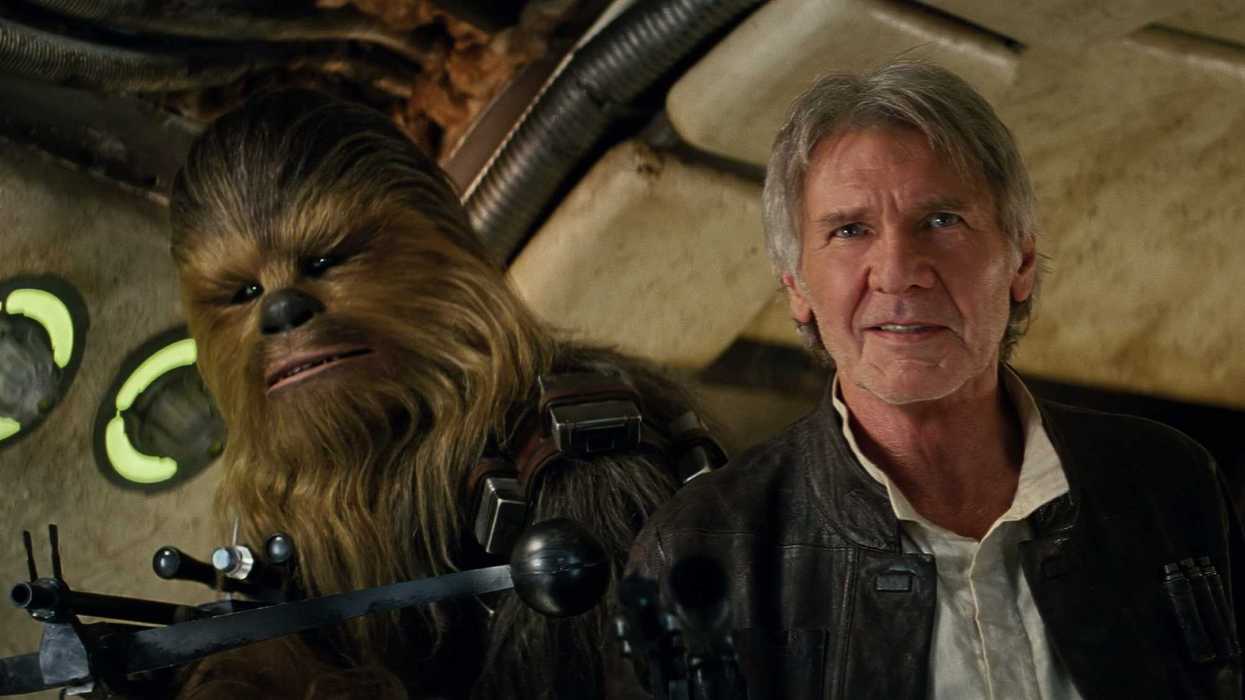
'Star Wars: Episode VII - The Force Awakens' (2015)
Nostalgic moments in sci-fi adventure films are typically coupled with spectacle and a wow-factor. The Force Awakens (2015) chose a quiet, emotional path and poignantly triggered our most beloved Star Wars memories.
In the movie, after Han Solo and Chewie reclaim the legendary Millennium Falcon, Solo softly says, “Chewie, we’re home.” The theme music kicks in without extravagance, letting the audience absorb the moment. There isn’t any heavy-handed attempt at creating a sense of nostalgia. Instead, The Force Awakens exercises tremendous restraint, especially in a moment as iconic as this one.
The understated nature of the scene and the line does not tell the audience to feel nostalgic. It lets the audience feel it by themselves. The line gives us a soft push, the music takes us a little further, and soon enough, our minds start racing back through the years, thinking of every Star Wars memory we cherish.
Why does this line work so well? What can it teach us about restraint in dialogue writing?
Context Of The Scene
Before we explore the line further, let’s remind ourselves of what was happening in this scene.
In The Force Awakens (2015), directed by J.J. Abrams, “Chewie, we’re home,” is spoken by Han Solo (Harrison Ford) as he and his lifelong friend Chewbacca step into the Millennium Falcon. This legendary ship was stolen from him a long time ago. After being stolen from Solo, the ship had passed through multiple owners before ending up with a dealer on Jakku.
Han Solo and Chewie had been on the hunt for the ship, and when they boarded it, they were unaware of anyone else’s presence. However, soon after Solo says this line, they discover Rey (Daisy Ridley), Finn (John Boyega), and BB-8 all aboard the ship. After a brief spell of introductions, the youth become aware of Han Solo’s identity, adding myth, legend, and history to a scene that already felt perfectly nostalgic.
The audience is reminded of Han Solo’s conquests through the words of Rey and Finn, both of whom had heard legends whispered around but had not ever seen or met Solo.
The line is heartfelt. Without being overdramatic, it captures a deep sense of loss and the relief of overcoming it, no matter how late it might be. Harrison Ford’s charismatic charm underscores his words and reminds us of his greatest moments, many of which were aboard the Millennium Falcon.
Bridging The Gap Between Then And Now
The finest nostalgic moments in cinema, especially those that are a part of grand, beloved sagas such as Star Wars, perfectly bridge the gap between past and present. They don’t recreate the same scenes as before or employ slick means to create nostalgia. They build something entirely new and find novel and exciting ways of bringing back memories of the saga’s greatest moments.
By reuniting Han Solo and Chewie with the iconic Millennium Falcon, “Chewie, we’re home” turns nostalgia into an emotional homecoming. It reminds us of the original trilogy’s unrelenting sense of adventure, a large part of which was down to Han Solo and the Millennium Falcon being an integral part.
The gap between then and now isn’t just about Han Solo and the Falcon. It’s also about the gap between Solo and the two youngsters, Rey and Finn. In a simple scene, we witness youthful admiration of a legend and the power of a warrior’s legacy. At no point does the music overpower this moment. The scene is so confident in its ability to connect with the audience that it respectfully sticks to its understated nature.
“Then and now” has yet another meaning, and it is related to us, the audience. What were our early memories of Star Wars? Of Han Solo? The Falcon? How have we evolved over the years, from those films to where we are now? This tender moment of nostalgia doesn’t just bring back memories. It takes us back to a different time. A time when Star Wars was one of the greatest movie escapes out there, and it reminds us that the saga still has a lot more to offer.
What This Line Can Teach Us About Restraint In Dialogue Writing
Han Solo’s “We’re home, Chewie” may sound simple on the surface, but deep down, it can teach us a lot about not overburdening a powerful nostalgic moment with ideas, but instead, using restraint. Here are three strong takeaways from this line:
Less Is More
This scene in The Force Awakens required audience participation to a great extent. It needed us to trigger our memories and feel nostalgic about what we were witnessing. Hence, it was important for the dialogue to remain minimal and leave room for the audience to bring their own memories into the scene, which is precisely what happens.
The Power Of “Home”
It’s interesting how the word “home” is used here. It doesn’t signify a literal home but an emotional and symbolic one, the one the audience can relate to. The word quickly transports us back to countless memories of Han Solo and the Falcon.
Conversational Nostalgia
We’ve discussed the understated nature of this scene, but the fact that nostalgia is created in simple conversation actually makes it stronger. Han Solo softly says, “We’re home, Chewie,” to Chewbacca. As iconic as this moment may be, in essence, it is a casual conversation that does not try too hard to trigger memories but triggers them nonetheless.
Summing It Up
“Chewie, we’re home,” almost serves as a dialogue said to any of us watching Star Wars: The Force Awakens. It creates a nostalgic, metaphorical home that feels like home to all of us, which makes this line and this moment so effortlessly powerful.
What is your favorite moment from The Force Awakens? Tell us in the comments below.