These 7 Final Movie Lines Will Stick With You Forever
These story ends but these closing lines refuse to leave.
'Se7en' (1995)
Closing scenes are pivotal in any narrative. But when there is a closing line to round it all up, encapsulating the ups and downs of the story in its entirety in the very last scene, it’s as satisfying as a steaming cup of cocoa on a winter morning.
But with horror, such closing lines hit slightly differently. We do leave with our hearts full, but full of fear, apprehension, and “what ifs.” It’s more about feeling uneasy with what we just saw! The possibilities of everything that could have gone wrong, and would have gone wrong, leave us worrying.
In this article, we’re looking at closing horror lines that leave you extremely uneasy at the end of their films.
The 7 Most Chilling Last Words Spoken in Horror Films
1. Hannibal Lecter’s Last Call to Clarice (The Silence of the Lambs)
Clarice thought that she would never hear from Dr. Hannibal Lecter again. After throwing the necessary intel her way, which finally led her to Buffalo Bill, Lecter made a smooth escape from a temporary holding cell after being transferred from Baltimore State Hospital for the Criminally Insane.
But on FBI graduation day, as the party is in full swing, Clarice gets a call. She immediately recognizes the voice. Lecter greets her like an old friend first, then lets her know he has no plans to pursue her—and expects the same favor in return.
But his voice doesn’t sound very relaxed, which worries Clarice. Lecter ends the phone call abruptly with, “I do wish we could chat longer, but I’m having an old friend for dinner,” as he eyes Dr. Chilton, the administrator of the psychiatric hospital, getting off a plane with his family.
That last line immediately reminds us of everything Lecter is—a charmer, a ruthless manipulator, and most importantly, a cannibalistic serial killer. His “I’m having an old friend for dinner” is one of the greatest cannibal puns.
2. Norman Bates Is Gone (Psycho)
Alfred Hitchcock introduced the world to inner demons through Psycho, which features a simple motel owner who kills the guests at his motel under the influence of his trauma.
Norman Bates shows classic signs of dissociative identity disorder (although Hitchcock doesn’t really go into the details), where his suppressed traumatic memories of his now-deceased mother trigger a new personality. This new personality, “Mother,” is violent, hateful, and bloodthirsty, and slowly takes over Norman until, at the end of the film, he completely loses himself to her.
After the detectives finally take him into custody, we see him all alone in a locked and guarded room. Bates sits there still as we hear Mother’s voice talking to us. She narrates how she plans to pin all the murders on her son. While she is not exactly happy to do it, she claims to have always believed that her “bad” son should be kept locked away, something that she regrets not doing, and now that it's happening, it’s only for the best.
She explains how she plans to act all innocent and harmless just to manipulate everyone into believing that it is all her son’s fault. She ends her monologue with, “They are watching. They’ll see. They’ll see, and they’ll know, and they’ll say, 'Why, she wouldn't even harm a fly.’”
The last line in Psycho reflects the devastating effects of an abusive mother. Norman’s mother is dead, but the fact that she is living on in his psyche from beyond the grave is reflective of how mental health disorders and abuse work. It’s Norman who has constructed Mother in his mind, but even in his creation, his mother is ruthless.
3. Ripley’s Final Log Entry (Alien)
Ridley Scott’s Alien is a horror film that will make you want to scream, but somehow you’re too shocked and shaken to manage even a single sound. The horror in Alien isn't in the jump scares but in the moments of conflict, betrayal, and helplessness that leave you on the edge of your seat.
In the end, Ripley recording her last log entry before heading back to Earth as the last survivor of the Nostromo crew is heart-wrenching. Ripley's final report on the crew’s space expedition is factual but colored with loss. She came with six other people, but now they’re all dead. She’s even unsure if she’s going to make it back to Earth safely.
The pain, regret, and sense of failure in her voice are the ultimate encounters with horror that the audience needs before Ripley signs off on the classic sci-fi horror.
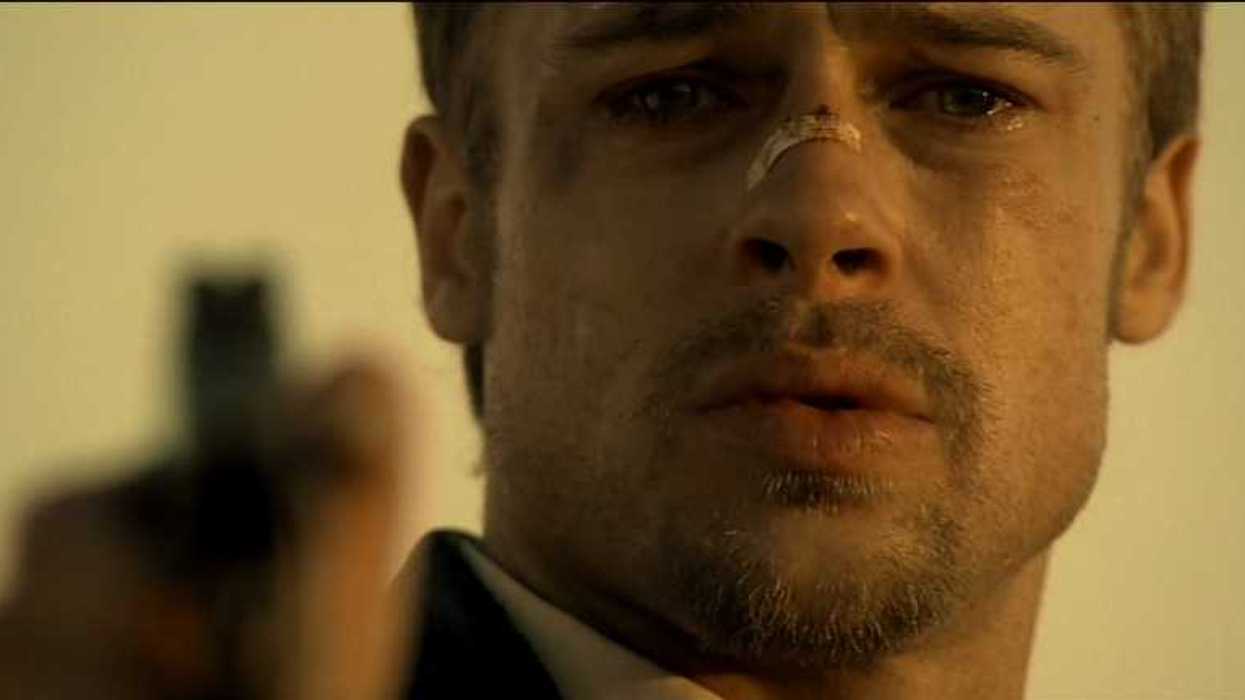
4. Lt. William Somerset (Se7en)
Ernest Hemingway’s quote at the end of Se7en, recited in William Somerset’s voice, is Se7en’s one last blow to the audience.
By the end of the story, Mills has lost his family. John Doe has won the game, even in death, proving that somehow bad can prevail over good in the most bizarre cases. Somerset, as a veteran detective, is stumped by what he just experienced.
So, when he says, “Ernest Hemingway once wrote, the world is a fine place and worth fighting for... I agree with the second part,” it connects us with Somerset's shock, Mills’ grief, and John Doe’s win all at the same time.
5. The Death of Frankenstein’s Monster (Bride of Frankenstein)
To realize that you’re unwanted is probably one of the greatest griefs you could ever face. Frankenstein’s monster is an unfortunate creature. He was created as an experiment and then rejected when he failed to meet society’s expectations.
In the sequel, Bride of Frankenstein, Dr. Pretorius (Henry Frankenstein's sinister former mentor) forces Henry back into the lab by having the monster kidnap Elizabeth and threatening to expose Henry's crimes. Together, they create a female companion for the monster. When she's finally brought to life, and the monster approaches her, she screams in horror and rejects him.
The creature tries for some time to break the ice with his bride, until realizing that even one of his own doesn’t want him. This realization hits him hard, and he decides to end the cycle.
Frankenstein’s monster’s last words are heartbreaking. Right before blowing himself up along with his bride and Dr. Pretorius (Dr. Henry’s sinister ex-professor), the monster says, “We belong dead,” you suddenly understand how much sadness he was carrying in his heart. That closing line connects you with the heartbreaks that this unwanted creature might have gone through during his limited time in this world.
6. Teddy’s Philosophical Question (Shutter Island)
Teddy was sure that he was a U.S. Marshal investigating the escape of a patient at a mental institution, until he was forced to face the truth. Realizing that he was the one to kill his wife and is now a patient at a mental hospital, and not a U.S. Marshal, was another life-altering moment in his life, much like the traumatic ones he has already endured.
At the end, coming to terms with his reality, Teddy leaves us with a tough question to think about—“Which would be worse, to live as a monster or to die as a good man?”
Honestly, I’ve not been able to decide yet. What would you prefer?
7. Nina’s Death (Black Swan)
I relate to Nina on multiple levels—her drive for perfection, her moments of self-doubt, and her linking her identity with her work. As much as I know that it is a toxic habit, some of us just can’t help it.
In her dying moments, Nina experiences the perfection she has been pursuing all this time. Performing as the Black Swan for the first time, she allows herself to embrace both the white and the black swans fully.
"I felt it. Perfect. It was perfect," she says.
Great closing lines like the ones above tend to leave a lasting impression on the audience. They’re one of the reasons why the narrative lingers on in our minds. At the same time, they open our eyes to some of the most complex questions that remain unanswered in the world.
Which is your favorite closing line from the above?