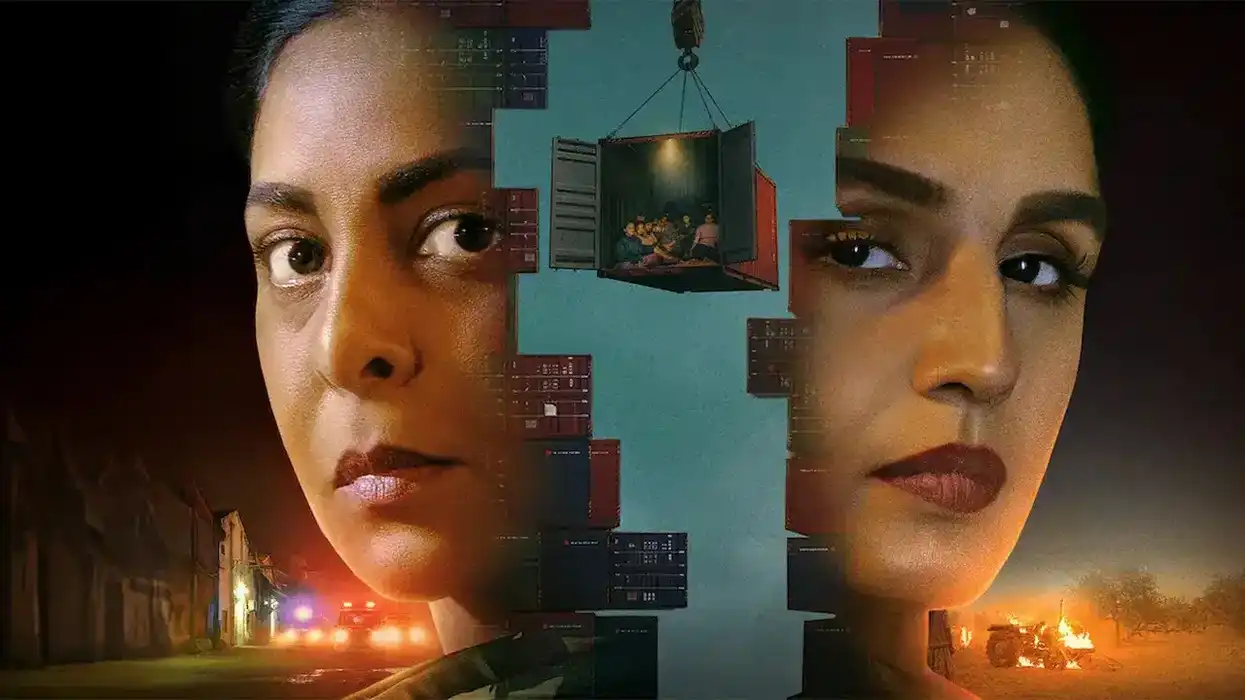
For composer Ceiri Torjussen, returning to Netflix’s Delhi Crime meant revisiting a sonic world he had already shaped in Season 2—while reinventing it for a darker, more emotionally charged season.
Season 3’s narrative dives into the human cost of sex trafficking, demanding a score that balances the show’s signature gritty synth palette with an intimate sense of vulnerability.
In the below conversation, Torjussen breaks down the techniques, templates, and conceptual decisions behind the season’s evolving sound—from custom-designed character motifs to processed recordings of traditional Indian instruments—and shares the lessons he’s learned about scoring grounded, character-driven drama at scale.
Listen to Ceiri’s Delhi Crime Season 3 score here.
Let's dive into the interview!
- YouTube www.youtube.com
No Film School: You’ve now lived inside the sonic world of Delhi Crime for two seasons. From a craft perspective, what were the first technical or conceptual decisions you made when beginning Season 3?
Ceiri Torjussen: Since this is my second outing with Delhi Crime, I’d already established a sonic palette that had worked for season 2. Season 3 came with a unique challenge: it’s a human drama about sex trafficking, and so, while I needed to keep the gritty, synth-based sound-world alive, I also needed to address the tragic human consequences of the harrowing storyline. This meant sometimes leaning into the more emotional story beats and trying to reflect the plight of the young girls in the show in a dramatic, but sensitive way. It was a hard balance to strike.
NFS: At what point did you see the Season 3 script? Can you start creating tracks based on the script, or do you like to wait until the picture comes in?
CT: I actually read the scripts several months before I saw any picture, and, because we knew what kind of music had worked in Season 2, having been inspired by the scripts, I did start writing a small library of music way before the first picture cuts came in. This gave more tools for the editors as they were cutting, since they were able to place my music in from the get-go, which not only helped the post team as they edited, but also helped me once I eventually started writing to picture.
NFS: This season introduces a more sophisticated criminal network. How did you go about designing the darker, bass-heavy motif for Badi Didi and John Gupta? Did you create custom sound design elements for them?
CT: Tanuj (director) was excited for me to experiment with new ways of scoring, which was a real treat. I did create some custom-designed sounds for some of the characters. The Badi Didi / John Gupta theme, for example, has its own custom-designed synth sound, which has this creepy, slow bend to it. I extended that idea as a general sound of “dread” by making it a very long, slow downward glissando over several octaves. You’ll hear that motif in many cues throughout the season.
 'Delhi Crime' Credit: Netflix
NFS: We heard you incorporated processed recordings of traditional Indian instruments like sarod, santoor, and bansuri. Can you break down your signal chain or processing workflow for transforming these acoustic elements into something uniquely textural?
CT: I processed different instruments in different ways, depending on how ‘recognizable’ or more textural I wanted them to be. Amp distortion was one approach, especially on the sarod and santoor. It kind of turns it into more of an electric guitar sound, but not the same as a classic rock sound we’re used to hearing. It gives the instruments a harsher edge while keeping some of the geographical flavor alive. I also recorded an excellent singer/bansuri player called Sheela Bringi. She recorded a few ‘songs’ that I wrote as ‘wild track’ (i.e., not to picture). I was then able to use her performances not only as the basis of certain cues, but also to use isolated elements of the recordings and manipulate/process them in novel ways. I explored a lot of extreme pitch shifting and time stretching, which was great for turning slow, breathy bansuri or vocal lines into textural, cloudy pads that had a certain gentle life to them. These sounds gave a much more human approach to my score, which was especially useful for all of the young girl characters’ storylines.
NFS: Since Delhi Crime is very music-heavy, how do you maintain variety and avoid harmonic, rhythmic, or timbral repetition across an entire season?
CT: Good question! This can be a challenge, but I think the key was to just write a lot of music. The more I wrote, the more new ideas came, and those ideas spun off into other ideas. It was a fairly organic development of themes and motifs that worked for the show, but were diverse enough from each other that they created plenty of variety. Turning a melody upside down or writing cues in 7 or 11 meter instead of 4 were useful tricks. Using a lot of filters and audio fx to constantly vary the sound was also something I did a lot.
NFS: Can you walk us through your template or session setup for the show? Do you build a specific palette for each season, or do you iterate on a master project file over time?
CT: I do both. I do have an (always developing) ‘master template’ which I start most projects from. When I began music on season 3, I started with my master template, but then added all the new, custom-made sounds I’d made, and chose specific sample libraries that I thought might be useful for this project. Of course, as I worked through the season, I’d constantly be modifying the template as I went. That’s another way to avoid repetition between cues and episodes – adding the occasional new sound or tool as I went along.
NFS: Compared to Season 2, did Season 3 require you to rethink your approach to dynamic range—especially with the mix needing to accommodate both intimate scenes and large-scale action in the finale?
CT: Not really. There were plenty of quieter moments in Season 2, also. In season 3, it was a matter of carefully choosing the moments when I got really big, and working my way up to and away from those spots in artful ways. Tanuj and the team were pretty open-minded about how I should score the new season, but we did have conversations about themes and story, way before I saw any footage. We discussed how important it was to strike a balance between the classic, gritty, hard-edged sound of the show and the more delicate and troubling storyline of child trafficking and abuse that forms the core of the season 3 plot. The sound mix was done by a crack team in Mumbai and I had every confidence that they’d manage my music in a deft and tasteful way.
 Composer Ceiri TorjussenCredit: Projection PR
NFS: Were there any scenes this season that forced you to rethink your initial musical approach—something where trial-and-error completely changed the final cue?
CT: Sure – several times. This happens in most projects I score, and it’s always interesting (and humbling) that a completely different musical approach than my initial attempt is the one that ends up working best.
NFS: You work across film, TV, and documentary. From a workflow standpoint, what distinguishes scoring a tightly serialized crime drama like Delhi Crime from your other genres?
CT: Scoring a series like Delhi Crime is different in many ways from my other projects. Most obviously, the sheer amount of music makes it a different animal from scoring a feature. There were over 5 hours’ worth of score in Season 3, not including the dozens of earlier, unused versions of cues written. Getting started early on with the score was a big help for me in tackling all that was needed. Also, unlike a feature, I was able to telescope musical ideas and themes over the course of the whole season – an almost 6-hour stretch of programming - rather than in the tighter confines of a 90-minute feature. It’s a completely different challenge
NFS: Finally, for composers reading No Film School, what’s one lesson or habit from your Delhi Crime experience that you think would benefit anyone scoring grounded, character-driven drama?
CT: I’d have several lessons, I think, the most important of which would be to really listen to your filmmakers. Start the conversation early and listen to what they have to say about the drama and each character. There’s a lot to glean from a director or writer’s opinion about a character (that may be different from your own), so getting their take on each scene and what they hope music can achieve to enhance it is crucial.