Every filmmaker knows that music is the invisible engine of narrative tension, but few composers navigate it as dynamically as Philip Guyler.
He's worked on everything from sci-fi battles of the BBC’s Mission 2110 to the delicate emotional landscape of the award-winning Love on the Spectrum.
In this interview, Guyler breaks down why production music is the unsung hero of modern television, how tight budgets and recording deadlines force tighter creative discipline, and why a blank screen can sometimes be the ultimate canvas for a musician.
Let's dive in.
No Film School: Hi Philip! Could you begin by telling us about your favorite project that you have scored in your career?
Philip Guyler: My favorite project would probably be Mission 2110, which was written by the team behind the Doctor Who franchise. It was a science fiction series made for the BBC. It was so much fun to write the score, a mixture of electronic and orchestral textures, composing often quite epic themes for robots and sci-fi battles through a mix of animation and on-set action.
NFS: What is your personal taste in music like, and how has that informed your approach to film/TV scoring?
PG: My personal taste in music has varied, but I was always drawn to the work of Vangelis. He created a very symphonic feel out of early electronic music, often by combining it with organic elements. It took the music to another level and gave it an originality few artists have been able to achieve. I like the way the sounds were layered, often some being very low in the mix but contributing to the overall sound to the point of being noticeable if they were taken away.
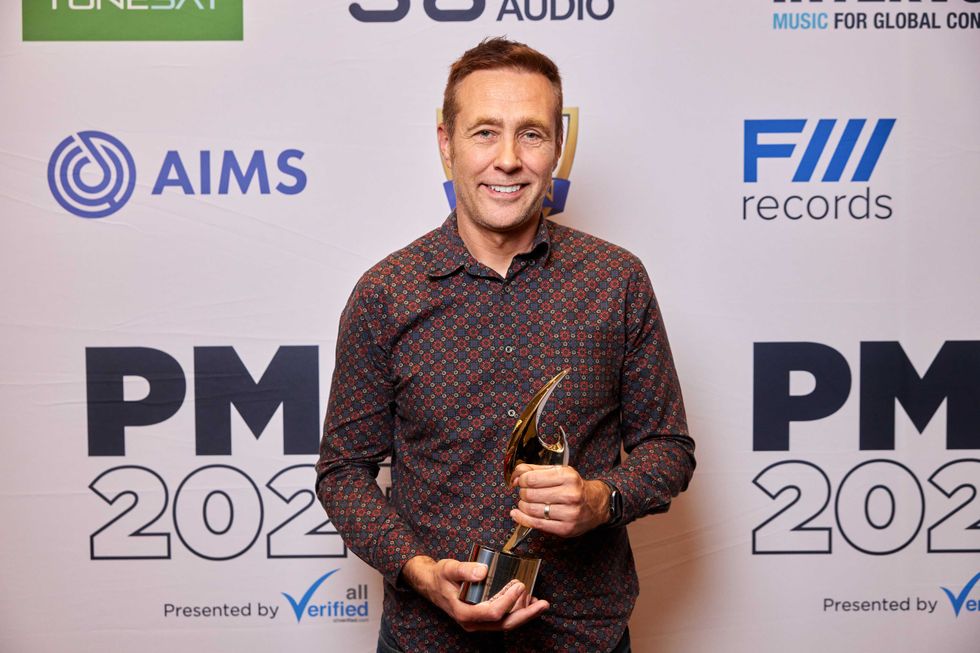 Philip GuylerCredit: Impact24
NFS: Having scored projects for both film and television, how does your approach differ across these mediums?
PG: For me, the difference between scoring film and television has involved a few factors. Films can often be much longer-term projects where the composer can be brought in very early, and the whole process will generally be more drawn out with lots of re-edits and changes. TV can tend to have a quicker turnaround. This can mean more pressing deadlines for the composer. Sometimes with TV, less is required to be written directly to picture, especially with documentaries, so you write a predetermined suite of music agreed upon with the producer, which is often written in advance of or during filming. This allows the editors to have the music when they start the edit process. This process does involve conversations and often references tracks from the editor and producer to really get a handle on the mood and emotion the music needs, as there may be very few visuals to go on.
A film may have a bigger budget, which allows for more live players. This doesn’t always happen with TV projects, which can have more modest budgets. This means you may utilize a few live musicians, but a large part of the score may be generated electronically using samples. Fortunately, the technology has really come on in recent years, allowing you to produce really convincing scores on samples, especially when combined with a few live musicians.
NFS: You have also won a Mark Award for your production music on Love on the Spectrum. Could you please tell us more about production music and what differentiates it from your other scoring work?
PG: Yes, I was fortunate to win the Mark Award and be nominated for a Music & Sound Award for that work as well. Production music, in its simplistic form, is pre-written musical albums in different styles and genres that are written for placement in film, TV, commercials, etc. It’s probably the most common form of music you will hear on TV these days.
There are rarely tight deadlines associated with production music, unlike bespoke scoring work, which can be very last-minute and tied to a structure of deadlines. If you write for the top tier of publishers, they can often have bigger recording budgets. For example, the track that won the Mark Award was part of an album recorded with a full orchestra in the iconic Abbey Road Studio 2. It is often only well-funded films, docs, and dramas that would have a budget that would allow you the luxury of that many players and a studio as iconic as that.
There is a knack to writing production music, though. As you have to write something that an editor is going to want to use. So knowing how to structure and set the tone of a track is important. And unlike bespoke work, where you will have reference points or pictures to work from when writing production music, you don’t really have any of that. So it’s all about getting your head around the space and genre you are writing for to produce tracks that are going to be liked and user-friendly for editors.
NFS: Do you have any dream projects or collaborators?
PG: I really enjoy the challenge of working on any genre, be it for film or TV, as I like the variety it brings. I would love to work on a large-scale nature film and really push the boundaries with it, creating something memorable without it sounding too much like a traditional orchestral score, incorporating some world music elements and fusing those with traditional orchestra and electronic textures.
NFS: You have been fortunate enough to record with some of the most iconic orchestras in the world, including the London Philharmonic and the City of Prague Orchestra & Choir. How do you adapt your creative approach to each new collaborator?
PG: I have adapted this question to focus on the difference between writing using samples and writing for an orchestra. As there isn’t a massive difference if you are writing for one orchestra or another,
Often, when you are working with samples, you can make massive-sounding pallets and very intricate and complex arrangements for orchestral instruments without really having to worry about the time it would take to record or the number of players. When you are recording large live ensembles, you have to be mindful of writing material that the musicians are going to comfortably be able to play in the often-limited time you have to record. So working with orchestras, especially under recording time constraints, does make you really think about writing to get the best out of the orchestra.
NFS: Is there anything else you would like to add about any recent accomplishments or upcoming projects?
PG: I have recently just finished writing some additional music for the new series of Day Of The Jackal for Sky, which is still being filmed. And I’ve scored two new true crime docudramas that will be landing on Amazon later this year. Hair Fetish Killer has a traditional score with Italian roots, telling a wild story reaching from Bournemouth to Potenza, Italy. The other project, based on the Mumbai Terror Attacks in 2008, has a much harsher electronic or industrial feel to the score.
I also have a new series of Expert Witness I scored, which has just started on BBC1.