The Horror Movies That Best Showcase Willem Dafoe's Range
Six horror performances that make the case for Dafoe as the range player of his generation.
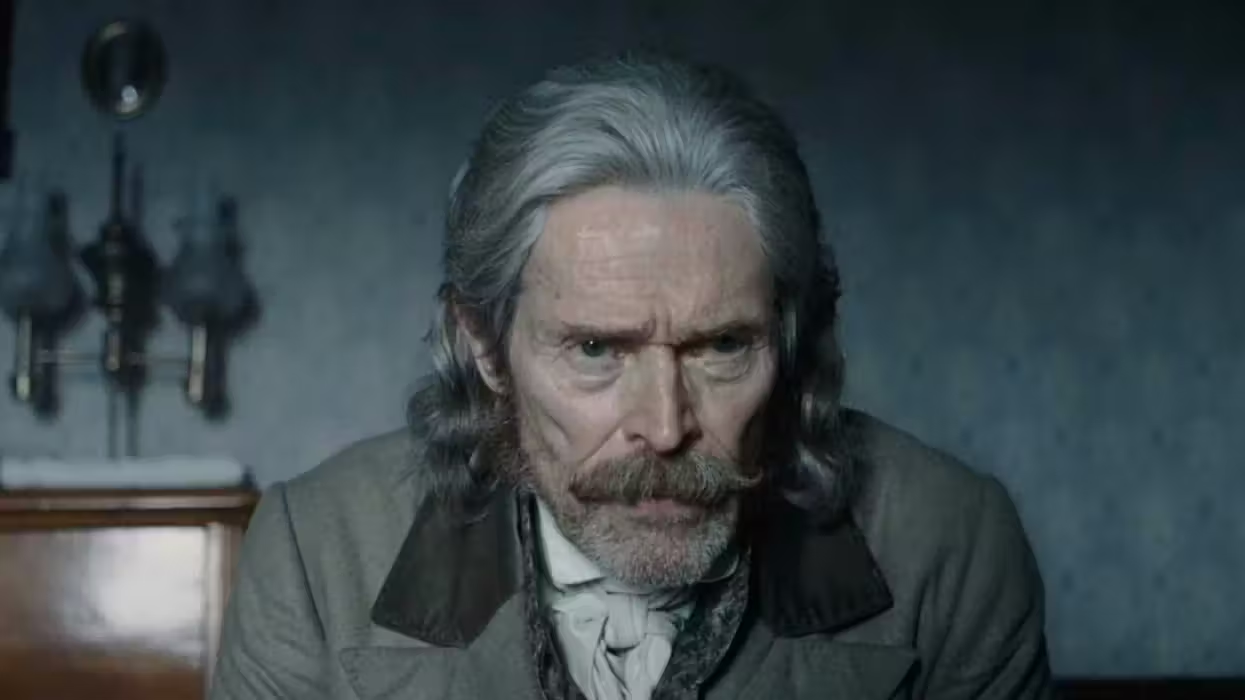
'Nosferatu'
When you have the incomparable Willem Dafoe in any movie, you know you're going to get a powerhouse performance where he goes all in. I personally loved him in Raimi's Spider-Man movies, and though those have a hint of horror in them, we aren't including them today as a technicality. But just know I'm always thinking about his Green Goblin (and the redemption arc he got later in No Way Home).
We turn to Dafoe when we need an actor to sell the impossible. He's been a vampire, a vampire hunter, a detective, a carnival barker, an actual god of death.
Here are six titles that best show what he can do.
- YouTube www.youtube.com
Nosferatu
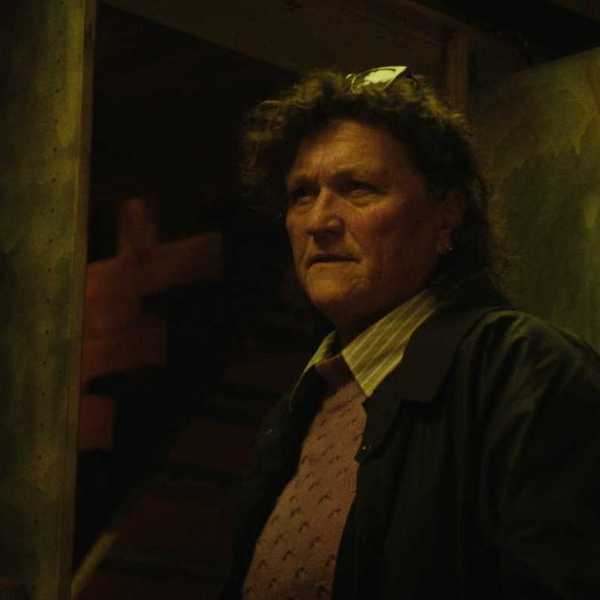
In Egger's film, Von Franz is the character other iterations call Van Helsing, an occult scholar excommunicated from polite society for taking magic too seriously. And by gum does he take it seriously.
Dafoe plays him with wild-eyed conviction. In one sequence, he tries to kill Count Orlok in a rat-filled dungeon while flames roar behind him and he laughs maniacally. What's not to love?
On his choice to shout the scene rather than underplay it, Dafoe told Entertainment Weekly, "What are you going to do, whisper through this scene?"
"There's all kinds of performances, but I can't help myself. That's my energy," Dafoe told the outlet. "I get excited. Performing is about doing things, and to be doing things in a structured environment really makes them more intense. We deserve more than an imitation of natural behavior. Film is better than that."
Our conversation with costume designer Linda Muir dug into how the film builds its world, and we also broke down the eight films that inspired Eggers.
- YouTube www.youtube.com
Shadow of the Vampire
Before Von Franz, there was Max Schreck, the German actor who originally played Orlok. In E. Elias Merhige's fictionalized account of the making of the 1922 Nosferatu, Dafoe plays Schreck.
But the film adds a twist. What if the actor really was a vampire?
Dafoe earned an Oscar nomination for the performance, and the transformation was as brutal on the outside as on the inside.
Speaking with the Tampa Bay Times at Cannes, Dafoe said, "It took a little over three hours to get into the makeup. And at the end of the day, it took an hour to get undressed. I was the first to arrive and the last to leave. It was interesting, because some of the people I worked with never saw me as anything other than Schreck."
Two decades before Eggers cast him as an occultist, Dafoe was studying cinema's most enduring monster from the inside.
- YouTube www.youtube.com
The Lighthouse
Not to load this list up with Robert Eggers, but we have to include Dafoe's first collaboration with Eggers. The film put him in a New England lighthouse playing Thomas Wake, a bearded, sea-shanty-singing wickie who drives his young apprentice (Robert Pattinson) mad.
He's definitely chewing scenery here and doing Acting (with a capital A), but doing it in Eggers' trademark period- and setting-appropriate dialogue.
Dafoe built Wake from the ton of research materials Eggers gave him before the shoot. He told BFI, "Eggers is a freak for research. He lives in these times. He's one of these guys in his imagination. When I said I wanted to do this, he presented me with many things to watch, many things to read, many things to listen to. Everything from sea shanties to pictures to videos of interviews of old lighthouse keepers, vintage footage to accent tapes. You go as deep as you want to go."
Eggers has talked before about the horror films that shaped him. But research clearly plays a big part too.
- YouTube www.youtube.com
American Psycho
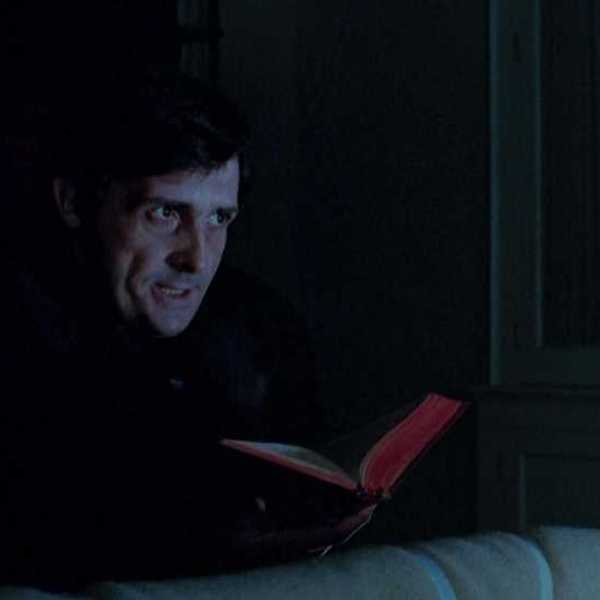
The same year Shadow came out, Dafoe played the exact opposite kind of monster-hunter—a mild-mannered private investigator named Donald Kimball, poking around Patrick Bateman's world.
His scenes are short, but Mary Harron built them around a trick that only works because of Dafoe's control.
As SlashFilm wrote, Harron had Dafoe shoot each of Kimball's three interviews with Bateman three separate times. Once oblivious, once suspicious, once fully aware. And then the team cut between the takes so viewers can never quite read him.
Harron told the site she wanted to capture the "sense of lurching back and forth between these daytime and nighttime worlds." Dafoe is the daytime, and he's terrifying in it.
We've written before about how Harron built tension in the business card scene too.
- YouTube www.youtube.com
Nightmare Alley
I feel like this one gets lost in people's memories. Guillermo del Toro's neo-noir doesn't get filed under horror as often as it should, but the "geek" sequence, in which carnival owner Clem Hoatley calmly explains how you turn a broken alcoholic into a chicken-biting sideshow attraction, is one of the most disturbing scenes in it. It's just Dafoe, walking a stranger through a monstrous process.
He told ScreenRant that del Toro "gives you a very complete world, you went to that world, you get on that set, that carnival set, it was full of detail, it was full of beautiful things, it was easy to pretend."
The horror in Clem is a businesslike calm. Our podcast breakdown of the film's production design and wardrobe dug into how that world got built.
- YouTube www.youtube.com
Death Note
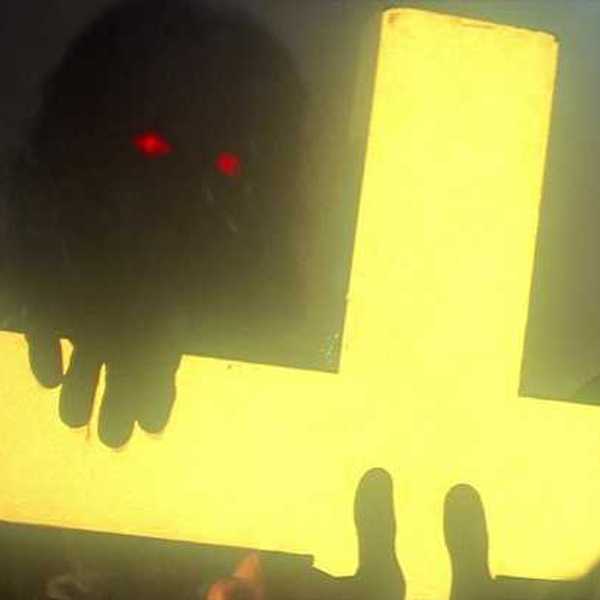
Okay, so it's easy to admit that Adam Wingard's Netflix Death Note is not the adaptation most manga fans wanted. But almost every review of the movie carves out an exception for Dafoe, who voices the death god Ryuk and lent his facial capture to the character's CGI design.
The casting story is one of the film's best behind-the-scenes stories.
Wingard told io9, "Well, as a matter of fact, David Bowie was actually originally who I wanted to [be the voice of] Ryuk—but then David Bowie died. And then the second person on my list was Prince, weirdly enough—and then he died. And I was like, we got to stop, we're literally killing them off. Which is really morbid, but it was true."
He added, "He was the first person we actually approached. It's one of the few times I've actually approached an actor right off, and they said yes, thank God."
Speaking with ScreenCrush, Dafoe said he skipped reading too much of the manga on purpose:
"With Ryuk, there's no rhyme or reason. He's a death god. We can't apply human logic to him. But we can apply kind of human characteristics, like the fact that he's bored. He wants to be amused, and these humans amuse him."
Let us know which Dafoe is your da-favorite.